
Reviewed · WALKING TOURS
London Mystical and Dragons Walking Tour
London’s dragons are not only creatures of legend on this walk. They appear as symbols of protection, power, rivers, churches, Roman religion, and the old boundaries of the City. Guide Arjun connects these threads in a 2 to 3 hour stroll from London Stone to Temple Bar Memorial.
I like the small maximum of eight people, which gives you room to ask questions. I also like the route’s mix of famous places, such as St. Paul’s Cathedral, and easy-to-miss corners such as forgotten streams and church wells. The main caution is that the tour covers a lot of ground, and some interiors may be closed, especially on Sundays or bank holidays.
Key points to know
- Follow London’s dragon symbols: The walk links the City’s protector dragons with Beowulf, Tiamat, and St. George.
- See the city below the city: The route recalls the lost Walbrook and other rivers, as well as the Roman Temple of Mithras.
- Expect a thoughtful guide: Arjun brings together folklore, architecture, Roman religion, churches, rivers, and spiritual symbolism.
- Small groups matter: With no more than eight people, you can hear clearly and ask about details along the way.
- Bring good walking shoes: The leisurely pace includes many stops, but the route still covers considerable ground.
- Plan around opening hours: The Temple Church and other sites may not be open during every departure.
London’s dragons and the old City
This is not a standard greatest-hits walk through London. It uses dragons as a thread through the City of London, then follows that thread into older layers of belief and place.
You’ll hear about protective creatures linked with the City, sacred water, ancient trees, Roman worship, Christian churches, and symbols worked into buildings. Some ideas are presented as folklore or interpretation rather than settled historical fact. That distinction matters, and the appeal here comes from seeing familiar streets through a symbolic lens.
Arjun is the guide named throughout the experience. His approach is conversational and research-based, with plenty of questions and side details. The strongest praise focuses on his passion, patience, storytelling, and ability to adjust explanations for families, children, and adults with different interests.
The tour starts at 1:30 pm at 113 Cannon Street, near London Stone. It finishes at Temple Bar Memorial beside the Royal Courts of Justice. You are not simply circling one square, so allow enough energy for a city walk and wear shoes that can handle several hours on pavement.
More Walking Tours in London
- Tour for Muggles The Ultimate Harry Potter Walking Tour in London
★ 5.0 · 4,684 reviews - London Jack The Ripper Guided Walking Tour
★ 5.0 · 3,131 reviews - Changing of the Guard Guided Walking Tour in London
★ 5.0 · 1,793 reviews
London Stone and the forgotten Walbrook
The first stop is London Stone, a small but famous object with a large symbolic role. It is said to protect London through its presence, and the tour uses it as a starting point for thinking about the City as a place shaped by older forces.
This opening works well because it sets the tone quickly. You are not being asked to admire a grand building from the outside and move on. Instead, you are encouraged to consider why a single stone became attached to ideas of safety, continuity, and the identity of London.
From there, the walk moves to Bloomberg Arcade and the memory of the Walbrook River. This stream once helped shape the Roman and later development of the area, but modern streets now cover it. The stop is brief, yet it gives the route an important theme: London’s past is often beneath your feet rather than in plain view.
The connection between water, settlement, and sacred ground is one of the tour’s recurring ideas. If you enjoy old maps, forgotten waterways, and the way cities grow over earlier places, this part should appeal to you.
The Temple of Mithras below modern London
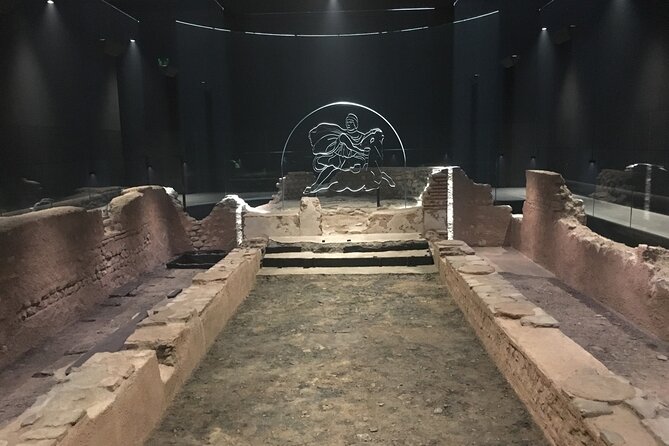
The Roman Temple of Mithras is among the most compelling stops. The temple was devoted to Mithras, a sun god worshipped by Roman communities, and it offers a direct link to religious life in ancient London.
The site is especially effective for anyone who likes archaeology and lost belief systems. The tour places the temple within a wider discussion of hidden symbols and ancient spiritual ideas, rather than treating it as an isolated ruin.
One practical point is important: access can vary. The supplied details identify the temple as part of the route, but not every departure guarantees the same interior experience. If a site is closed, Arjun has used images and alternative explanations to keep the story moving. That is useful, though seeing a picture is not the same as entering an ancient space.
Bank of England and the City of Dragons
At the Bank of England, the tour shifts from Roman and sacred water stories toward power. This is described as a seat of the City of Dragons, connected to a forgotten river.
You’ll look at the financial district through a different frame. The point is not that the Bank of England is literally a dragon’s lair. Rather, the dragon becomes a symbol for protection, authority, wealth, and the forces that shape the City.
This is one of the walk’s more interpretive sections. You may enjoy the way it links architecture and civic power with old myths. If you prefer tours that stick only to documented dates and official explanations, you may find parts of the symbolism less convincing. Arjun’s strength is that he presents the material as a way to think about London, not merely as a list of dates.
A completely different sort of day out in London:
- Stonehenge, Windsor Castle, and Bath from London
★ 4.5 · 18,662 reviews - London Big Bus Hop-On Hop-Off Tour with Optional River Cruise
★ 3.5 · 10,803 reviews - London Small Group Tour of Historical Pubs
★ 5.0 · 10,422 reviews - Stonehenge, Windsor Castle and Bath with Pub Lunch in Lacock
★ 4.5 · 7,402 reviews
Bow Bells, Cheapside, and lost trees
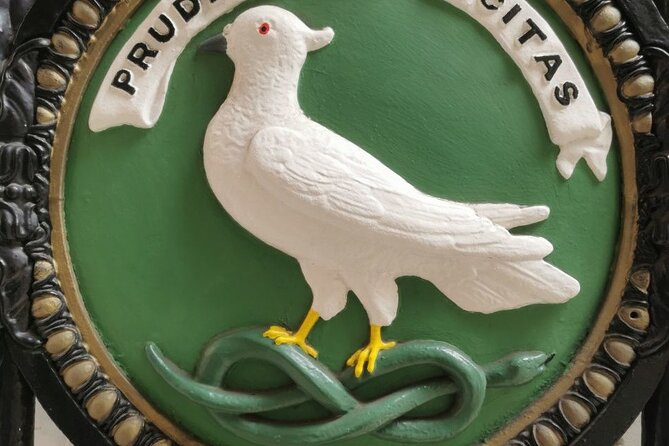
St. Mary-le-Bow Church brings in the symbolism connected with Bow Bells. The church is also part of a larger story about how Christian buildings can preserve, replace, or redirect older symbols.
The stop is short, but the walk does not treat churches as decorative backdrops. You’ll be encouraged to notice shapes, images, and meanings that are easy to pass without a guide. This is where the tour can change the way you look at ordinary streets.
Cheapside adds another unusual detail: the oldest tree in the City of London. The tree is presented as a reminder of the many trees that once stood in areas now covered by streets and buildings.
That small point helps balance the more dramatic dragon and temple stories. London was not always a dense financial center. Trees, streams, open ground, and sacred places once played a much larger role in daily life. The stop is short, but it gives the route a welcome connection to nature and vanished city spaces.
St. Paul’s and the symbol of the Phoenix
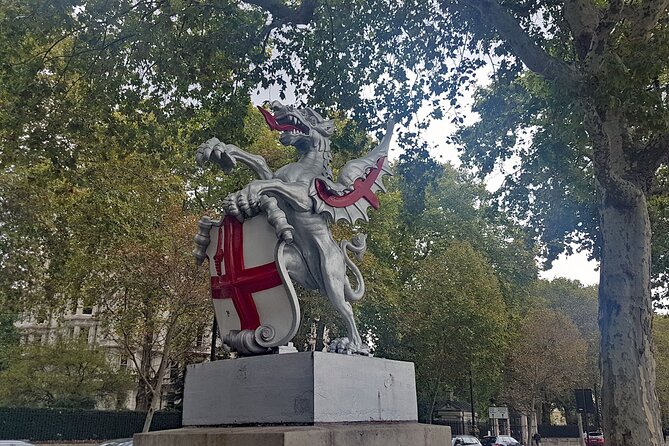
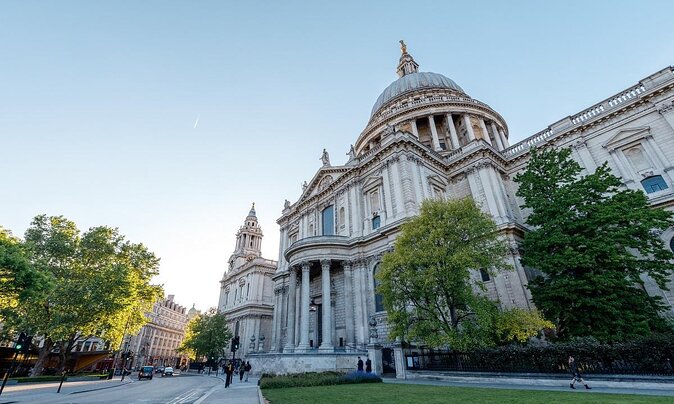
St. Paul’s Cathedral is the grandest landmark on the route. The tour presents it as a place of ceremony from ancient times and as an example of the Phoenix symbol.
The Phoenix fits naturally into London’s story of destruction and renewal. The symbol suggests a city that can burn, fall, and rise again. At St. Paul’s, the idea gains force because the building carries such weight in the city’s public life.
You should expect to examine the cathedral from the route rather than assume a full cathedral visit. The experience is a walking tour, and the published stop includes no admission ticket. If you want to tour the cathedral interior, you would need to arrange that separately.
The value here is the interpretation. You have probably seen photographs of St. Paul’s, but the guide invites you to think about its symbols and ceremonial role. That makes the stop more than a photo opportunity.
St. Martin-within-Ludgate and the road west
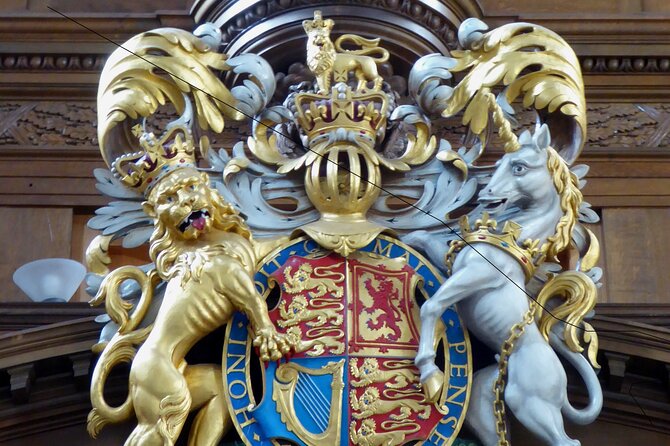
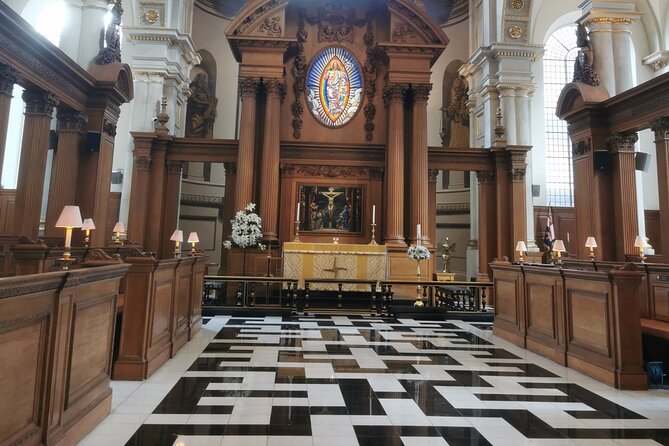
The Church of St. Martin-within-Ludgate receives one of the longer stops. Its long religious history is paired with older enigmas, making it a good place for the tour’s blend of church architecture and pre-Christian questions.
This is also a point where pacing matters. The walk includes many stops, and several are inside or near churches. Arjun’s style, based on the available feedback, is to spend time explaining rather than rush you from one landmark to another. Families have found the format workable, including children with many questions.
At Ludgate Circus, the route recalls another lost river and the king associated with London’s name. The stop is short, but it broadens the story beyond buildings. You begin to see the City as a place shaped by water, rulers, trade, belief, and repeated rebuilding.
The tour does not present London as a single neat story. It layers Roman, medieval, Christian, pagan, and modern interpretations on top of one another. That approach is the main reason to book it, and also the main reason some people may prefer a more conventional city tour.
St. Bride’s well and medieval symbols
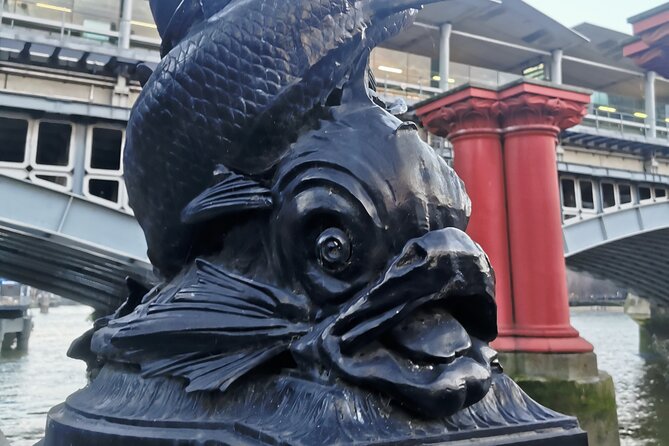
St. Bride’s Church is another substantial stop. It has a pagan past and contains a well, giving the guide another chance to connect water with ritual and settlement.
Wells often carry strong symbolic meaning in folklore. Here, the discussion helps you consider how older sacred places may continue to matter even after a church is built around or near them. You’ll also encounter the practical side of London’s layered past: new buildings do not erase every earlier association.
St. Dunstan in the West follows with medieval symbolism and another look at how religious imagery can carry several meanings at once. This part of the walk is especially suited to people who enjoy iconography, architecture, and the question of why a symbol appears where it does.
You may find that the churches take more attention than expected. That is not a problem if you like religious art and old buildings. If your main goal is dragons alone, the number of church stops may feel high. The tour is really about mythology and symbolism across London, not a creature-spotting outing.
Temple Church and the Knights Templar
Temple Church is one of the most atmospheric stops on paper. Built by the Knights Templar, it was modeled on the Church of the Holy Sepulchre and is presented as a place where esoteric ideas can be explored.
The building’s connection with the Templars gives the tour a natural move into medieval religious and military history. You’ll hear how the church’s design and associations contribute to its reputation for mystery.
Access is not guaranteed. One departure found the church closed, and the guide used images instead. This is the clearest practical weakness in the experience. Before booking, check the date and opening conditions if entering Temple Church is important to you. Even if you cannot go inside, the stop remains useful for its exterior setting and the stories attached to the building, but it will not fully replace an interior visit.
Temple Bar Memorial and the guardian dragon
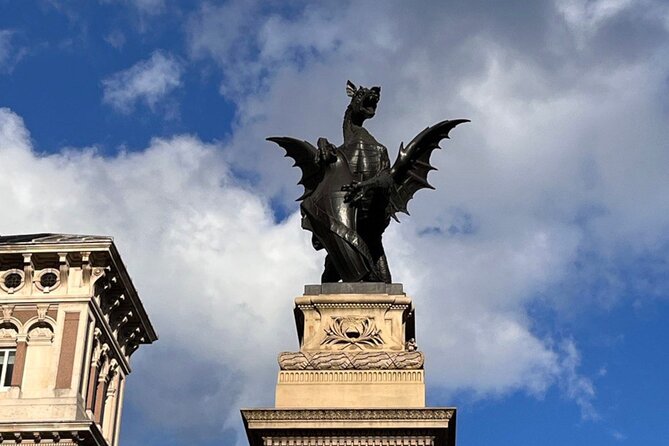
The walk ends at Temple Bar Memorial, beside the Royal Courts of Justice. Its dragon is described as the fiercest protector of the City, with connections reaching back to Beowulf, Tiamat, and St. George.
This final stop gives the tour a satisfying visual finish. The dragon is not just a mascot. It gathers together the ideas introduced along the way: boundaries, guardianship, old rivers, royal power, religious symbols, and the survival of ancient motifs in a modern city.
Ending here also makes the route practical. You finish in an area with strong transport links and plenty of options for continuing your afternoon. The end point is not the same as the start, so you see more of central London rather than retracing your steps.
Arjun provides a PDF of the places visited, intended to help you return to the sites later. One person did not receive it promptly, so keep the promise in mind but contact the operator if it does not arrive.
How much walking and how the pace feels
The tour lasts about 2 to 3 hours. It includes many short stops, with longer visits at St. Martin-within-Ludgate, St. Bride’s Church, and Temple Church.
The pace is described as comfortable rather than hurried. Stops break up the walking, and the guide can spend more time where questions lead. Still, this is not a short stroll around one landmark. You cover a considerable distance across the City and toward Temple Bar.
I would choose this walk early in your London stay if you want a new way to read the streets during the rest of your visit. The PDF can also help you revisit places at your own speed, provided you receive it after the tour.
The group limit of eight is a real advantage at this price. At $29.48 per person, you are paying less than many large guided experiences while getting a route designed around conversation and small details. The value is strongest if you enjoy interpretation, storytelling, and lesser-known corners. It is less compelling if you want paid entry to major attractions, since the listed stops have no admission included.
The activity is offered in English. Service animals are allowed, and it is near public transportation. Most people can take part, but the walking distance and outdoor nature mean you should consider your own comfort and the weather.
Who should book this London walk
I would recommend it to people interested in:
- Folklore, mythology, dragons, and symbolic traditions
- Roman London and the Temple of Mithras
- Churches, wells, religious art, and old architecture
- Lost rivers and the way modern cities cover earlier places
- Small groups and question-friendly guides
- Family outings with older children who enjoy unusual history
It can work well for families. The guide has been able to engage children around ages 10 to 16, while still offering enough material for adults. The subject also suits a work group or friends looking for something less ordinary than a standard sightseeing circuit.
I would hesitate if you need every interior to be open or want a strictly academic presentation. The tour mixes accepted historical information with folklore, esoteric interpretation, and symbolic connections. That can be thought-provoking, but you should remain open to ideas rather than expect every dragon line or sacred association to be proven fact.
Weather matters too. The experience requires good weather, and a poor-weather cancellation brings an offer of another date or a full refund. You can cancel for a full refund up to 24 hours before the start time. Cancellations or changes inside that window are not accepted.
Should you book it?
Book this tour if you want London to feel strange, layered, and full of stories that standard walks often skip. Arjun’s personal approach, the eight-person limit, and the blend of Roman remains, churches, lost rivers, dragons, and sacred symbols give the afternoon a clear identity.
I would especially choose it for a second or third day in London, once you have seen the big sights and want to look closer at the streets between them. Bring good shoes, check the opening status of Temple Church, and allow for a little imaginative thinking.
Skip it if you want a conventional tour based only on major monuments and confirmed historical facts. For everyone else, the $29.48 price offers an unusual way to understand the City, one stone, church, river, and dragon at a time.
FAQ
Where does the London Mystical and Dragons Walking Tour start?
The tour starts at 113 Cannon Street, London EC4N 5AW, at 1:30 pm.
Where does the tour finish?
The tour ends at Temple Bar Memorial in the City of London, London EC4A 2LT. It is next to the Royal Courts of Justice.
How long does the walking tour last?
The experience lasts approximately 2 to 3 hours.
How many people can join the tour?
The tour has a maximum of eight travelers.
Is admission to the stops included?
The listed stops have no admission ticket charge. However, entry into some locations may depend on opening hours, and Temple Church may be closed during some departures.
What is the cancellation policy?
You can cancel up to 24 hours before the start time for a full refund. Changes or cancellations made less than 24 hours before the start time are not accepted. If poor weather or an insufficient number of bookings causes cancellation, you will be offered another date or a full refund.
Recently added around London
- London’s Crown Secret: Self-Guided Royal Puzzle Quest★ 4.5 · 8 reviews
- Postcard London★ 5.0 · 8 reviews
- Windsor Castle, Stonehenge & Roman Baths Private Tour★ 4.5 · 8 reviews
- Private Tour: Downton Abbey London Locations by Taxi★ 5.0 · 8 reviews
- Cotswolds Private Driving Tour from London★ 5.0 · 8 reviews
- Skip-the-line London Westminster Abbey and City of Westminster Kid-Friendly Tour★ 5.0 · 8 reviews
- A Silent Disco Adventure in London★ 5.0 · 8 reviews
- Private Full Day Cotswolds Tour From London★ 5.0 · 8 reviews
Walking Tours, compared.

Oxford University Walking Tour With University Alumni Guide
Read our review →
Tour for Muggles The Ultimate Harry Potter Walking Tour in London
Read our review →

Cambridge University Walking Tour by Alumni™ Kings College Option
Read our review →
Blackbeard to Banksy – The Ultimate Walking Tour of Bristol
Read our review →
Air Raid Shelter + St. Nicholas Market Walking Tour
Read our review →
Walking Tour of Bath with Blue Badge Tourist Guide
Read our review →
Changing of the Guard Guided Walking Tour in London
Read our review →Browse the lists this tour appears in