
Reviewed · WALKING TOURS
Winston Churchill’s London – A Very Small Group Walking Tour
Winston Churchill’s London comes into focus through places tied to his private habits, not just grand political monuments. With Richard leading, you move from Mayfair homes and Savile Row tailors to the cigar shop he favored, the church where he married Clementine, and the government buildings shaped by his career.
I like the six-person limit, which gives this walk a personal feel and lets Richard adjust the pace and stories to the group. I also like the mix of public history and small details, such as Churchill’s special romper suit, his preferred cigar, and the suits made by Henry Poole.
The main consideration is that the walk lasts only two to three hours, so each stop is brief. The Churchill War Rooms are not included in the $94.65 price, and you’ll need to book that museum separately if you want to go inside.
Key points to know before you book
- A tiny group of no more than six: This is a good setup for questions, conversation, and a guide who can respond to your interests.
- A personal route through Mayfair and St. James’s: You see places linked to Churchill’s homes, clothes, cigars, marriage, and daily life.
- Richard is the named guide: His approach centers on stories, political anecdotes, family connections, and the man behind the public image.
- The walk ends at the Churchill War Rooms: You receive an introduction to the bunker museum, but entry is not part of the tour.
- A strong choice for Churchill fans: The route follows his life from childhood and marriage to wartime leadership and Parliament.
- Book early if you want the museum afterward: The walk averages 78 days of advance booking, and the War Rooms are best arranged ahead of time.
Churchill’s London begins in Mayfair
The tour starts at 1 to 3 Arlington Street, in Mayfair, one of London’s most exclusive areas. This is not just a meeting point. It places you in the part of town where the young Churchill was making his way as an ambitious bachelor and former war hero.
The first section takes about 45 minutes, making it the longest stop on the route. You look at his first childhood home in London, his bachelor flat, and the home he established with Clementine. These addresses give the early part of his story a human scale. Before the famous speeches and wartime broadcasts, Churchill was a young man trying to build a career, manage family expectations, and make a name for himself.
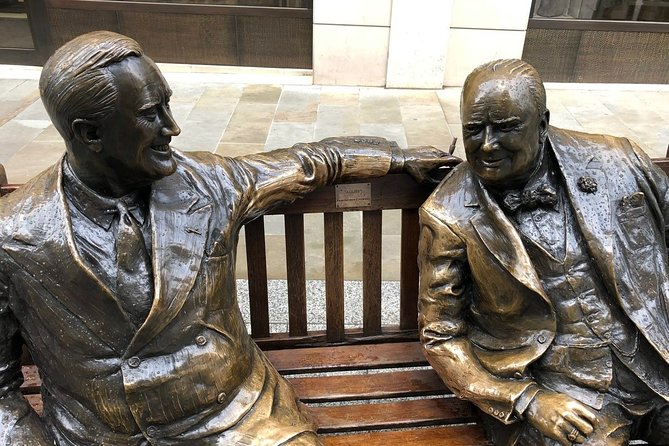
You also have a chance to pose with the Allies Statue of Churchill and Franklin Roosevelt. It is a useful photo stop, but the real value is the context Richard adds around it. The statue connects Churchill to the wartime alliance with the United States, while the nearby streets show the social world in which he lived.
I would pay close attention here. The Mayfair section carries much of the personal material that can get lost in a standard political sightseeing walk. It also sets up the rest of the tour, which keeps returning to Churchill’s tastes, routines, and relationships.
More Walking Tours in London
- Tour for Muggles The Ultimate Harry Potter Walking Tour in London
★ 5.0 · 4,684 reviews - London Jack The Ripper Guided Walking Tour
★ 5.0 · 3,131 reviews - Changing of the Guard Guided Walking Tour in London
★ 5.0 · 1,793 reviews
Savile Row and the clothes Churchill made famous
The stop on Savile Row lasts about ten minutes and focuses on bespoke clothing. This is the traditional London address for custom suits, shirts, and formal wear, and it fits Churchill’s well-dressed public image.
At Henry Poole and Co., you hear about the company’s long connection with the Churchill family. The tailor made suits for Churchill’s father, Randolph, and produced many garments for Winston over the years. One especially memorable detail concerns the pinstriped suit seen in the well-known photograph of Churchill holding a Tommy gun.
The shop also made Gary Oldman’s suits for the film Darkest Hour. That link gives the stop a modern point of contact, but the older family connection is more important. You are not simply looking at a famous street. You are seeing how clothing helped Churchill present himself in public.
This is a quick exterior-focused stop, so do not expect a full tailoring demonstration or a long visit inside. Its value comes from Richard’s storytelling and from seeing the setting for yourself.
St. James’s, practical luxury and Churchill’s daily tastes
The walk continues into St. James’s, another area associated with high-end shops and traditional gentlemen’s businesses. This section takes about 20 minutes, giving Richard time to point out places Churchill used or favored.
You see shops connected with his preferred aftershaves and even a cheese merchant he liked. These details may sound small beside Parliament and wartime decisions, but they help explain the man’s public style. Churchill was famously attached to familiar comforts, and his clothing, grooming, food, and drink all played a part in his daily routine.
The area also carries a James Bond connection, since it is associated with the sort of clothing and cologne used by the fictional spy. That comparison adds a little humor and helps you understand the polished world of St. James’s.
I like this part because it breaks up the formal political story. You are not only following a prime minister. You are following a man who had firm preferences and expected quality. The drawback is that shoppers with no interest in traditional tailoring or luxury goods may find some of the stops less compelling.
Spencer House and the Churchill family line
At Spencer House, Richard places Churchill’s family background within the wider aristocratic story of the Spencer-Churchill name. Churchill was born at Blenheim Palace in 1874, but his early years in London are tied to Spencer House and the smaller neighboring house where he grew up.
This short stop lasts about ten minutes. Richard discusses Churchill’s ancestors, his father Lord Randolph Churchill, and the family connection to the 7th Duke of Marlborough. He also explains the relationship between the Spencer-Churchill family and Diana Spencer, later Princess Diana.
That family link matters because Churchill’s story can seem to begin fully formed, as if the wartime leader appeared from nowhere. This stop shows the family setting, social position, and inherited expectations behind his early life.
It is a compact stop, not a house tour. You should think of it as a street-side history lesson with an important family map attached.
A completely different sort of day out in London:
- Stonehenge, Windsor Castle, and Bath from London
★ 4.5 · 18,662 reviews - London Big Bus Hop-On Hop-Off Tour with Optional River Cruise
★ 3.5 · 10,803 reviews - London Small Group Tour of Historical Pubs
★ 5.0 · 10,422 reviews - Stonehenge, Windsor Castle and Bath with Pub Lunch in Lacock
★ 4.5 · 7,402 reviews
Turnbull and Asser, the story behind the Siren Suit
Churchill’s clothes were not all formal suits. At Turnbull and Asser, the discussion shifts to the practical garment he used at Chartwell, his country home, and during the cold nights of the Second World War.
The company made his famous romper suit, also called the Siren Suit, to his own specifications. It was comfortable and practical, yet still unmistakably Churchill. The garment suited a man who might move from private domestic life to a public crisis without abandoning his personal style.
Turnbull and Asser also received the first Royal Warrant from Prince Charles. That detail places the shirt maker within the wider story of British royal and political dress.
This ten-minute stop is valuable because it links appearance with wartime conditions. Churchill’s clothing was not merely decoration. In this case, it answered a real need while becoming part of his familiar public image.
Churchill’s cigars at James J. Fox and Robert Lewis
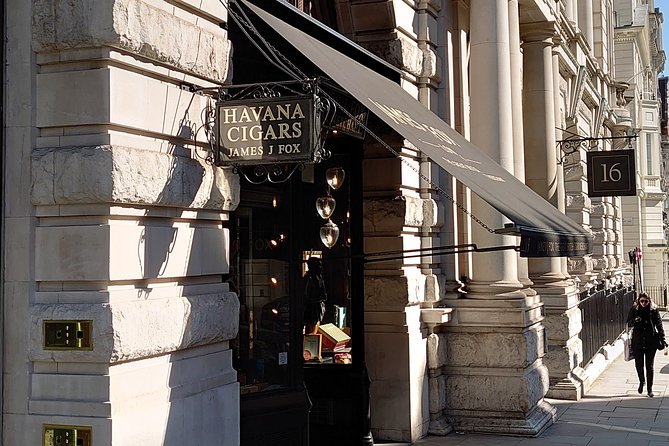
The cigar stop offers one of the tour’s most distinctive details. Churchill was often pictured with a cigar, and his favored brand was Romeo y Julieta. At James J. Fox and Robert Lewis, you visit the cigar merchant where he bought them.
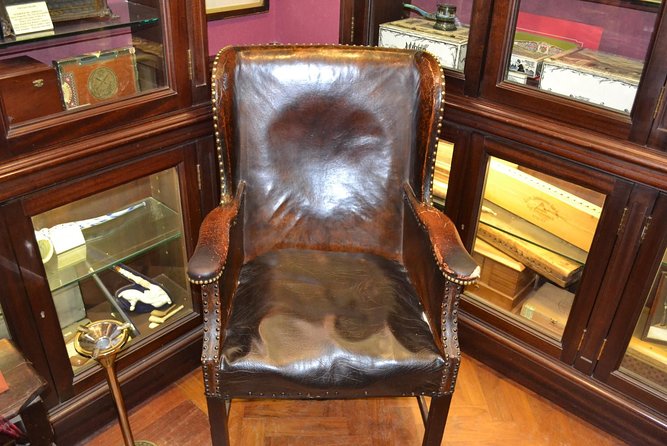
You can sit in Churchill’s chair and may have the chance to sample a cigar in the upstairs lounge. If that option matters to you, it is sensible to confirm the current arrangements when booking, since cigar sampling may depend on the shop’s rules and availability.
This stop lasts about ten minutes, but it brings together several parts of Churchill’s image: habit, comfort, ceremony, and public performance. The cigar was not an incidental prop. It became one of the visual marks by which people recognized him.
You do not need to smoke to enjoy the stop. The shop and the chair offer a direct connection to Churchill’s routine, while Richard can explain how the cigar fits into the larger story.
St. Margaret’s Church and Churchill’s marriage
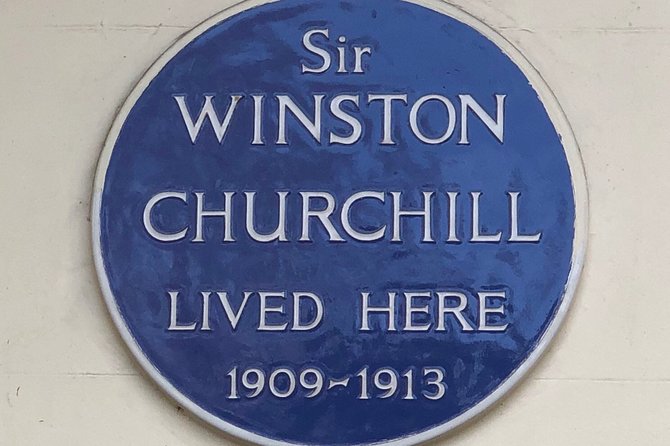
At St. Margaret’s Church on Parliament Square, the focus turns to Churchill’s marriage to Clementine Hozier. They married there on 12 September 1908.
The church is next to Westminster Abbey and is known as the parish church of the House of Commons. During Churchill’s life, it served as a place for celebrations, memorials, and services of thanksgiving connected with national life.
The visit lasts about ten minutes. It is a quiet change of mood after the shops and personal habits of Mayfair and St. James’s. Clementine was a major part of Churchill’s private and public life, so this stop helps prevent the tour from becoming a story about one man acting alone.
Because this is a guided walk rather than a dedicated church tour, the time here is limited. Still, the location gives useful context before the route moves fully into Churchill’s political career.
Parliament Square and the Churchill statue
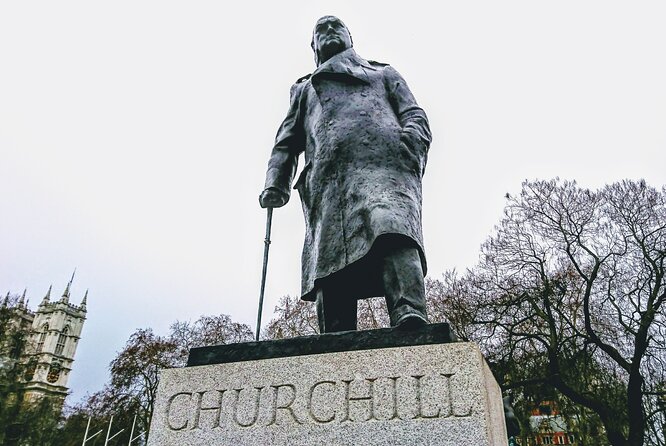
Across from the Houses of Parliament, Churchill’s statue faces the building he cared about most deeply. Richard pauses here for political discussion and anecdotes about Churchill’s long public career.
One useful detail is that Churchill turned down both a peerage and a dukedom. Accepting either would have stopped him, or his male descendants, from serving in the House of Commons. That decision says a great deal about how he viewed parliamentary politics and his own role within it.
This is one of the strongest points for anyone who wants more than a collection of Churchill stories. The statue is familiar, but the conversation around it gives you a clearer sense of his political choices and ambitions.
Allow yourself to pause and look across the square. The setting connects the personal addresses from earlier in the walk with the national decisions discussed later at Whitehall and Downing Street.
Whitehall and the Red Lion pub
The Whitehall stop takes about ten minutes and includes a look at the Red Lion pub. The pub has served every British prime minister a drink, including Churchill.
The point is not simply that Churchill liked alcohol. He also valued tradition, and the Red Lion connection shows how political life in London often overlaps with ordinary social customs. A pub near the government quarter can carry a story about prime ministers without being a formal monument.
This is a brief look rather than a pub meal or drinking session. If you want to stop for a drink, you would need to plan that separately, since the tour only includes the guided visit.
Downing Street and Churchill’s wartime office
At 10 Downing Street, you see the famous official residence of the prime minister. It has served that purpose since Robert Walpole, and Churchill entered through its door as prime minister in 1940.
The original door Churchill used is now preserved inside the Churchill War Rooms. That creates a direct link between the street outside and the underground rooms where he directed Britain’s part in the Second World War.
You should expect to view Downing Street from outside rather than enter the residence. The stop takes about ten minutes, but its importance is clear. This is where the public role discussed at Parliament Square becomes the wartime leadership associated with Churchill’s name.
Finishing at the Churchill War Rooms
The walk ends outside the Churchill War Rooms on King Charles Street. Richard gives you details about the once-secret bunker and the map rooms from which Churchill directed the British side of the war.
The guided walk does not include museum admission. That separation is worth noting when you compare prices. At $94.65 per person, you are paying for a small-group guide and a focused route through central London, not for a museum ticket.
I see the tour as a strong introduction to the War Rooms, especially if you have not yet decided how much time to spend inside. If you do want to visit, book through the museum’s website in advance. The tour ends at the entrance, so you can continue straight inside if you have a timed ticket.
Plan for the walk to take roughly two to three hours. The listed stops add up to a brisk route with many short pauses, so comfortable walking shoes and attention to the clock will help. The route is near public transportation, and service animals are allowed. Most people can take part, but the tour remains a walking experience with frequent movement between areas.
Is $94.65 good value?
The price makes the most sense if you care about Churchill and want a guide to connect many small places into one story. A larger general history walk might show you Parliament and Downing Street, but this route adds homes, tailors, a shirt maker, a cigar merchant, a church, and a pub tied to Churchill’s life.
The maximum of six people is the key value point. Richard can adjust the tour to the group, answer questions, and spend more time on the subjects that interest you. That personal format is especially useful when you want political context rather than a list of dates.
The value is lower if you only want major sights or if your main goal is a long museum visit. The War Rooms cost extra, and several stops last only ten minutes. You are paying for access to a carefully connected story, not for extended time at each address.
The tour is offered in English and comes with a mobile ticket. Group discounts may be available, which could improve the price for a larger booking, though the small-group cap remains six people.
What Richard brings to the walk
Richard is central to the experience. His style combines Churchill’s military work, political career, American connections, family life, clothing, cigars, and private routines. The walk is designed to bring out the man behind the public image rather than treat him as only a wartime statue.
A useful feature is his ability to adjust the route’s conversation to the group. If you want more political detail, family background, or personal anecdotes, the small format gives you room to ask.
The strongest praise centers on his warmth, pacing, and ability to make three hours feel short. He is also described as personable and willing to keep the conversation flowing. One unusual detail is that he declined a tip, which fits the impression of a guide focused on the experience rather than a hard sales pitch.
Who should book this Churchill walk?
I would recommend it most strongly to:
- People with a real interest in Churchill’s life and wartime leadership
- Visitors who prefer a small group to a large bus or crowded walking tour
- Anyone who enjoys personal details about clothing, food, cigars, family, and daily routines
- First-time visitors who want a clear introduction before visiting the Churchill War Rooms
- History fans who want to connect famous government landmarks with less obvious local places
You may want a different tour if you prefer a broad overview of London, dislike frequent stops in upscale shopping districts, or want museum admission included. The walk also moves at a steady pace, so it is best for people comfortable walking through central London for several hours.
Should you book Winston Churchill’s London?
Book this tour if you want Churchill’s story told through the actual streets of Mayfair, St. James’s, Westminster, Whitehall, and Downing Street. The six-person limit, Richard’s flexible storytelling, and the unusual stops at Henry Poole, Turnbull and Asser, and James J. Fox give it a personal angle that a standard sightseeing route cannot match.
The smartest plan is to reserve the walk and the Churchill War Rooms separately, with the museum arranged in advance. At $94.65, the tour is a fair buy for a serious Churchill fan who values a small group and a strong guide. It is less useful for someone seeking only a quick look at Parliament and Downing Street.
FAQ
How long does the Winston Churchill’s London walking tour last?
The tour lasts approximately two to three hours.
How many people can join the tour?
The group is limited to a maximum of six travelers.
Who guides the tour?
The named guide is Richard, who leads the walk in English.
Where does the tour start?
The meeting point is 1 to 3 Arlington Street, London SW1A 1RA.
Where does the tour finish?
The tour finishes outside the Churchill War Rooms on King Charles Street, London SW1A 2AQ.
Is admission to the Churchill War Rooms included?
No. Entry to the Churchill War Rooms is not included in the tour price.
Should I book the Churchill War Rooms in advance?
Yes. It is strongly recommended that you pre-book entry through the museum’s website if you intend to visit.
What is the cancellation policy?
You can cancel up to 24 hours before the experience start time for a full refund. Cancellations or changes made less than 24 hours before the start time are not accepted for a refund.
Recently added around London
- A Day at the Museum – Natural History Museum London★ 4.5 · 7 reviews
- WW2 London Blitz Private Tour★ 4.5 · 7 reviews
- Tower of London Private Guided Tour★ 3.0 · 8 reviews
- South Bank (London Bridge) Walking Tour & Enter The Tower of London★ 5.0 · 8 reviews
- The Roman City of St Albans Private Tour★ 5.0 · 8 reviews
- Windsor Castle & Hampton Court Palace, Private Tour Including entry pass★ 3.5 · 8 reviews
- London Self-Guided Murder Mystery Tour by Trafalgar Square★ 4.5 · 8 reviews
- Borough Market Food Tour | Private Brunch Experience in London★ 5.0 · 8 reviews
Walking Tours, compared.
Oxford University Walking Tour With University Alumni Guide
Read our review →
Tour for Muggles The Ultimate Harry Potter Walking Tour in London
Read our review →
Cambridge University Walking Tour by Alumni™ Kings College Option
Read our review →
Blackbeard to Banksy – The Ultimate Walking Tour of Bristol
Read our review →
Air Raid Shelter + St. Nicholas Market Walking Tour
Read our review →
Walking Tour of Bath with Blue Badge Tourist Guide
Read our review →
Changing of the Guard Guided Walking Tour in London
Read our review →Browse the lists this tour appears in