
Reviewed · BRITISH MUSEUM TOURS
Crash course in archaeology at the British Museum
The clever idea here is to use the British Museum as a map of human development. Rather than rush past dozens of cases, archaeologist Rossa links selected objects into one long story, from early hominids and stone tools to agriculture, cities, empires, and modern Britain. You may handle the museum far better after hearing how its objects fit together.
I like the chronological structure, which gives order to a museum that can feel overwhelming. I also like the attention to discovery: you learn not just what an object is, but who found it, how ancient writing was decoded, and why the object changed our understanding of the past.
The main drawback is the pace and length. Expect to stand for long stretches during talks, and do not book this if your goal is to see every famous object in the building. This is more depth than breadth, with breaks but a serious five-hour commitment.
Key points to know before booking
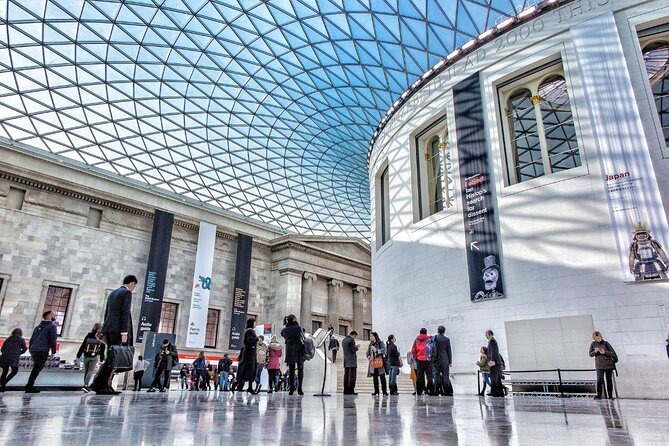
- A five-hour story of civilization: Follow a clear path from early human tools and hunter-gatherers to agriculture, cities, Rome, the Saxons, and the beginning of modern Britain.
- A real archaeologist at the front: Rossa brings professional archaeological training and uses the objects to explain how the past is pieced together.
- Famous pieces plus easy-to-miss objects: Expect the Rosetta Stone, Assyrian displays, Elgin Marbles, Lewis Chessmen, and objects that many people would walk past.
- Great for repeat British Museum visitors: The tour gives context and connections instead of trying to race through all the galleries.
- Morning timing helps: The 9:45 am start leaves your afternoon open for another London sight, though the tour itself takes most of the morning and early afternoon.
- Plan for standing: Ask for one of the museum’s small folding stools when you enter, and bring food for the break if you want to avoid limited, expensive museum options.
Why this British Museum tour feels different
The British Museum is a difficult place to tackle on your own. Its collection covers thousands of years and many parts of the world, while its galleries spread across several floors and wings. You can easily spend an hour admiring a case without knowing why its contents matter.
This tour solves that problem with a simple idea: tell the story of civilization in order. Rossa moves between galleries to show how one development leads to another. Early tools lead into settled life, settled life into villages, villages into towns, and towns into organized states and empires.
That approach suits me far more than a standard highlights tour that gives you a quick look at 20 objects and then moves on. You see fewer items, but you get a reason to remember them.
The guide’s style is a major part of the experience. Rossa is described as an engaging storyteller who mixes firm archaeological detail with humor and clear explanations. The best moments are likely to come when he explains the human drama around an object: who excavated it, what they were looking for, and how later research changed the first interpretation.
More British Museum visits:
- British Museum London Guided Tour Semi-Private 8ppl Max
★ 5.0 · 984 reviews - The British Museum London – Exclusive Guided Museum Tour
★ 5.0 · 555 reviews - British Museum Guided Tour
★ 4.0 · 470 reviews
Starting near Russell Square at 9:45 am
The meeting point is on Bernard Street near Russell Square, and the tour begins at 9:45 am. It finishes at the British Museum on Great Russell Street, so you should expect a short walk into the museum rather than meeting inside the galleries.
That start time is useful if you want to keep your afternoon free. You could plan lunch after the tour, visit another central London sight, or return to the British Museum on your own for rooms the tour did not cover.
Build in enough time to reach Russell Square without rushing. The experience has a maximum group size of 25, though some sessions may be smaller. A limited group matters in a museum, since you need to hear the guide and gather around objects without blocking other people.
The tour lasts about five and a half hours, while the central museum visit is described as roughly five hours. Treat it as a half-day commitment. Any entry queue or delay at the start can affect the schedule, although the guide may adjust the breaks to keep the full experience worthwhile.
From early tools to the first settled communities
The opening section sets the foundation with early hominids, stone tools, and the lives of hunter-gatherers. This is not simply a parade of old objects. The point is to show how archaeologists read small clues to reconstruct daily life and human development.
From there, the story moves toward agriculture, the first villages, and the growth of towns and cities. That change is one of the most important steps in human history, and the museum’s objects help make it visible.
You might hear about Jericho and the archaeological work used to understand early settlement. The value of this section is its scale. Instead of beginning with kings and monuments, the tour starts with ordinary human choices: making tools, storing food, building homes, and living in larger groups.
This section should appeal to anyone who wants archaeology explained as a method, not just a collection of dates. You learn to ask what an object can prove, what it cannot prove, and how archaeologists reach conclusions from incomplete evidence.
Egypt, hieroglyphs, and the Rosetta Stone
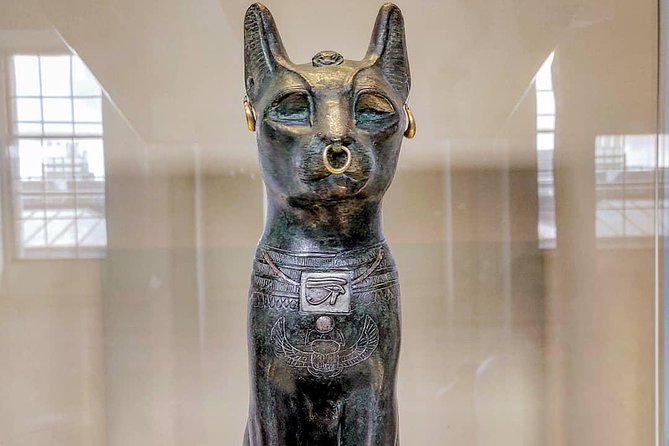
Ancient Egypt is one of the British Museum’s biggest draws, and this tour gives it a place within the larger story rather than treating it as an isolated subject.
The Rosetta Stone is an obvious highlight, but the useful part is the explanation of how Egyptian hieroglyphs were deciphered. The stone is important because the same text appears in different scripts, giving scholars a way to compare them.
That lesson connects neatly with the wider problem of reading the ancient world. You also learn about cuneiform and the work that allowed scholars to make sense of Mesopotamian records. Seeing the scripts as part of a process of investigation makes the displays much more memorable.
Expect references to Egyptian rulers such as Ramesses II, along with objects that show how power, religion, writing, and administration worked together. The tour does not appear to focus only on royal spectacle. Its larger purpose is to explain how evidence from Egypt helps us understand organized society.
More museums and galleries in London:
- Tower of London and Crown Jewels Exhibition Ticket
★ 4.5 · 6,677 reviews - Chelsea FC Stadium Tours and Museum
★ 5.0 · 1,908 reviews - Official tickets: Moco Modern & Contemporary Art Museum
★ 4.5 · 1,157 reviews - The Postal Museum Admission Ticket
★ 4.5 · 347 reviews
Mesopotamia and the rise of cities
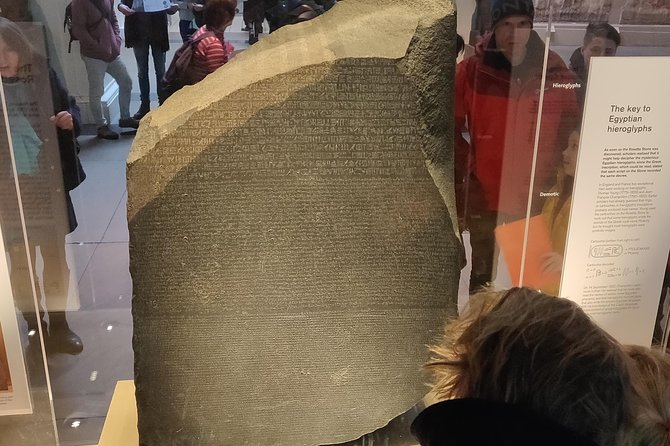
The Mesopotamian galleries are especially important for this tour because the British Museum played a major role in the study of the region. Here the story turns to writing, law, cities, rulers, and the systems needed to manage large populations.
Cuneiform is central. It began as a practical form of record keeping, and its surviving marks offer direct evidence of administration and everyday concerns. Rossa uses the subject to show how writing changed what people could remember, control, and pass on.
The Assyrian section is another major stop. Monumental reliefs can seem intimidating when you first see them, but a guide can point out details that reveal military power, court life, and the way rulers wanted to present themselves.
This is one of the strongest reasons to choose the tour over a casual visit. You may have walked through the Assyrian rooms before without realizing how much information sits in the carved details. The guide’s job is to slow you down and connect the artwork to the wider development of empire.
Greece, Rome, and objects that shaped later Europe
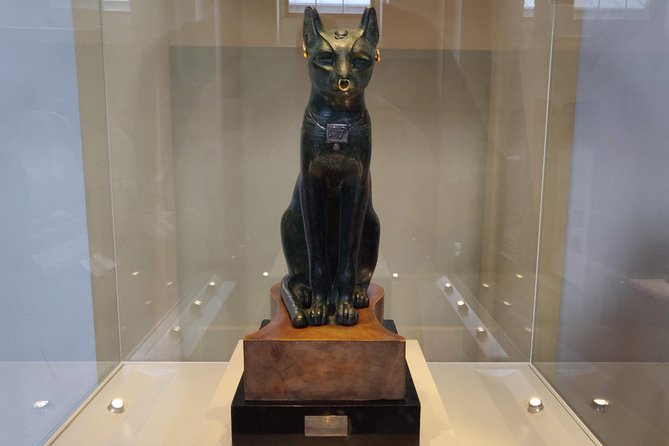
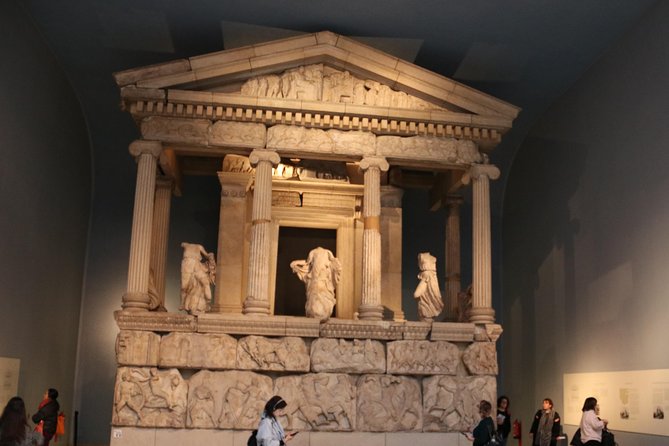
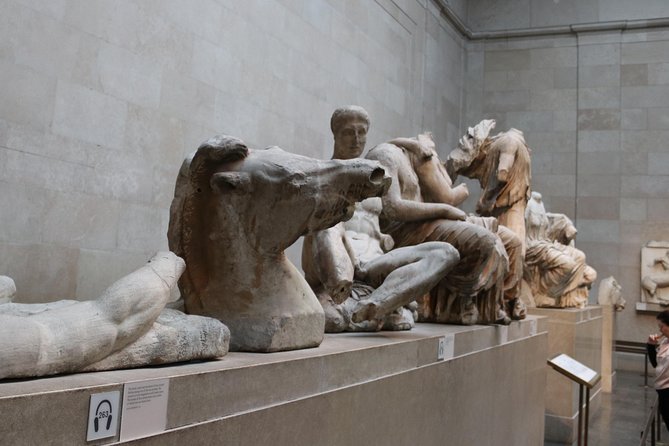
The Greek galleries bring a different kind of evidence. The Elgin Marbles, also called the Parthenon sculptures, are among the museum’s best-known holdings. They offer a chance to talk about Greek art, ancient buildings, museum collecting, and the complicated path by which objects reached London.
The tour also includes Rome, placing the Roman Empire within the longer story of cities, government, engineering, conquest, and cultural exchange. You should expect selected examples rather than a full survey of Roman Britain or the entire Roman collection.
This part works best if you enjoy connections between periods. Greek ideas influenced Rome, Roman power shaped later Europe, and objects in the museum can show both continuity and change. You are not simply being told that one civilization came after another. You are shown how beliefs, designs, writing systems, and political structures moved across time.
Vikings, Saxons, and the road to modern Britain
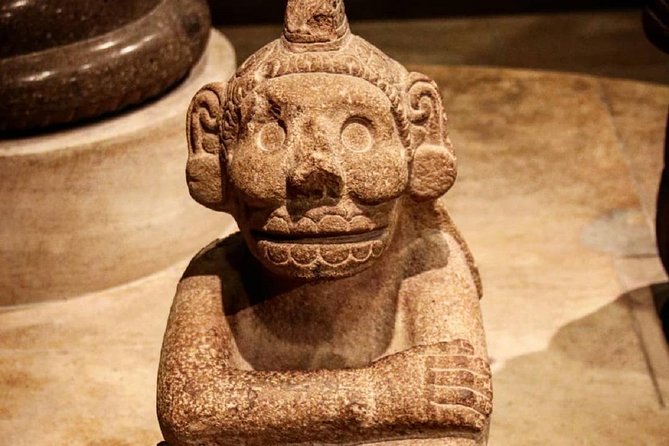
The later section brings the story closer to home. Viking material and the Lewis Chessmen add a welcome change of mood after the large stone monuments of Egypt, Greece, and Assyria.
The Lewis Chessmen are small, expressive, and easy to enjoy on their own. On this tour, they also help explain medieval society, trade, status, and the movement of objects across the North Atlantic.
The story continues through the Saxons and toward the beginning of modern Britain. Some accounts of the tour also include Victorian London and Paris, along with newer thinking about human origins and early communities.
This wide reach is impressive, but it also explains why the tour cannot linger everywhere. If you want a specialist session on Viking weapons, Roman sculpture, or medieval Britain alone, choose a narrower visit. If you want to see how the pieces fit into one long sequence, the broad route makes sense.
The archaeology behind the objects
One of the best features is the attention paid to the people who built the museum’s collection and expanded archaeological knowledge. The tour discusses archaeologists, explorers, and relic hunters, including figures connected with major excavations.
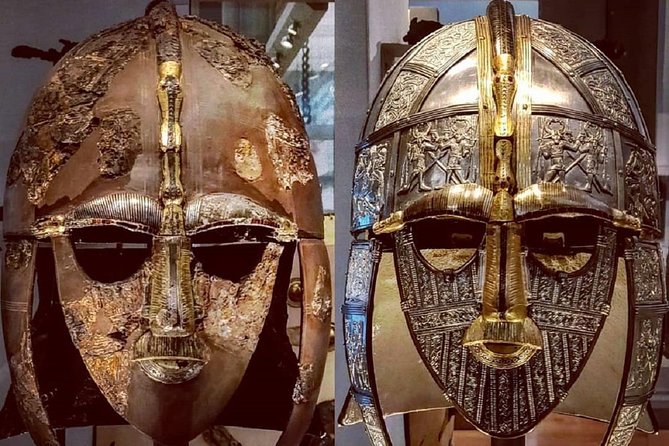
You may hear about Kathleen Kenyon and the Jericho excavations, as well as Mrs Pretty and the discovery associated with Sutton Hoo. These stories add a human layer to the museum. Excavation is not an abstract process when you understand who worked at a site, what they found, and how later evidence changed the picture.
There is also room for the difficult side of collecting. The tour’s focus on finders and explorers can prompt useful questions about ownership, excavation methods, and the movement of antiquities into European museums.
That context is valuable at the British Museum, where the objects are often more famous than the stories of their removal and display. The tour does not turn every stop into a debate, but it gives you more to consider than a label alone.
The five-hour pace, breaks, and comfort
Five hours inside a museum can be tiring, especially when much of the time is spent listening while standing. The tour includes a lunch break of about 40 minutes and a shorter break later, with time for refreshments and bathrooms.
Bring food if you want a simple, affordable lunch. The museum options are described as limited and expensive, so a packed snack can save both money and time.
Look for the museum’s small folding stools when you enter. They can make a major difference during longer explanations. If standing is difficult for you, this is not a minor detail. The tour is open to most people, and service animals are allowed, but the supplied information does not promise a seated format or a fully step-free route through every gallery.
Wear comfortable shoes and keep your belongings manageable. You will move between rooms and stop repeatedly, so comfort matters more here than dressing for a formal guided visit.
What the $83.34 price gets you
At $83.34 per person, this is not the cheapest way to enter the British Museum, especially since general museum admission is free. You are paying for the guide’s time, preparation, archaeological training, and the structure that turns a huge collection into a readable story.
The value depends on how you use museums. If you like wandering alone, reading labels, and choosing your own pace, spend your money elsewhere and explore the free galleries at leisure.
If the museum feels intimidating, the price can be reasonable. A five-hour private-style lecture in a small group gives you a framework you can use for the rest of your London visit. You may also leave with a list of subjects and objects worth studying later.
I would not choose this tour just to tick off the Rosetta Stone, Elgin Marbles, and Lewis Chessmen. You can see those objects without paying for a guide. Choose it for the explanations, the chronology, and the archaeological detective work around them.
Who should book this experience
This suits you best if you like ancient civilizations, archaeology, and long-form storytelling. It is particularly useful for a repeat British Museum visitor who has already seen the main galleries but wants stronger connections between them.
It can also work very well as a first visit if you accept that you will not see everything. The museum is far too large for one tour, and this experience deliberately chooses a route through selected rooms.
Families with older children may enjoy the stories, though the five-hour length requires patience. People who dislike standing, long talks, or a fixed route should think carefully before booking.
The tour is offered in English, and confirmation is provided at booking. It is near public transportation, with a maximum of 25 people. You can cancel for a full refund up to 24 hours before the start time. Cancellations or changes inside that window are not refunded or accepted, and a minimum group size is required.
Should you book the archaeology course?
Book it if you want the British Museum to make sense, not just to see it. Rossa’s chronological method, archaeological background, and storytelling give selected objects a purpose and a place in the human story.
Skip it if you want a fast highlights walk, a specialist Egypt-only visit, or plenty of time to explore alone. At more than five hours, it asks for stamina, and the long talks may tire your feet.
For the right person, this is a strong half-day choice: serious, entertaining, and far more useful than wandering through an enormous museum without a plan. Bring food, find a folding stool, and leave room in your afternoon to return to the galleries that caught your eye.
FAQ
Where does the tour start?
It starts at Russell Square, on Bernard Street, London WC1N 1LJ.
What time does the tour begin?
The start time is 9:45 am.
Where does the tour finish?
The tour ends at the British Museum on Great Russell Street, London WC1B 3DG.
How long does the experience last?
The experience lasts approximately five hours and 30 minutes. The museum portion is described as about five hours.
Is museum admission included?
The experience information lists the British Museum admission ticket as free. The tour includes a qualified archaeologist guide.
Who leads the tour?
The tour is led by Rossa, an archaeologist known for chronological storytelling and detailed explanations of the collection.
What language is the tour offered in?
The tour is offered in English.
Is lunch included?
No. Lunch is not included. A lunch break is provided, and bringing your own food may be useful because museum food options are limited and expensive.
Can I cancel for a full refund?
Yes. You can cancel at least 24 hours before the local start time for a full refund. Cancellations or changes made less than 24 hours before the start time are not accepted or refunded.
Recently added around London
- London’s Crown Secret: Self-Guided Royal Puzzle Quest★ 4.5 · 8 reviews
- Postcard London★ 5.0 · 8 reviews
- Private Tour: Downton Abbey London Locations by Taxi★ 5.0 · 8 reviews
- Windsor Castle, Stonehenge & Roman Baths Private Tour★ 4.5 · 8 reviews
- Cotswolds Private Driving Tour from London★ 5.0 · 8 reviews
- Skip-the-line London Westminster Abbey and City of Westminster Kid-Friendly Tour★ 5.0 · 8 reviews
- A Silent Disco Adventure in London★ 5.0 · 8 reviews
- London: National Gallery English Audio Tour with free fast Entry★ 3.0 · 8 reviews
British Museum Tours, compared.
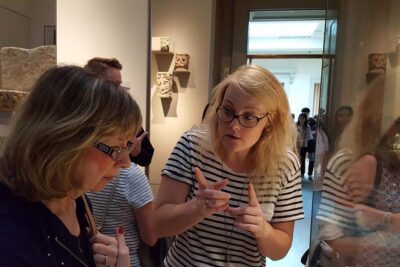
British Museum London Guided Tour Semi-Private 8ppl Max
Read our review →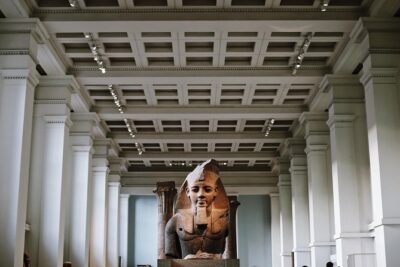
The British Museum London – Exclusive Guided Museum Tour
Read our review →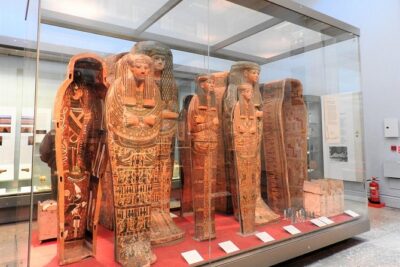
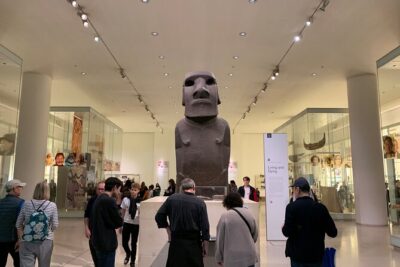
Private Guided Tour of the British Museum – Tickets Included
Read our review →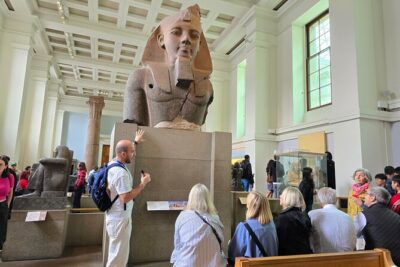
British Museum Guided Tour with Priority Timeslots(Small Group)
Read our review →
British Museum & National Gallery of London Semi-Private 8ppl Max
Read our review →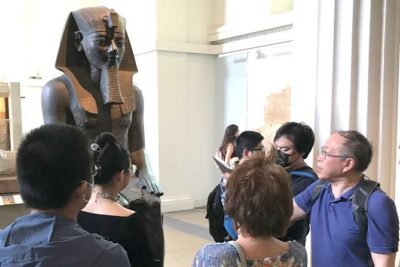
Explore Biblical Artifacts at the British Museum
Read our review →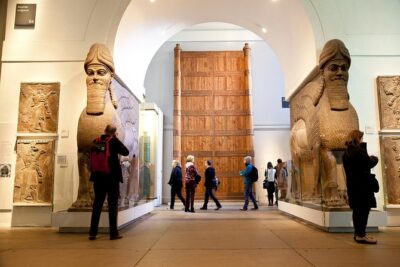
British Museum Highlights Private Tour in London including the Rosetta Stone
Read our review →Browse the lists this tour appears in