
Reviewed · OXFORD TOURS
Natural History Museum Tour – by Uncomfortable Oxford™
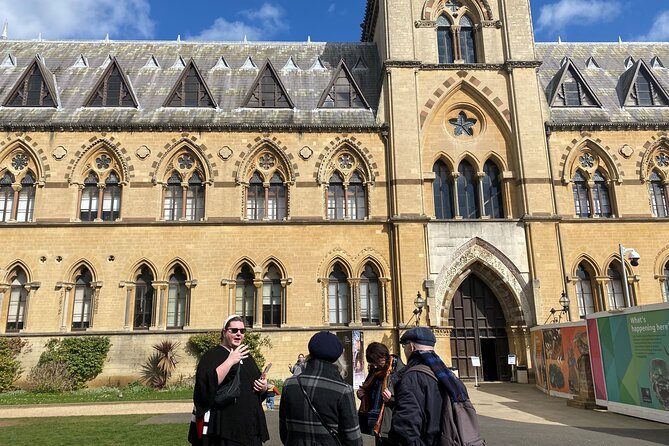
Oxford’s Natural History Museum is an unusual place to begin a tour about empire. Its glass-roofed galleries and scientific collections open a door onto the people, institutions, and colonial networks that helped shape Oxford. From there, this discussion-led walking tour connects museum displays with the city’s wider story, including the legacy of Cecil Rhodes and the Rhodes Scholarship.
I like two things right away: you get real museum access rather than only an outside view, and the guide invites you to think rather than simply listen. Guides including Ffion, Devika, and Cameron have been praised for making difficult subjects accessible and respectful. The main drawback is that this is not a light sightseeing stroll. Some topics are uncomfortable, and the tour works best if you are ready to take part.
Key points to know
- The Natural History Museum is the starting point: Meet at Parks Road, where the tour begins with a look at Oxford’s colonial connections.
- The Pitt Rivers Museum may be included: Previous tour routes have continued through both museums before moving into central Oxford.
- Discussion matters as much as information: You are encouraged to question, respond, and connect what you see to modern issues.
- Cecil Rhodes receives careful attention: The tour examines both the scholarship linked to his name and his racist views and legacy.
- The format is small and personal: The maximum group size is 15, and the experience is described as a private tour.
- Allow about 90 minutes: The tour ends back at the meeting point, making it easy to continue sightseeing afterward.
Why start at Oxford’s Natural History Museum?
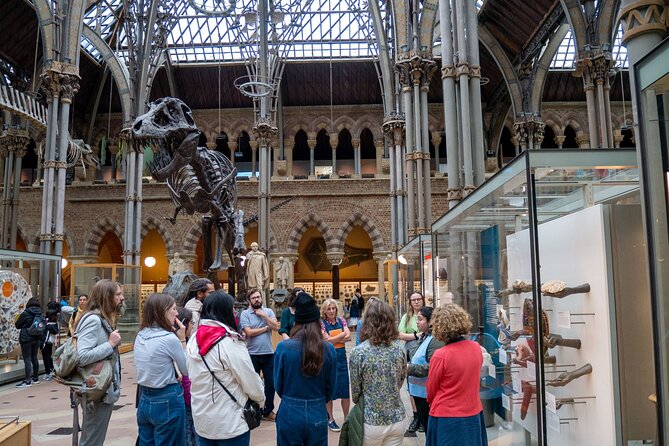
The Oxford University Museum of Natural History, at Parks Road, is more than a handsome university museum. For this tour, it provides the first setting for examining how science, collecting, empire, and institutional power became connected.
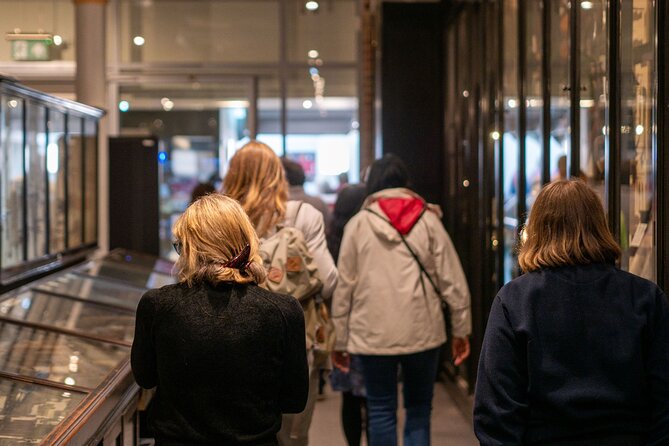
You begin here with a free admission ticket. The stated museum portion is about 15 minutes, but the wider experience continues through other museum spaces and Oxford locations. That distinction matters. You are not booking a standard museum highlights tour with a short city walk attached. The museum is the opening chapter of a wider conversation.
I like this starting point because it puts ideas next to objects. Instead of hearing about colonial collecting in the abstract, you can consider how museums acquired, classified, and displayed material from around the world. The tour asks you to look again at institutions that may first appear neutral or purely educational.
The Natural History Museum is also an easy meeting point. It is near public transportation, and you return there at the end. Still, check the exact meeting instructions carefully before setting out. One unfortunate mix-up resulted in a group and guide missing each other, despite both sides waiting and trying to make contact. Make sure the phone number on your booking works, keep your phone charged, and arrive at the front of the correct museum a little early.
More museums and galleries in Oxford:
- Ashmolean Museum Tour – by Uncomfortable Oxford™
★ 5.0 · 9 reviews - Tower of London and Crown Jewels Exhibition Ticket
★ 4.5 · 6,677 reviews - Chelsea FC Stadium Tours and Museum
★ 5.0 · 1,908 reviews
The museum route is only the beginning
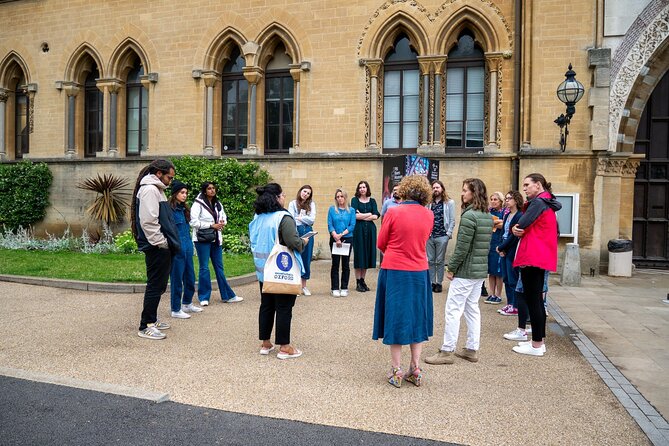
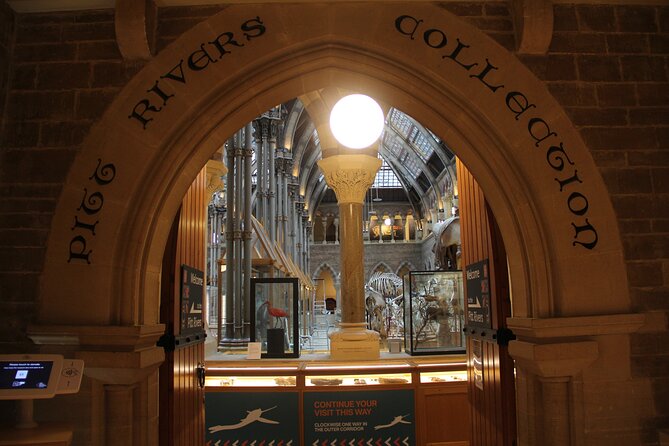
The tour’s description names the Natural History Museum as the first stop, while past routes have also included the Pitt Rivers Museum and other Oxford sites. That gives the experience a useful rhythm: begin with collections, then step outside and connect those objects and institutions to the city around you.
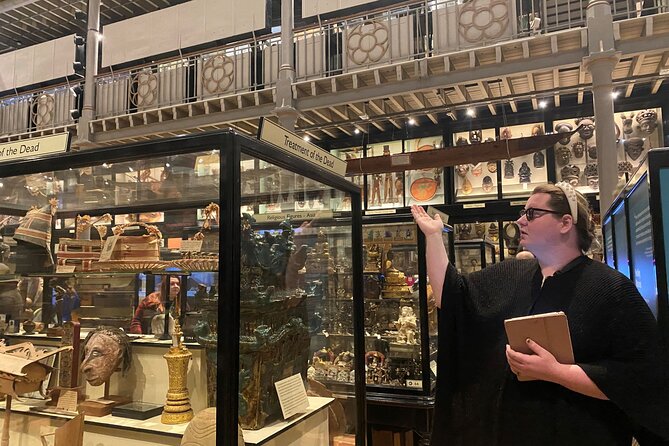
The Pitt Rivers Museum is especially suited to this kind of visit because its displays raise questions about how cultures have been grouped, labeled, and presented. The supplied information does not promise a fixed room-by-room route, so you should not expect a guaranteed list of objects or galleries. The precise path may depend on the guide, museum conditions, and the interests of the group.
That flexibility is a strength for some people. A guide can spend more time on a point that catches your attention instead of rushing through a rigid script. It also means you should book this for the approach, not for a checklist of famous exhibits.
After the museums, the route moves into Oxford itself. The city becomes part of the evidence. Colleges, scholarships, academic institutions, and public spaces can be read in a new way when you know how they connect to Britain’s imperial past.
How the discussion-based format works
This is not designed as a lecture in which you stand quietly while someone recites dates. The strongest part of the experience is the exchange between guide and group.
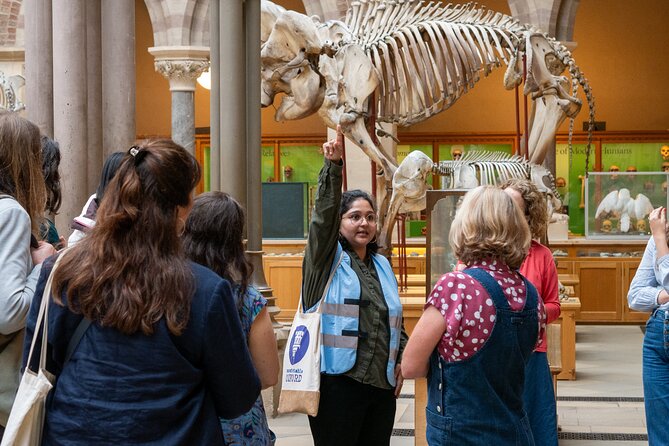
Guides such as Ffion have been praised for presenting a large amount of information in an accessible way. Devika was noted for keeping the group together and making sure everyone could contribute. Cameron was also singled out for encouraging interesting discussions. Those details give you a useful picture of the tone: informed, organized, and interactive.
You may be asked what you think about an object, a building, a scholarship, or a historical claim. You do not need specialist knowledge to join in. The aim is to examine familiar Oxford sights from more than one angle.
That format also helps prevent the tour from becoming preachy. The best accounts describe a respectful setting where difficult conversations could happen without turning into a performance of outrage. The guides appear to work hard to separate facts, interpretation, and group discussion.
Still, the tone can vary with the guide and the people in your group. If you prefer a quiet tour with uninterrupted narration, this may feel demanding. If you enjoy asking questions and weighing competing ideas, the format should suit you very well.
Cecil Rhodes and Oxford’s imperial connections
One of the tour’s most useful subjects is Cecil Rhodes and the scholarship that carries his name. Oxford is closely linked to the Rhodes Scholarship, which has supported students from many parts of the world. Yet Rhodes himself held racist views and played a major role in British colonial expansion in southern Africa.
A good tour does not force you to choose between a simple celebration and a simple rejection. It asks how an institution can produce opportunities while also carrying the name and legacy of a deeply problematic figure. That is a worthwhile question far beyond Oxford.
The tour examines concerns about the scholarship’s diversity and Rhodes’s historical attitudes toward people of color. This gives you a chance to consider how universities handle benefactors, memorials, names, and inherited wealth.
I particularly value this topic because it links Oxford’s past to present decisions. You are not only learning what happened. You are considering who gets remembered, who benefits from old institutions, and how a university responds when its public image conflicts with its history.
The discussion may challenge assumptions you bring with you. That is part of the point. You might arrive expecting a traditional look at colleges and famous scholars, then leave with a sharper sense of how empire influenced the city’s institutions.
More History Tours in Oxford:
- Oxford: 90 minute Architectural & Historical Highlights Tour
★ 5.0 · 23 reviews - Reformation Oxford Christian History Tour private groups
★ 5.0 · 14 reviews - London Small Group Tour of Historical Pubs
★ 5.0 · 10,422 reviews - Soho Music & Historic Pubs Tour
★ 5.0 · 1,993 reviews
What the 90-minute schedule feels like
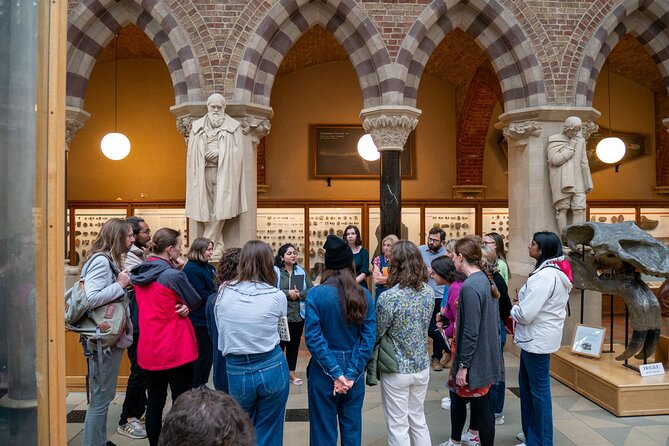
At approximately an hour and a half, the tour is long enough to develop an argument without taking up your entire day. You can fit it between other Oxford plans, though the discussion format may make the time pass quickly.
The published route begins at the Natural History Museum and ends back there. The stated first museum segment lasts about 15 minutes, with the rest of the experience extending to other museum areas and city sites. Since the exact time spent at each location is not specified, plan for the full 90 minutes rather than assuming a brief museum introduction.
The walking element is important. You will move between indoor collections and outdoor Oxford locations, so wear comfortable shoes and prepare for changing weather. The information provided does not give a detailed accessibility route, but it states that most people can participate and that service animals are allowed.
The maximum group size is 15. That is small enough for discussion to be possible, though not necessarily intimate in every instance. The experience is also presented as private and personalized, so confirm the booking format for your date if that distinction matters to you.
Is the $96.11 price good value?
At $96.11 per person, this is not the cheapest way to see Oxford. You are paying for more than entry into a museum, though. The price covers a guide-led interpretation of several museums and city locations, with a specialist focus on colonialism, empire, and Oxford’s institutional history.
The value depends on what you want from a tour. If your goal is simply to see the Natural History Museum, you can enter without paying an admission fee. If you want a list of famous buildings and quick facts, a conventional city walk may offer more sights for less money.
I think the price makes more sense for you if you want context and conversation. The guide’s role is to connect objects, buildings, and institutions in a way that would be difficult to recreate from a casual visit. A private or small-group format can also be worthwhile for families, university groups, educators, or friends who want to discuss the subject together.
Group discounts are available, which may improve the value for a larger party. The maximum is 15 people, so this is not intended for a huge coach group. Since the tour is offered in English, everyone in your party should be comfortable following a fairly substantial discussion in that language.
The practical meeting point at Parks Road
You meet at the Oxford University Museum of Natural History, Parks Road, Oxford OX1 3PW. The tour ends at the same place, which is handy if you want to continue visiting the museums or explore central Oxford afterward.
The museum is near public transportation. Even so, allow time to find the right entrance and identify your guide. A past no-show problem appears to have involved phone contact and uncertainty over the exact location. That does not establish a pattern, but it is a sensible reminder to check the confirmation details and keep communication open.
Confirmation is provided when you book. The ticket is mobile, so you can keep it on your phone rather than collecting paper documents. Save the confirmation before you arrive, especially if your mobile signal is unreliable.
Free cancellation is available up to 24 hours before the local start time for a full refund. Cancellations or changes made within 24 hours are not refunded or accepted, so do not leave the decision until the last minute.
Who will get the most from this Oxford tour?
I would choose this experience if you have already seen the postcard version of Oxford, or if you want something more serious than a standard college walk. It is a strong fit for people interested in museums, universities, social justice, colonialism, public memory, and the way institutions tell their own stories.
It can also work well for local residents. One person who had lived in Oxfordshire for more than two decades found that the Uncomfortable Oxford format revealed aspects of the city that ordinary sightseeing had left out. That is a useful clue: familiarity with Oxford will not make the tour redundant.
Families can participate, but consider the age and attention span of your children. One failed meeting involved three children, and the group eventually went inside after waiting. The tour itself covers serious material and relies on discussion, so it may suit older children and teenagers better than very young ones.
You should also choose it if you want a guide who will facilitate conversation rather than deliver a fixed opinion. The most praised qualities are clear explanations, sensitivity, and the ability to keep difficult exchanges constructive.
Who may prefer a different experience?
This is not the best pick for you if you want only cheerful sightseeing. The tour deals directly with racism, colonial power, museum collecting, and the moral questions attached to Oxford’s public institutions.
It may also disappoint if you expect a detailed architectural tour or a full museum orientation. The Natural History Museum is an entry point, not the entire subject. The route can include the Pitt Rivers Museum and other Oxford sites, but the supplied details do not promise every major college or landmark.
The tour’s discussion-based nature can be a benefit or a burden. You may be invited to share your views, and the pace can shift as the group considers a question. If you prefer a tightly timed script with no audience participation, pick a conventional sightseeing tour instead.
The small maximum group size helps, but a group of 15 can still include different comfort levels and interests. The experience is most rewarding when you are willing to listen as carefully as you speak.
What the strongest parts of the experience are
The subject matter receives the greatest praise. People especially value the chance to examine Oxford’s connection to the British Empire instead of seeing the city only through academic prestige and medieval charm.
The guides’ manner is just as important. Ffion, Devika, and Cameron are each associated with clear delivery and active discussion. The most useful quality is balance: the tour presents difficult evidence, then gives you room to think about it.
I also like the way the museums and streets support one another. A collection can feel distant when viewed alone. Once the guide connects it to Oxford’s colleges, benefactors, and scholarships, the story becomes more immediate.
The tour can change how you see familiar sights. A building may still be beautiful, but beauty no longer asks you to ignore the people and systems behind it. That is a more honest way to explore a university city.
Should you book Uncomfortable Oxford?
Book it if you want a thoughtful 90-minute experience that combines museum visits, walking, and open discussion. The focus on colonialism, Cecil Rhodes, the British Empire, and Oxford’s institutional choices gives you material that ordinary sightseeing tours often skip.
I would be cautious if your main goal is a low-cost museum visit, a fast list of landmarks, or an entirely lighthearted afternoon. At $96.11, the value lies in interpretation and conversation, not admission alone.
For the right audience, this is a worthwhile way to see Oxford with clearer eyes. Arrive at the Natural History Museum early, confirm the meeting details, keep your phone available, and come ready to discuss complicated subjects respectfully.
FAQ
Where does the Natural History Museum Tour begin?
The tour begins at the Oxford University Museum of Natural History, Parks Road, Oxford OX1 3PW, UK.
Where does the tour end?
The activity ends back at the meeting point at the Natural History Museum.
How long is the tour?
The tour lasts approximately 1 hour and 30 minutes.
Is admission to the Natural History Museum included?
The stated admission ticket for the Natural History Museum is free.
Does the tour include the Pitt Rivers Museum?
The route has included both the Natural History Museum and the Pitt Rivers Museum, along with other Oxford locations. The supplied details do not provide a guaranteed room-by-room route.
What subjects does the tour cover?
The tour examines colonialism, the British Empire, Oxford’s colonial connections, the Cecil Rhodes Scholarship, and Rhodes’s historical attitudes toward people of color.
Is the tour offered in English?
Yes. The experience is offered in English.
How large can the group be?
The maximum group size is 15 people. The experience is also described as a private, personalized tour.
Can I cancel for a full refund?
Yes. You can cancel at least 24 hours before the local start time for a full refund. Cancellations or changes made less than 24 hours before the start are not accepted or refunded.
Recently added around Oxford
- CS Lewis & Tolkien Tour with Magdalen Entry Public tour 13.45★ 5.0 · 8 reviews
- Oxford: to Cotswolds (Half Day)★ 5.0 · 8 reviews
- Oxford Private Guided Walking Tour★ 4.5 · 8 reviews
- Oxford Scenic Cycle Tour- 2 persons minimum summer season★ 5.0 · 8 reviews
- Ashmolean Museum Tour – by Uncomfortable Oxford™★ 5.0 · 9 reviews
- Oxford Walking Tour – Discover its University and Traditions★ 4.0 · 9 reviews
- Oxford PRIVATE Pub and City Evening Walking Tour★ 5.0 · 10 reviews
- Harry Potter in Oxford Tour Divinity School entry Private Tour★ 5.0 · 10 reviews
Oxford Tours, compared.

Oxford University Walking Tour With University Alumni Guide
Read our review →
1.5-hour Oxford City and University Walking Tour
Read our review →

City Sightseeing Oxford Hop-On Hop-Off Bus Tour
Read our review →
Harry Potter Walking Tour of Oxford Including New College
Read our review →
Oxford Sightseeing River Cruise Along The University Regatta Course
Read our review →
Afternoon Tea Sightseeing River Cruise in Oxford
Read our review →
Inspector Morse, Lewis and Endeavour Oxford Walking Tour
Read our review →Browse the lists this tour appears in