
Reviewed · MANCHESTER TOURS
Angel Meadow Manchester History Tour with Author Dean Kirby
Angel Meadow was once one of Victorian Britain’s worst slums, packed with about 30,000 people beside the River Irk. Author Dean Kirby brings that vanished district back into view, showing how Manchester’s Industrial Revolution rested on lives lived in crowded lodging houses and deep cellars.
I like the small group of no more than 15, which gives you room to ask questions. I also like the way the walk connects surviving sites, parkland, and modern apartment blocks instead of pretending the old slum remains untouched. The main drawback is that redevelopment has erased much of the original district, so this is partly a storytelling walk rather than a tour of preserved buildings.
Key points to know
- Dean Kirby leads the walk: The guide is the author of Angel Meadow: Victorian Britain’s Most Savage Slum and focuses on the area’s people as well as its buildings.
- A 90-minute historical walk: You follow streets near the River Irk, St. Michael’s Flags, and Angel Meadow Park.
- A hard story, not a postcard stroll: Expect poverty, overcrowding, disease, crime, and industrial exploitation alongside Manchester’s growth.
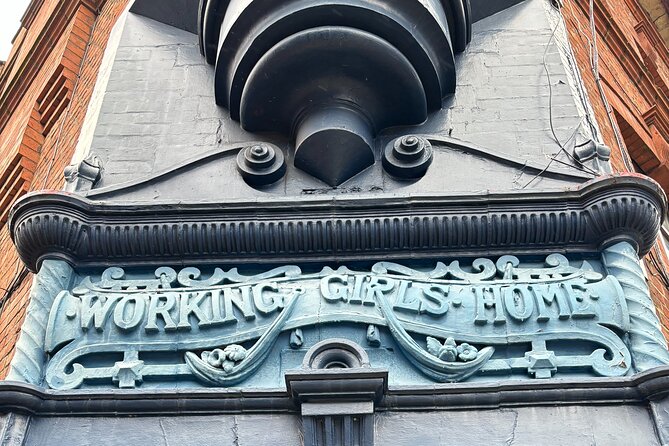
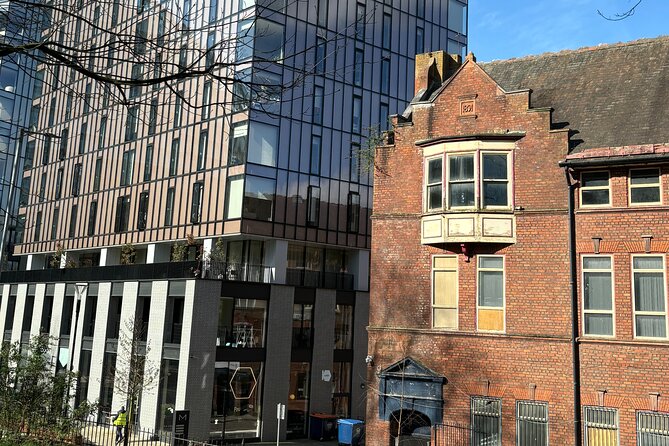
- Modern Manchester is part of the view: New apartments sit beside sites linked to ragged schools and the old working district.
- Good for questions and photographs: The small group leaves time for discussion, and Dean points out useful photo spots.
- Plan for steps and decent fitness: The walk is not recommended if you cannot manage steps.
Why Angel Meadow tells Manchester’s real story
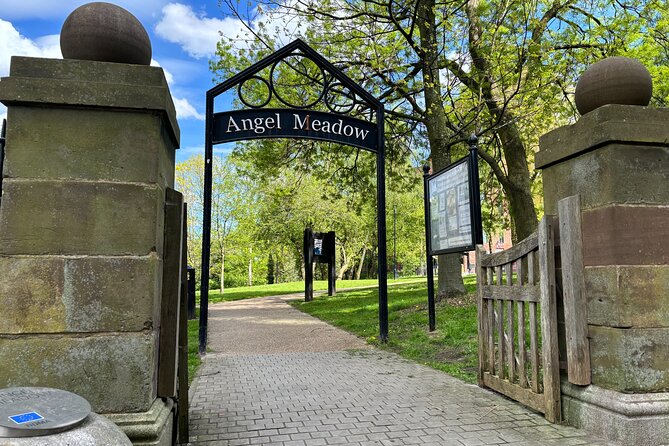
Manchester is often presented through grand cotton mills, canals, warehouses, and the success of the Industrial Revolution. Angel Meadow gives you the other half of that picture: the cramped streets and harsh living conditions that supported the city’s rise.
In the Victorian period, roughly 30,000 people lived in this district. Many families struggled to survive in overcrowded lodging houses and cellars close to the River Irk. The setting matters. This was not simply a poor neighborhood separated from industry. It sat in the shadow of one of the world’s first cotton mills, close to the work and wealth that drew people into Manchester.
Friedrich Engels called Angel Meadow Hell upon Earth. That phrase is severe, but it signals the tone of the tour. You are not getting a gentle architectural walk with a few dates added in. You are hearing about hunger, crowded housing, dangerous streets, and the ways poverty shaped daily life.
I find that focus useful because it keeps the tour from turning Manchester’s industrial past into a success story with the suffering edited out. Dean Kirby’s subject is the district and its people, not just the machinery and buildings that helped Manchester become a major city.
More History Tours in Manchester:
- Street Art: The Modern History of the Northern Quarter
★ 5.0 · 102 reviews - London Small Group Tour of Historical Pubs
★ 5.0 · 10,422 reviews - Soho Music & Historic Pubs Tour
★ 5.0 · 1,993 reviews
Meeting at Sadler’s Cat and walking toward St. Michael’s Flags
The walk begins at Sadler’s Cat on Hanover Street at 2:00 pm. The starting postcode is M60 0AB. From there, the route finishes at St. Michael’s Flags and Angel Meadow Park on Old Mount Street, postcode M4 4TF, with the park entrance listed more specifically as M4 4GU.
That one-way arrangement is worth noting. You are not simply looping back to the starting point, so plan your day around finishing in Angel Meadow. The end point is about a six-minute walk from Shudehill bus station, which makes it practical if you want to continue elsewhere in Manchester afterward.
If you prefer to return to where you began, Dean walks back with anyone who wants to make the return journey. That is a thoughtful touch, especially if you arrived without checking the route or are meeting someone back near Hanover Street.
The walk is offered in English and uses a mobile ticket. The group can include up to 15 people, small enough for a more personal feel without making the outing private or expensive. At $27.62 per person, the price is reasonable for a 90-minute specialist walk led by the author of a book on the subject.
Along the River Irk, where the hardship was concentrated
The River Irk is one of the most important parts of the route. It helps you understand why Angel Meadow developed as it did, and why life there was so difficult.
The district’s location beside the river put people close to mills, work, transport, and cheap housing. It also placed them in a cramped urban setting where poverty and poor sanitation were part of everyday life. Dean uses the river as a way to connect the physical setting with the social story.
You will hear about families trying to keep body and soul together in lodging houses and cellars. That detail gives the tour its human scale. Statistics about 30,000 people are striking, but crowded housing tells you more about what those numbers meant at street level.
The route also brings up the scuttlers, street gangs associated with the area. Their presence adds another layer to the story. Angel Meadow was not only a place of work and poverty. It was also a neighborhood where people competed for space, safety, and a chance to get by.
Do not expect the river walk to feel like a preserved Victorian setting. The point is to imagine the former streets while standing in a city that has changed greatly. That can be less visually dramatic than walking through a fully intact old quarter, but it also makes the guide’s explanation more important.
St. Michael’s Flags and the vanished streets
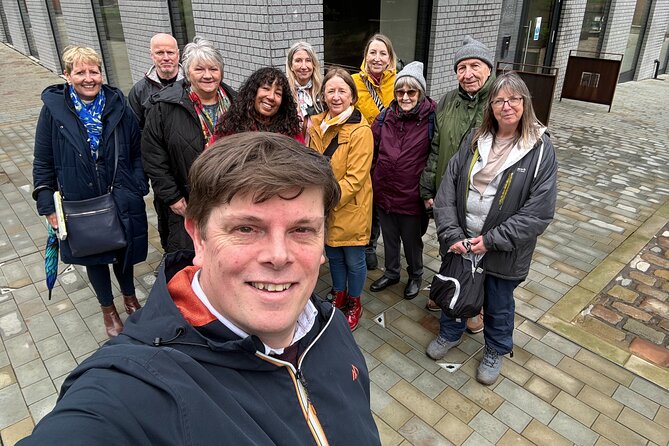
St. Michael’s Flags and the surrounding streets help anchor the story in a specific part of Manchester. Dean points out how modern buildings now sit near places connected with the old slum, including former ragged schools.
The contrast is one of the most useful parts of the walk. New apartments can make the area look clean and orderly, but the ground beneath them carries a different past. You are asked to look beyond the current buildings and understand how the district once worked.
Ragged schools were created to provide basic education for poor children. Their presence in the story shows that Angel Meadow was not only defined by crime or misery. It had families, children, institutions, and people trying to respond to very difficult conditions.
This is where Dean’s role as a writer helps. He does not simply point to a corner and give you a construction date. He paints a picture of streets, homes, work, and survival. The experience is strongest when the present-day view seems ordinary and his explanation reveals what has disappeared.
You will also get chances to stop for photographs. The best pictures may not be classic Manchester postcards. Instead, you can frame the mix of parkland, streets, modern apartment blocks, and the traces of an older working district.
A few more Manchester half days worth a look
- The Manchester City Stadium Tour
★ 5.0 · 4,176 reviews - Alcotraz Prison Cocktail Experience in Manchester
★ 5.0 · 1,216 reviews - LEGOLAND Discovery Centre Manchester
★ 4.0 · 1,049 reviews - Manchester Afternoon Walking Tour
★ 5.0 · 1,033 reviews
Angel Meadow Park and the final chapter of the walk
The walk ends beside Angel Meadow Park, a tree-lined open space that offers a calmer setting after the darker parts of the story. The park gives you room to pause and think about the change from crowded Victorian streets to modern public space.
For people who want to continue exploring, the finish is useful. You are already near the park entrance and within walking distance of Shudehill bus station. You can stay in the area after the tour rather than having to rush back to the start.
The park also highlights the biggest limitation of the experience. Much of the original Angel Meadow has been lost to redevelopment. You should come expecting a historical reconstruction guided by evidence and explanation, not a fully preserved slum district.
That is not a flaw in Dean’s tour so much as a fact about Manchester. The absence of old buildings becomes part of the lesson. You see how cities replace difficult parts of their past, and why a guided walk can help recover stories that bricks and streets no longer show.
Dean Kirby’s approach to a difficult subject
Dean Kirby is both a historian and the author of Angel Meadow: Victorian Britain’s Most Savage Slum. His connection to the subject gives the tour a clear focus and helps explain why the walk feels more like a guided narrative than a list of facts.
The strongest praise for his style centers on his ability to make the vanished district feel vivid while keeping the mood relaxed. He leaves space for questions, and the small group makes it easier to stop and ask about a detail you want to understand.
That matters on a subject this heavy. A walk about poverty and exploitation can become grim or overly academic. Dean’s friendly manner gives the experience a human tone without softening the facts.
You should still expect serious material. Angel Meadow’s story includes overcrowding, poverty, gangs, and the cost of industrial growth. If you prefer light sightseeing, this may feel intense. If you want to understand Manchester beyond its mills and shopping streets, the difficult subject is the reason to book.
What the $27.62 price gets you
At $27.62, you are paying for a focused 90-minute walk with a specialist guide rather than admission to a museum or a collection of preserved interiors. The value depends on how much you want context and interpretation.
I think the price works well for people who have already seen central Manchester and want a more unusual subject. Angel Meadow is often overlooked, and the walk gives you a reason to visit an area you might otherwise pass without understanding.
The small group adds value. A maximum of 15 people means you should have a fair chance to hear Dean and ask questions. It also creates a social setting for people who enjoy local history, industrial heritage, and urban change.
The price is less compelling if you only want dramatic old buildings or a short photo stop. Because redevelopment has changed the district, you will spend part of the walk imagining what stood there. The reward is the story, not a large number of surviving monuments.
Fitness, weather, and practical planning
The tour lasts about an hour and a half, but you should treat it as a proper walking activity. A moderate level of fitness is recommended, and the route is not suitable for anyone unable to negotiate steps.
Wear shoes you can walk in comfortably. The tour takes place outdoors and requires good weather. If poor weather causes cancellation, you can choose another date or receive a full refund.
The start time is 2:00 pm, giving you room to visit another Manchester attraction earlier in the day. Leave enough time to reach Sadler’s Cat on Hanover Street, and remember that the walk finishes elsewhere.
Service animals are allowed, and the start and finish points are near public transportation. Confirmation arrives when you book, and the mobile ticket is convenient for a city day when you may not want to carry extra paper.
Free cancellation is available up to 24 hours before the start time. Cancellations or changes made inside that window are not refunded or accepted. The tour also needs a minimum number of participants, so a cancellation for that reason comes with a choice of another date or experience, or a full refund.
Who will get the most from this Angel Meadow walk
I would choose this tour if you are interested in:
- Manchester’s Industrial Revolution beyond the success stories
- Working-class life and Victorian urban poverty
- Local history told through streets, parks, and surviving clues
- Small-group walks where you can ask questions
- Author-led tours with a clear subject and point of view
- Areas of a city that are easy to overlook
Families with older children may find the story useful if they are comfortable with serious themes. The material concerns poverty and harsh living conditions, so it may not suit very young children or anyone seeking a cheerful afternoon activity.
Photography fans should enjoy the changing views, but this is not mainly a photo tour. The pictures work best as a record of contrasts: trees and apartment blocks, modern streets and former schools, open parkland and the memory of crowded housing.
Should you book Angel Meadow with Dean Kirby?
Book it if you want Manchester explained from the ground up, with attention to the people who paid the price for industrial growth. Dean Kirby’s relaxed, question-friendly style and direct connection to the subject make the $27.62 fee fair, especially in a group capped at 15.
Skip it if you need a preserved historic quarter or dislike walking outdoors in uncertain weather. Much of Angel Meadow has been redeveloped, so you must be willing to use the present-day streets as clues to the past.
For a thoughtful 90-minute look at one of Manchester’s least comfortable stories, this is a strong choice. Meet at Sadler’s Cat, wear practical shoes, and leave time to continue from Angel Meadow Park once the walk ends.
FAQ
Where does the Angel Meadow tour begin?
The tour begins at Sadler’s Cat on Hanover Street in Manchester. The listed postcode is M60 0AB.
What time does the tour start?
The tour starts at 2:00 pm.
How long does the experience last?
The walking tour lasts approximately 1 hour and 30 minutes.
Where does the tour finish?
The tour finishes at St. Michael’s Flags and Angel Meadow Park on Old Mount Street. The park entrance postcode is M4 4GU.
Is the end point close to public transportation?
Yes. Angel Meadow Park is about a six-minute walk from Shudehill bus station.
Who leads the tour?
The tour is led by historian and author Dean Kirby, who wrote Angel Meadow: Victorian Britain’s Most Savage Slum.
How many people can join the tour?
The maximum group size is 15 people.
What language is the tour offered in?
The experience is offered in English.
Is the tour suitable for people with limited mobility?
You should have a moderate level of physical fitness. The tour is not recommended for anyone unable to negotiate steps.
Can I cancel for a refund?
Yes. You can cancel at least 24 hours before the start time for a full refund. Cancellations or changes made less than 24 hours before the start time are not refunded or accepted.
Recently added around Manchester
- Private Cocktail Making Class in Manchester★ 5.0 · 8 reviews
- MANCHESTER: Yorkshire Adventure – Sightseeing Day Trip Tour★ 5.0 · 9 reviews
- Manchester: Luggage Storage Central★ 5.0 · 10 reviews
- Musical MADchester Quest Experience in Manchester★ 4.0 · 14 reviews
- Murder Detective Self-Guided Tour in Manchester★ 3.5 · 16 reviews
- Manchester’s Music Scene with a Local Host, Private + Custom★ 4.0 · 17 reviews
- Inspirational guided walking tour of Media City & The Quays★ 5.0 · 23 reviews
- Italian Afternoon Tea Experience in Manchester★ 4.0 · 25 reviews
Manchester Tours, compared.


Alcotraz Prison Cocktail Experience in Manchester
Read our review →



Manchester iFLY Indoor Skydiving Experience – 2 Flights & Certificate
Read our review →Browse the lists this tour appears in