
Reviewed · WALKING TOURS
Booze, Brothels & The Bard: A Walking Tour of London’s Bawdy Borough
Southwark’s past is not tidy. It is a story of prisons, alehouses, prostitution, poverty, and theatre, all packed into the streets south of the Thames. This two-hour walk brings those rough-edged stories together, ending at Shakespeare’s Globe.
I like the route for two clear reasons: it links famous sights with less polished places such as Crossbones Graveyard and the old Marshalsea Prison, and it gives you a useful literary thread through Shakespeare, Dickens, and the people who lived around them. Guide Tom is singled out for his lively storytelling and careful explanations.
The trade-off is pace. With eleven stops in about two hours, many places are viewed from outside or as brief pauses. One stop takes about five minutes, so plan to return later if you want to enter a museum, study a church, or spend time at Borough Market.
Key points to know before you book
- Southwark’s darker past: Hear about the Marshalsea Prison, the Clink, Crossbones Graveyard, and the borough’s old sex trade.
- A literary finish: The walk ends at Shakespeare’s Globe, with connections to Shakespeare, Dickens, and other writers.
- Small group setting: The maximum group size is 15, giving you a better chance to hear the guide and ask questions.
- Eleven compact stops: The route covers a lot of ground, but most stops last about five minutes.
- A good value price: At $27.78 per person, the fee pays for a two-hour guided walk through one of London’s most layered districts.
- Easy start and finish: Begin on Borough High Street and finish at Shakespeare’s Globe, near public transport.
Southwark is London with the polite cover removed
Many first visits to London focus on royal palaces, grand museums, and tidy ceremonial streets. Southwark offers a different picture. For centuries, it sat just outside the City of London’s strict control, making it a place for activities that the City preferred to keep at arm’s length.
That meant theatres, bear-baiting venues, taverns, brothels, prisons, and cheap lodging houses. It also meant trade and ordinary work. The area connected the river crossings with the road south, so people, goods, performers, prisoners, and pilgrims all passed through.
I like that this tour does not treat the borough as just a Shakespeare backdrop. The famous playwright is part of the story, but not the whole story. You get a look at the people who lived around the theatres and markets, including the poor, the imprisoned, the outcast dead, and the workers who kept the beer trade moving.
The route is also useful for orientation. It begins near Borough High Street and finishes by the Globe, taking you through a compact part of London where medieval remains, Victorian buildings, modern food stalls, and reconstructed Tudor theatre sit close together.
More Walking Tours in London
- Tour for Muggles The Ultimate Harry Potter Walking Tour in London
★ 5.0 · 4,684 reviews - London Jack The Ripper Guided Walking Tour
★ 5.0 · 3,131 reviews - Changing of the Guard Guided Walking Tour in London
★ 5.0 · 1,793 reviews
Marshalsea Prison and the people London left behind
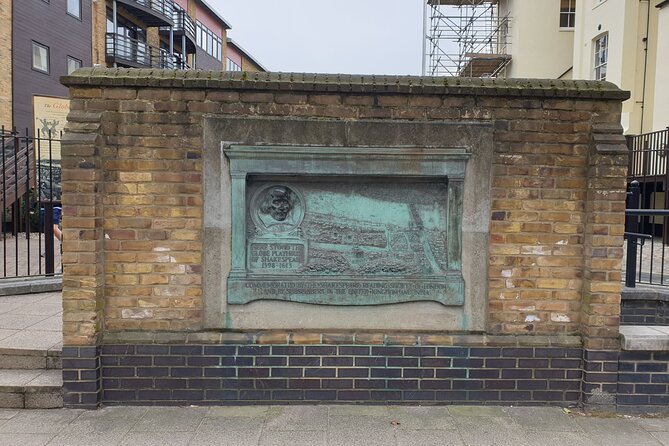
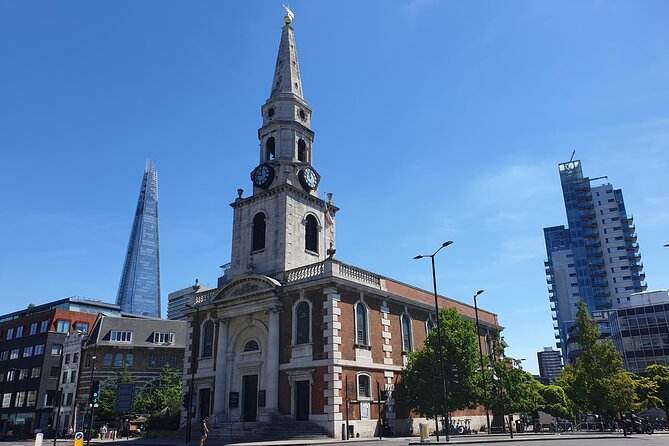
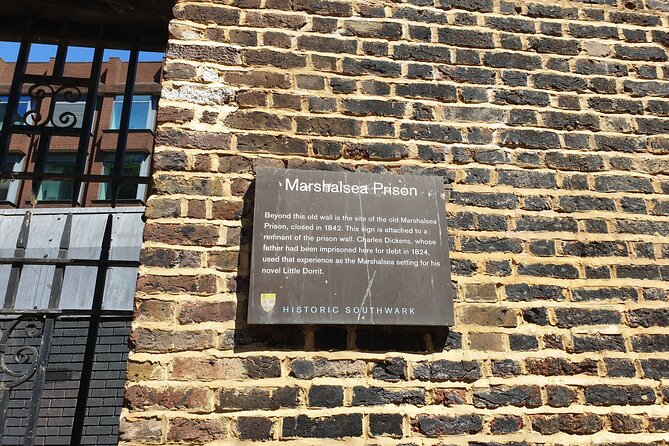
The first stop is St George the Martyr, where the only remaining part of Marshalsea Prison can be seen. The church itself is not the main point here. The surviving prison wall or structure connects you to a place once associated with debtors and confinement.
This is a strong opening because it sets the tone. Southwark’s story was not only about pleasure. It was also about debt, punishment, and lives narrowed by poverty. The brief stop gives your guide a chance to explain the prison’s place in the borough before the walk moves on.
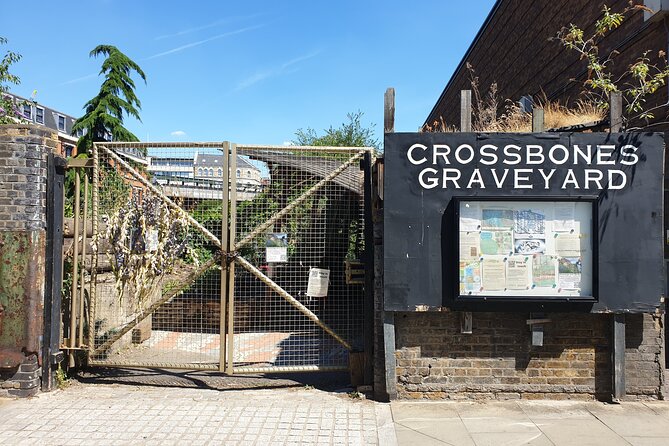
Next comes Crossbones Graveyard and Garden of Remembrance. It is described as the final resting place for thousands of Southwark’s outcast dead. The site carries a quieter mood than the prison stop, and it helps explain how the borough’s poorest people were treated after death.
You should expect a short visit rather than a long pause for reflection. Five minutes is enough to understand why the place matters, but not enough to explore every layer of its story. If this stop catches your interest, mark it for a separate return visit.
Beer, coaching inns, and the road through Southwark
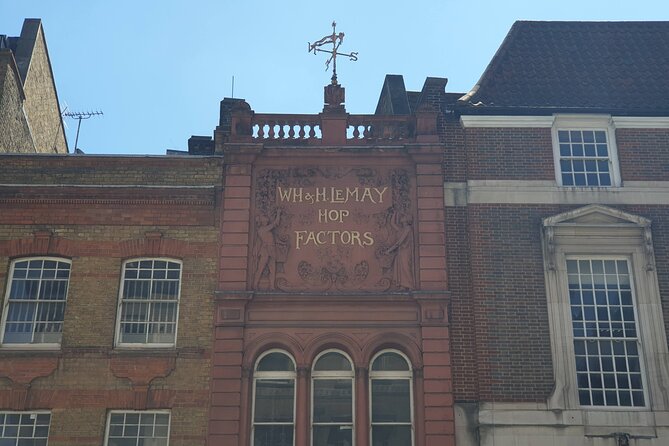
The Hop Exchange is a reminder of Southwark’s beer trade. Its connection to hops adds an economic side to the tour. Beer was not just a drink sold in taverns. It depended on farming, transport, storage, merchants, and buildings designed around that trade.
This is one of the route’s useful details because it moves beyond famous names. You see how work and commerce shaped the borough. The five-minute stop will not turn you into a specialist in brewing, but it gives the streets a clearer purpose.
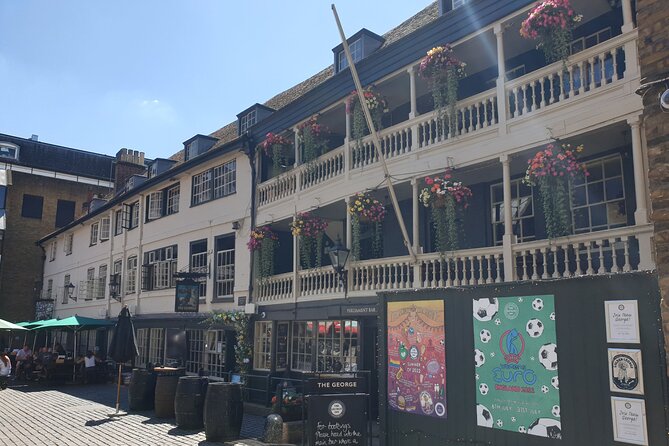
The George comes next. It is London’s last surviving galleried coaching inn, and it offers a strong visual link to the age of stagecoaches and road travel. The galleries are the feature to notice, since they show how an inn could serve people arriving by coach and needing rooms, food, drink, and a place to wait.
The George is also the kind of place that benefits from a guide’s explanation. On your own, you might see an attractive old building. With context, you can picture its role in a busy transport district. Again, the stop is short, so treat it as an introduction rather than a full architectural visit.
The operating theatre brings a harsher kind of history
The Old Operating Theatre Museum and Herb Garret is listed as Europe’s oldest surviving operating theatre. Even from a short stop, the name alone points to a very different part of London’s past.
This is where the route shifts from public punishment and commercial trade to medicine. The operating theatre and herb garret connect the area to earlier medical practice, when treatment was physical, public, and often frightening by modern standards.
The tour does not allow much time for an extended museum visit. The five-minute pause is best used to understand what the building is and why it belongs on this walk. If you want to see the interior displays, you will need to return separately and check admission arrangements, since the tour includes a walking guide rather than museum entry.
That distinction matters when you judge the price. The $27.78 fee is reasonable for a guided introduction to eleven sites, but you should not expect it to cover a full series of indoor visits.
A completely different sort of day out in London:
- Stonehenge, Windsor Castle, and Bath from London
★ 4.5 · 18,662 reviews - London Big Bus Hop-On Hop-Off Tour with Optional River Cruise
★ 3.5 · 10,803 reviews - London Small Group Tour of Historical Pubs
★ 5.0 · 10,422 reviews - Stonehenge, Windsor Castle and Bath with Pub Lunch in Lacock
★ 4.5 · 7,402 reviews
London Bridge and Southwark Cathedral
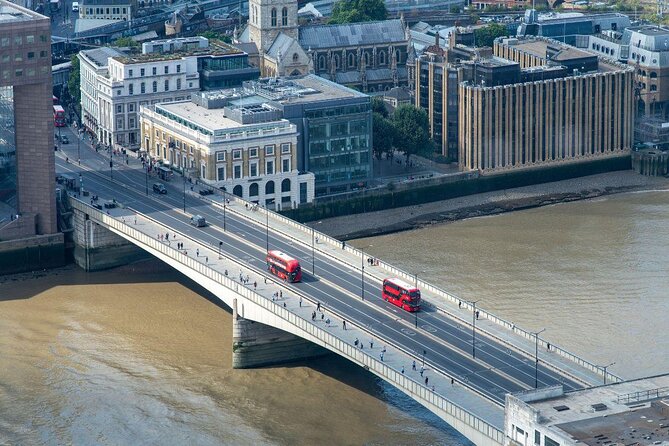
London Bridge is the route’s most instantly familiar landmark. The stop gives the guide a chance to explain the bridge’s importance as a crossing and as a gateway into Southwark.
The bridge is more than a photo point here. It helps you understand why this district developed as it did. A crossing brings movement, trade, travellers, entertainers, and people looking for lodging or work. The bridge also links the borough’s stories to the wider growth of London.
Southwark Cathedral provides a sharp contrast. It is London’s oldest surviving Gothic church, and its presence gives the walk a religious and architectural counterpoint to the theatres, prisons, and drinking places.
I like this pairing. In just a few minutes, you move from a famous piece of city infrastructure to a major medieval church. It shows how different forms of power occupied the same small area. The church represents long religious continuity, while the bridge represents movement and commerce.
As with the other stops, you should not expect a guided interior tour. The schedule gives you a useful outside introduction, then leaves you free to return at a slower pace.
Borough Market adds the everyday side of the story
Borough Market is described as a one-thousand-year-old food market. It is one of the route’s most practical stops because it still connects history with daily life.
The market helps explain why this part of London mattered for so long. Food arriving for sale requires roads, bridges, storage, sellers, and buyers. It also brings the historic theme down to street level. You are not only hearing about medieval and early modern Southwark. You are standing in a place that continues to serve a similar basic purpose: getting food to people.
The stop is short, so do not plan to shop or eat during the main walk. You can use the tour to get your bearings, then return after the tour ends or on another day. This is one of the clearest examples of the route’s basic limitation: it shows you many places, but it cannot give each one enough time for a full visit.
If you are choosing a starting point for further exploring after the walk, Borough Market is an easy option. The tour’s ending near the Globe also lets you continue along the river or visit nearby sights, subject to opening hours and separate admission.
Winchester Palace and the Clink
The remains of Winchester Palace reveal another side of medieval Southwark. This was once one of the most prestigious homes in medieval England. What remains is fragmentary, but that is part of the appeal. The ruins remind you that the borough was not only a place of cheap lodging and disorder. Important religious and political figures also had a presence here.
The guide’s role is especially valuable at ruins. Without context, a partial wall can be hard to read. A short explanation helps you picture the scale and status of the former palace, even though very little survives.
The Clink Prison Museum brings the walk back to confinement and punishment. The stop is at the site of the notorious Clink Prison, a name that entered the English language as a synonym for jail.
You get the historical setting during the walk, but the listed stop does not mean you receive a full museum visit. If you want the exhibits inside, set aside extra time and arrange that separately. This is a good example of how to use the tour: let the guide connect the places, then choose one or two that deserve a longer return visit.
Shakespeare’s Globe is a fitting final stop
The route ends at Shakespeare’s Globe Theatre, the reconstruction of Shakespeare’s original theatre. It is a natural finale, but the stop works best because the earlier walk has already placed the theatre in its neighborhood.
Shakespeare’s plays are often taught as literary works detached from ordinary life. Southwark helps put them back into a working district of taverns, markets, prisons, churches, and river traffic. The theatre was not floating in a cultural vacuum. It depended on audiences, performers, tradespeople, and the rough social world around it.
The Globe is a reconstruction, so you are not looking at the original building. Still, it gives the walk a visible ending and a chance to connect the borough’s social history with the playwright most closely tied to it.
You finish at 21 New Globe Walk, which is convenient if you want to continue exploring the riverfront. If you plan to attend a performance or take an interior tour, check that separately. The walking experience itself ends outside at the Globe.
Why the small group and guide matter
The group maximum is 15 people. That is not a private tour, but it is small enough to make a real difference on a London pavement. You are more likely to hear the guide clearly, keep together at crossings, and ask a question without shouting across a crowd.
Tom is the named guide praised for his punctuality, sympathetic manner, and colorful storytelling. His approach appears to suit this subject well. Southwark’s past has plenty of dates and building names, but the best moments come from linking those facts to the people who lived through them.
The walk is offered in English. You should be comfortable listening while walking and standing at each stop. Most people can participate, and the route is near public transport, making it a practical choice for a first day in the borough or a history-focused afternoon.
The timing is also worth noting. The experience lasts about two hours and is often booked around 35 days ahead. That advance demand suggests you should not leave it until the last minute if the schedule matters to you, particularly during a busy London visit.
Is $27.78 a fair price?
At $27.78 per person, I consider this good value if you want a guided overview rather than a series of full museum admissions. You receive two hours of local interpretation, a route through eleven important sites, and a small group capped at 15 people.
The price is less attractive if you expect to enter every museum and church. The included item is the walking guide. The stops at the Old Operating Theatre Museum and Herb Garret and the Clink Prison Museum are part of the route, but indoor admission is not listed as included.
Think of the tour as a well-organized first pass through Southwark. You get the connections that are hard to build alone, then decide where to spend more time. The most useful follow-up stops may be the Globe, Borough Market, the Old Operating Theatre, the Clink, or Southwark Cathedral, depending on your interests and opening times.
Free cancellation is available if you cancel at least 24 hours before the start time. Changes or cancellations inside that window are not refundable. The tour also requires a minimum number of participants, so if the provider cancels for that reason, you are offered another date or experience, or a full refund.
Who should book this Southwark walk?
I would choose this tour if you like urban history with a rough edge. It suits you especially well if Shakespeare interests you but you also want prisons, beer, medicine, markets, and the lives of people who rarely appear in grand national stories.
It is a good fit for first-time visitors who want a clear introduction to Southwark. It also works for repeat visitors who have seen London Bridge and the Globe but have not understood how the surrounding streets fit together.
You may want another kind of experience if you dislike quick stops, prefer long indoor visits, or need a slow pace. Eleven places in two hours is a lot. The guide gives you the story and the setting, but you must return on your own for detailed exploration.
Should you book it?
Book it if you want lively local history, strong storytelling, and a compact route through one of London’s most layered districts. The guide, especially Tom when available, is central to the experience, and the small group makes the walk more personal than a large city tour.
Skip it if your priority is spending an hour inside one museum or market. For most people, though, the $27.78 cost is a sensible way to understand Southwark before choosing which places deserve a longer visit. The route ends at the Globe, so you finish with one of London’s best-known cultural sights and a clear sense of the streets around it.
FAQ
How long does the walking tour last?
The tour lasts approximately two hours.
How much does the experience cost?
The listed price is $27.78 per person.
Where does the tour start?
The meeting point is on Borough High Street, London SE1 1JX, United Kingdom.
Where does the tour finish?
The walk ends at Shakespeare’s Globe, 21 New Globe Walk, London SE1 9DT, United Kingdom.
How many people can join the tour?
The maximum group size is 15 participants.
Is the tour offered in English?
Yes. The experience is offered in English.
What is included in the price?
A walking tour guide is included. The tour information does not list museum or attraction admission as included.
Can I cancel for a full refund?
Yes, if you cancel at least 24 hours before the experience start time. Cancellations made less than 24 hours before the start time are not refunded.
Recently added around London
- London’s Crown Secret: Self-Guided Royal Puzzle Quest★ 4.5 · 8 reviews
- Postcard London★ 5.0 · 8 reviews
- Private Tour: Downton Abbey London Locations by Taxi★ 5.0 · 8 reviews
- Windsor Castle, Stonehenge & Roman Baths Private Tour★ 4.5 · 8 reviews
- Cotswolds Private Driving Tour from London★ 5.0 · 8 reviews
- Skip-the-line London Westminster Abbey and City of Westminster Kid-Friendly Tour★ 5.0 · 8 reviews
- A Silent Disco Adventure in London★ 5.0 · 8 reviews
- Gangster Tour of Soho★ 4.5 · 8 reviews
Walking Tours, compared.
Oxford University Walking Tour With University Alumni Guide
Read our review →
Tour for Muggles The Ultimate Harry Potter Walking Tour in London
Read our review →
Cambridge University Walking Tour by Alumni™ Kings College Option
Read our review →
Blackbeard to Banksy – The Ultimate Walking Tour of Bristol
Read our review →
Air Raid Shelter + St. Nicholas Market Walking Tour
Read our review →
Walking Tour of Bath with Blue Badge Tourist Guide
Read our review →
Changing of the Guard Guided Walking Tour in London
Read our review →Browse the lists this tour appears in