

Reviewed · CHESTER TOURS
Fascinating Walking Tours Of Roman Chester With An Authentic Roman Soldier
Chester’s Roman past is not locked away in a distant museum. It sits under cafés, beside busy streets, and in the stonework of the city walls. This 90-minute walking tour brings those remains together with a guide dressed as a Roman soldier, turning scattered ruins into a clear picture of military life, work, pay, food, hygiene, and danger.
I like two things right away: the tour reaches places you could easily miss on your own, including Roman remains beneath a modern café, and the guides make time for questions rather than simply reciting dates. Guides such as Marcus, Julius, Gaius, Faustus, and Hippolyta have been praised for humor and strong storytelling.
The main consideration is that this is an outdoor walking tour, and Chester weather can be wet. One stop may involve a cellar, so wheelchair users may miss that small section, though an electric wheelchair user completed nearly all of the route.
Key points to know before booking

- A Roman soldier leads the walk: Guides appear in Roman military dress and may explain their custom-made kit, ranks, pay, and daily duties.
- Britain’s largest Roman amphitheater: You spend time at the country’s biggest surviving Roman amphitheater site.
- Look up and down: The route includes fortress walls over 5 meters high and Roman remains beneath a modern café.
- The Roman Gardens explain ancient engineering: Original pila stones and reconstructed mosaic flooring help show how a hypocaust heating system worked.
- Small groups keep questions practical: The maximum group size is 15, useful when you want to hear the guide or ask about an unusual detail.
- Good value at $16.64: For an hour and a half of guided interpretation in central Chester, the price is modest, especially if Roman archaeology is a main reason for your visit.
Roman Chester begins at the Town Hall
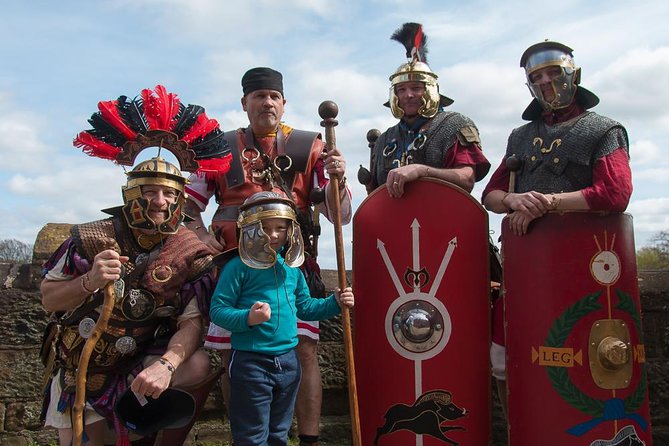
The walk starts outside Chester Town Hall on Northgate Street. That is a handy central meeting point, close to the historic core and easy to combine with a day of sightseeing in the city.
The first useful thing the guide does is give you a framework for Chester as a Roman military settlement. Instead of seeing isolated stones and fragments, you learn how a major fortress shaped the streets and how later buildings grew over the Roman remains.
The Roman soldier costume is more than a photo opportunity. Guides explain military ranks, pay, trade skills, living quarters, personal hygiene, and the risks faced by legionaries. Some have also brought reproduction and genuine artifacts for visitors to handle. That physical element helps, particularly for children, who may find a piece of equipment easier to remember than a long explanation.
Guides vary, but the names praised most often include Marcus, Julius, Gaius, Faustus, Tiberius, and Hippolyta. Their approaches differ slightly. Marcus is associated with an energetic presentation and explanations of his custom-made legionary kit. Julius and Gaius have been noted for mixing facts with humor, while Hippolyta brings attention to the role of women connected with the Roman army.
You should not book expecting a formal academic lecture. The tone is lively, conversational, and sometimes playful, with puns and jokes along the way. That works well for families and mixed-age groups, though one group found the experience less comfortable when fellow participants interrupted to show their own knowledge.
More Walking Tours in England:
- Oxford University Walking Tour With University Alumni Guide
★ 5.0 · 6,905 reviews - Tour for Muggles The Ultimate Harry Potter Walking Tour in London
★ 5.0 · 4,684 reviews - London Jack The Ripper Guided Walking Tour
★ 5.0 · 3,131 reviews
Chester Roman Amphitheater: stones, spectacle, and hard lives
The Roman Amphitheater is one of the tour’s main stops, with about 15 minutes set aside to explore it. It is described as Britain’s largest Roman amphitheater, and the guide uses the archaeological remains to discuss the people who fought and died there.
The value of this stop comes from interpretation. On your own, you might see a partial oval of masonry and move on. With the guide, you get a sense of the building’s purpose and the human cost of the spectacles held here. The emphasis is on evidence from the site rather than unsupported dramatic stories.
The remains do not present a complete, standing arena. This is an archaeological site integrated into the modern city, so you should expect open ruins rather than a restored Roman showpiece. That is part of the appeal, but it also means you need the guide’s explanation to picture the original structure.
The amphitheater is also important for orientation. It shows how Roman Chester was not just a settlement with a few military buildings. It was a major fortress town with public spaces, military facilities, baths, roads, and places for entertainment.
The guide may connect the arena to everyday military life, including the ranks and routines of legionaries. You can ask direct questions about pay, personal hygiene, training, or accommodation. Guides are used to handling questions from both first-time visitors and people with a serious interest in ancient history.
Chester’s fortress walls rise beside the modern city
Another section follows the foundations of the walls of what was once Britain’s biggest Roman fortress. Some sections of the original Roman wall survive to more than 5 meters high.
This is one of the best reasons to take the tour rather than simply follow a map. Roman masonry can disappear into later construction, and the relationship between surviving foundations and the present-day street plan is not always obvious. The guide points out what remains, explains its military role, and helps you notice portions of the wall you might otherwise pass without a thought.
The wall stop also shows how much of Chester’s Roman structure has been absorbed into the later city. You are not walking through a fully cleared ruin. You are moving through an old city where Roman stonework appears in unexpected places, sometimes beside shops and cafés.
Wear shoes suitable for a city walk, and keep your attention on the route as well as the buildings. The tour is not described as strenuous, and most participants can take part, but it involves moving between several sites rather than remaining in one controlled museum space.
The Roman Gardens and the hypocaust under your feet
At the Roman Gardens, the guide explains a reconstructed hypocaust system using original pila stones. These small supports held up a floor so hot air could pass beneath it, warming the room above.
The display also includes reconstruction of mosaic flooring found during excavations of Roman military baths. The guide explains what the stones and floor represented, how the system worked, and why these pieces were relocated to the gardens.
This is a useful stop because it moves the discussion beyond soldiers and battles. Roman military life depended on practical systems, including bathing, heating, building, and maintenance. A hypocaust may look like a pile of stone supports until someone explains the engineering behind it. Then you can see it as part of a working bath complex.
The original baths were apparently larger and grander than the famous baths at Bath, but much of the site was destroyed for a shopping development after only four days of basic archaeological investigation several decades ago. The tour uses this loss to show how much Roman Chester has been preserved, and how much has vanished before archaeologists could study it properly.
That story adds a useful note of caution. Chester is not a perfectly preserved Roman city. Some of its most important evidence survives only in fragments, records, or relocated objects. A good guide makes those gaps part of the lesson instead of pretending the picture is complete.
A few more England half days worth a look
- Admission Ticket to Sick To Death in Chester
★ 4.5 · 384 reviews - Fun, Flexible Treasure Hunt Around Chester with Cryptic Clues & Hidden Gems
★ 5.0 · 162 reviews - Medieval Walking Tour of Chester
★ 5.0 · 155 reviews - Chester Food Tour: Unique Food With Drinks & Sightseeing
★ 5.0 · 152 reviews
The surprise beneath a modern café
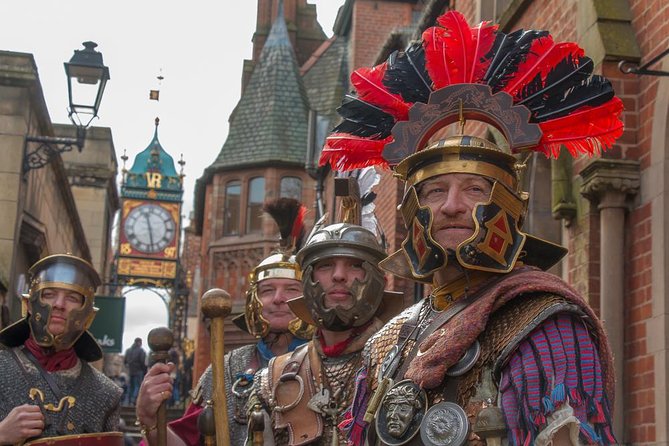
One of the most memorable parts of the walk is a visit to a basement containing Roman remains beneath a popular modern café. The specific café is not named in the supplied details, so you should treat this as a possible part of the route rather than a guaranteed attraction at every departure.
The discovery is valuable because it shows how archaeology works in real cities. Roman remains are not always displayed in grand ruins. They can sit below businesses and daily life, protected or revealed by later building work.
The tour also reaches the Principia columns under the café. The Principia was the headquarters building of a Roman fortress, making these columns especially useful for understanding the scale and organization of military Chester.
This stop may involve stairs or a cellar setting. An electric wheelchair user was able to take part in almost the entire walk but missed this one section. If step-free access is essential, contact the provider before booking rather than assuming every part of the route is accessible.
Why the Roman soldier format works
A costumed guide can easily become a gimmick. Here, the format has a practical purpose when the guide uses it to explain ordinary military life.
You may hear about a soldier’s wage, the trade he was taught, his rank, his sleeping arrangements, and the routines around hygiene. You also get a clearer sense that the Roman army was an organized workplace, not simply a mass of anonymous fighters.
The tour also makes room for less familiar parts of the Roman story. One guide discussed soldiers from regions that are now Ukraine and Russia, and the presence of women connected with the Roman military community. The detail about women sleeping outside the fortress walls adds complexity to a subject often presented as entirely male.
The costume helps children engage, but adults with a serious interest in ancient history can find plenty to think about too. One participant with a PhD in ancient history still found the tour entertaining and learned something new. That does not mean every guide will offer the same depth, but it suggests the format need not feel childish.
The best approach is to treat the soldier persona as a doorway into the evidence. Ask about the clothing, equipment, artifacts, and details that catch your attention. Guides such as Marcus and Hippolyta have been praised for responding well to questions.
A short walk with a high information value
The advertised length is about 1 hour and 30 minutes. That is enough time to see several important Roman sites without turning the outing into a full-day commitment.
At $16.64 per person, the value is strong if you want context rather than a quick look at ruins. You are paying for a guide who connects the amphitheater, walls, gardens, baths, heating system, and fortress headquarters. The price is less compelling if you prefer to wander alone or already know Chester’s Roman archaeology well.
Still, even independent sightseers may benefit. The tour identifies details hidden in the city, including sections of wall and the basement remains. Afterward, you can return to the places that interest you most with a better understanding of what you are seeing.
The group limit is 15 people. That is small enough to hear a guide more easily than in a large coach group, and it leaves some room for questions. The experience is offered in English and includes a mobile ticket.
The tour is booked, on average, about 14 days ahead. That does not guarantee every date will sell out, but it is a useful signal to reserve in advance if your Chester visit is fixed.
Weather, access, and the end of the walk
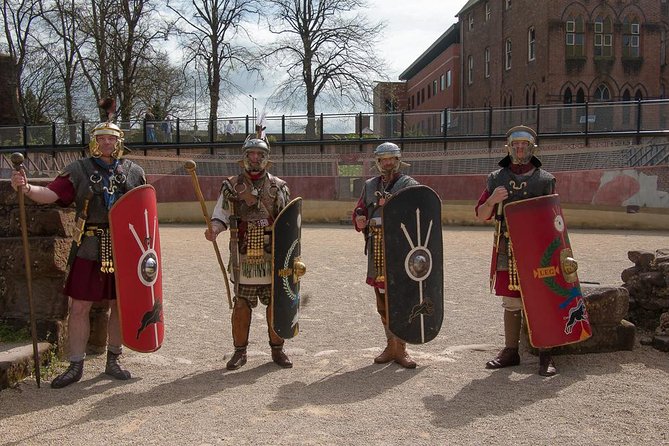
This experience requires good weather. If poor weather causes cancellation, you are offered another date or a full refund. For your own comfort, bring a waterproof layer even if the forecast looks friendly. Chester’s rain can make an outdoor history walk less enjoyable, and the tour does not shift into a fully indoor format.
The walk starts at the Town Hall on Northgate Street. The information also gives an end address at 23 Little St John Street, but it clearly says tours terminate at the Roman Amphitheater and the guide directs you to your next destination from there. Plan around the amphitheater as the practical end point.
Service animals are allowed, public transportation is nearby, and most people can participate. The cellar section is the main access concern mentioned in the available information. Since conditions can vary, ask the provider before booking if you need a completely step-free route.
Free cancellation is available up to 24 hours before the start time for a full refund. Changes or cancellations inside that 24-hour window are not accepted for a refund.
Who will enjoy this Roman Chester walk
I would choose this tour for a first visit to Chester, especially if Roman history is one of your main interests. It gives you a useful first map of the ancient fortress and points out details you might otherwise miss.
Families are a good fit. The costume, artifacts, jokes, and direct storytelling give children several ways into the subject. The guides have also been praised for keeping children engaged.
It suits adults who want facts without a dry lecture. The strongest guides combine solid historical information with humor and clear answers. The tour is also a good match for people who enjoy archaeology as a process, including the awkward truth that major remains can be lost beneath later development.
You may want something else if you dislike group tours, costumes, or a conversational presentation. One less positive experience was affected by group members interrupting, so the atmosphere can depend partly on the people who book your time slot.
Should you book Fascinating Walking Tours of Roman Chester?
Yes, if you want a short, affordable introduction to Roman Chester with more personality than a self-guided walk. The amphitheater, high Roman walls, Roman Gardens, hypocaust display, and possible café basement visit create a varied route, while guides such as Marcus, Julius, Gaius, and Hippolyta add human detail.
I would book it early if your schedule is firm, and I would choose a dry forecast when possible. If you have mobility concerns, ask about the cellar section before paying. For everyone else, $16.64 buys a focused 90-minute walk that explains not only what survives, but also what has been lost.
FAQ
How long does the Roman Chester walking tour last?
The tour lasts approximately 1 hour and 30 minutes.
How much does the experience cost?
The listed price is $16.64 per person.
Where does the tour begin?
The meeting point is Chester Town Hall, Northgate Street, Chester CH1 2HJ, UK.
Where does the tour finish?
Tours terminate at the Roman Amphitheater. The guide directs you to your next destination from there.
What language is the tour offered in?
The tour is offered in English.
What sites are included?
The route includes Chester Roman Amphitheater, sections of the Roman fortress walls, the Roman Gardens, and Roman archaeological remains. It may also include the Principia columns and a basement containing Roman remains beneath a modern café.
How many people can join the tour?
The maximum group size is 15 people.
Can I cancel for a full refund?
Yes. You can cancel at least 24 hours before the experience start time for a full refund. Cancellations or changes made less than 24 hours before the start time are not accepted for a refund.
Recently added around England
- Brighton to Heathrow Airport private taxi transfers★ 5.0 · 8 reviews
- London’s Crown Secret: Self-Guided Royal Puzzle Quest★ 4.5 · 8 reviews
- The Condensed Canterbury Tour★ 5.0 · 8 reviews
- Postcard London★ 5.0 · 8 reviews
- Private Tour: Downton Abbey London Locations by Taxi★ 5.0 · 8 reviews
- Windsor Castle, Stonehenge & Roman Baths Private Tour★ 4.5 · 8 reviews
- CS Lewis & Tolkien Tour with Magdalen Entry Public tour 13.45★ 5.0 · 8 reviews
- Cotswolds Private Driving Tour from London★ 5.0 · 8 reviews
Chester Tours, compared.


Fun, Flexible Treasure Hunt Around Chester with Cryptic Clues & Hidden Gems
Read our review →

Chester Food Tour: Unique Food With Drinks & Sightseeing
Read our review →
City Sightseeing Chester Hop-On Hop-Off Bus Tour
Read our review →
North Wales Adventure – Sightseeing Day Trip Tour
Read our review →

Browse the lists this tour appears in