
Reviewed · WALKING TOURS
London Soho District Guided Walking Tour Semi-Private 12ppl Max
Soho is where London’s polished West End gives way to music lore, political change, old pubs, street markets, and Chinatown food. This 2.5-hour walking tour connects those threads well, taking you from Piccadilly Circus to places tied to Jimi Hendrix, the Beatles, Queen, women’s suffrage, Karl Marx, and the growth of Soho’s LGBT community.
I like the 12-person maximum, which gives a guide room to answer questions instead of speaking to a moving crowd. I also like the flexible guiding style. Laurence adapted the route when only one couple showed up, while Becky, Nathan, Sheldon, and Anthony are each praised for making the district’s past clear and entertaining. The main drawback is simple: you must be comfortable walking, and the tour does not suit wheelchair users or anyone with limited mobility.
Key things to know before booking
- Music history is a major theme: See places linked with Jimi Hendrix, Beatlemania, and the recording of Bohemian Rhapsody.
- The route covers more than nightlife: Golden Square brings in women’s suffrage, Broad Street introduces early epidemiology, and Greek Street connects with Karl Marx.
- The group stays small: Semi-private means no more than 12 people, with private morning and afternoon options available.
- The route ends in Chinatown: You finish near Chinese restaurants, shops, and food stops, with dumplings mentioned as part of the experience.
- You walk rain or shine: Comfortable shoes, water, and an umbrella matter more than fancy clothes.
- The price is reasonable for a small group: At $62.54 per person, the value depends on how much you want context and local direction rather than simple sightseeing.
Why Soho makes a better walking subject than a standard London tour
Many first-time London tours lean heavily on palaces, wartime landmarks, and royal stories. This walk takes another route. Soho is compact, but its streets hold stories about music, protest, migration, theater, publishing, politics, food, and changing ideas about identity.
That mix is the real appeal. You are not only looking at buildings. You are asking why this small part of central London attracted artists, musicians, political figures, theater crowds, immigrant communities, and people seeking a freer social life.
The tour starts at the Criterion Theatre, beside Piccadilly Circus, and ends in Chinatown. That gives you a useful west-to-east progression through Soho’s main streets and squares. The route is made up of short stops, usually about 10 minutes each, but the total experience lasts about two and a half hours because the guide connects those stops with stories as you walk.
I would choose this tour if you want London to feel like a lived-in city rather than a list of famous monuments. You will not go inside a long string of attractions, and admission to the London Palladium is not included. The point is the street-level setting and the guide’s explanation.
More Walking Tours in London
- Tour for Muggles The Ultimate Harry Potter Walking Tour in London
★ 5.0 · 4,684 reviews - London Jack The Ripper Guided Walking Tour
★ 5.0 · 3,131 reviews - Changing of the Guard Guided Walking Tour in London
★ 5.0 · 1,793 reviews
Piccadilly Circus and the start at the Criterion Theatre
Meet outside the Criterion Theatre at 218 to 223 Piccadilly. This is a central location near public transportation, but Piccadilly Circus can be hectic, so give yourself extra time to find the correct meeting spot.
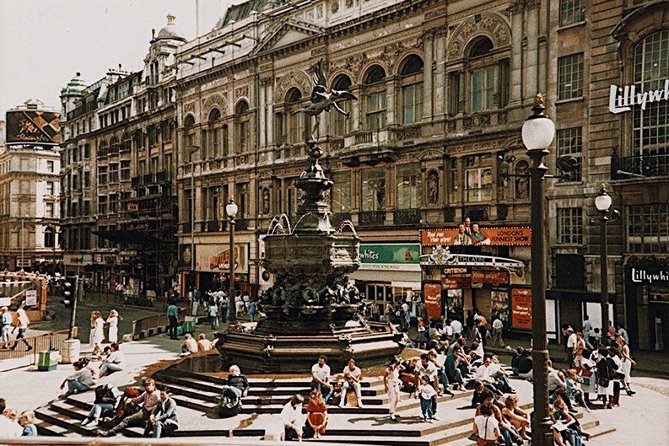
The circus is one of London’s best-known road intersections, surrounded by bright advertisements and busy pedestrian routes. It was built in 1819 to connect Regent Street with Piccadilly. That detail helps frame the neighborhood: Soho grew beside major commercial and theater routes, not in isolation.
You will also see the Shaftesbury Memorial Fountain, commonly called the statue of Eros. It was built in 1892 and 1893 to honor the philanthropic work of Anthony Ashley Cooper, the seventh Earl of Shaftesbury. His work included replacing child labor with school education, giving the monument a social reform story beneath its familiar public-square setting.
This opening section is short, but it sets up the tour’s wider pattern. London’s grand public spaces often have less obvious stories underneath them, and the guide’s job is to bring those stories forward.
Golden Square, politics, and Soho’s changing identity
Golden Square is one of the most useful stops for understanding Soho’s political past. Originally called Goldring Square, it is thought to have been laid out according to plans by Sir Christopher Wren in the 1670s.
In the late 17th and early 18th centuries, it became a political and ambassadorial district. The square also provides a setting for learning about the women’s suffrage movement. That combination gives you more than architectural background. It shows how a place can shift from elite political territory to a public space connected with social change.
The guide also discusses when the LGBT community began calling Soho home. This is an important part of the walk because Soho’s identity is not frozen in one era. The neighborhood’s cultural story keeps changing, and the tour treats that change as central rather than as a side note.
I especially like this section for visitors who have already seen London’s royal landmarks. Golden Square offers a different way to read the city, through public debate, social movements, and the communities that shaped the area.
Carnaby Street and the London Palladium
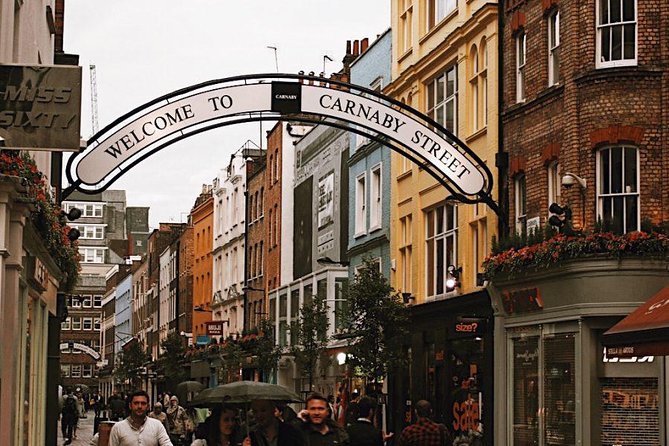
From Golden Square, the route continues toward Carnaby Street, a pedestrianized shopping street near Oxford Street and Regent Street. Today it is lined with more than 100 British heritage labels, international retailers, independent boutiques, and one-off concepts.
The value of this stop is not only shopping. Carnaby Street helps show how Soho and its neighboring streets have been linked with fashion and youth culture. If you want time to shop, keep your expectations in check. A 10-minute stop is enough to see the area and hear its story, but not enough for serious browsing.
The London Palladium is close by. Built in 1910 to compete with the London Hippodrome and London Coliseum, the theater retains many original features. It has its own telephone system and a revolving stage, details that make the building more interesting than a quick exterior glance might suggest.
Admission to the Palladium is not included, and the tour is not presented as an interior theater visit. You should think of this as an architectural and cultural stop from the street. Increased security at many attractions also means some sites on the route may not be entered.
A completely different sort of day out in London:
- Stonehenge, Windsor Castle, and Bath from London
★ 4.5 · 18,662 reviews - London Big Bus Hop-On Hop-Off Tour with Optional River Cruise
★ 3.5 · 10,803 reviews - London Small Group Tour of Historical Pubs
★ 5.0 · 10,422 reviews - Stonehenge, Windsor Castle and Bath with Pub Lunch in Lacock
★ 4.5 · 7,402 reviews
Blue Posts and the everyday side of Soho
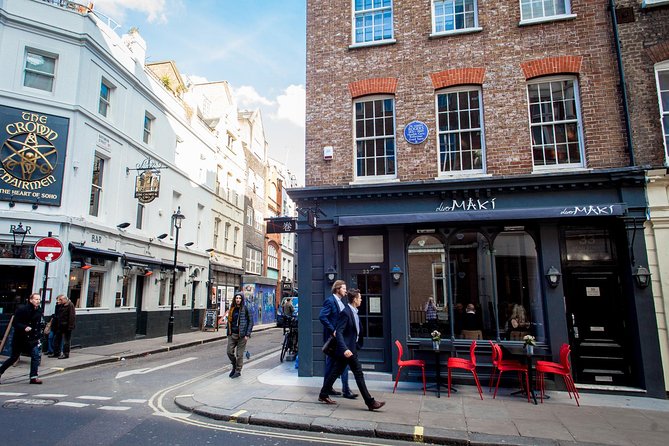
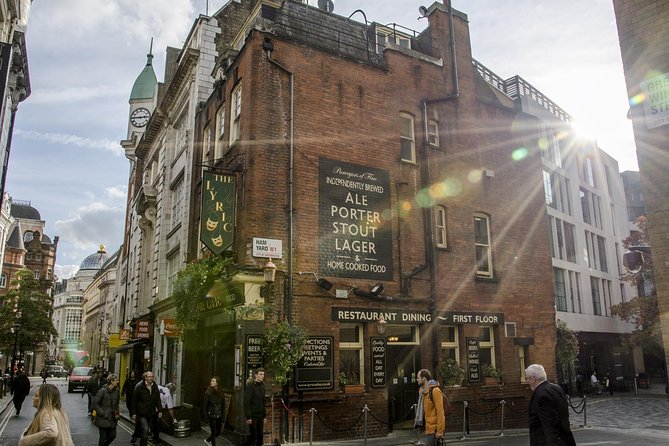
The Blue Posts offers a pause from large public spaces and famous names. This traditional English pub has been revamped but keeps the high ceilings and large windows it has had for roughly 275 years.
It is known for independently brewed cask ales, craft beers, and ciders. The tour does not include drinks, so you should not assume this is a tasting stop. Instead, it gives you a glimpse of the pub tradition that helped shape Soho’s social life.
This kind of stop matters because the neighborhood is not only made of landmarks. Pubs, markets, restaurants, and ordinary meeting places explain how people use the district day after day. A guide can point out details you would likely pass without knowing their age or role.
Berwick Street Market and a working Soho street
Berwick Street Market dates to 1778, making it one of London’s oldest markets. It sits in the center of Soho and is known for fruit and vegetable stalls as well as street food.
This is one of the places where I would pay attention to the difference between seeing and tasting. The market gives you the chance to look at the stalls and understand the street’s commercial role, but the tour price does not list food as an included feature.
Market stops are also useful for orientation. After hearing about politicians, musicians, and theaters, you see a more practical side of Soho. People come here to buy food, eat, meet, and move through the neighborhood. If the market is busy, stay close to the guide and keep bags light.
The route does not allow large bags or suitcases, a sensible rule in tight streets and crowded public areas. Bring only what you need for two and a half hours.
Soho Square, from fashionable address to public garden
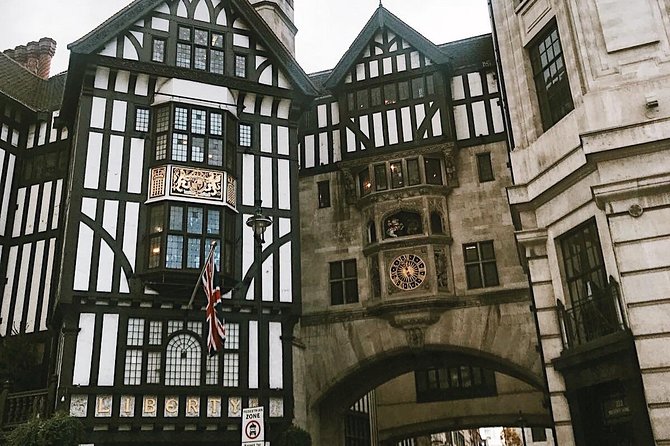
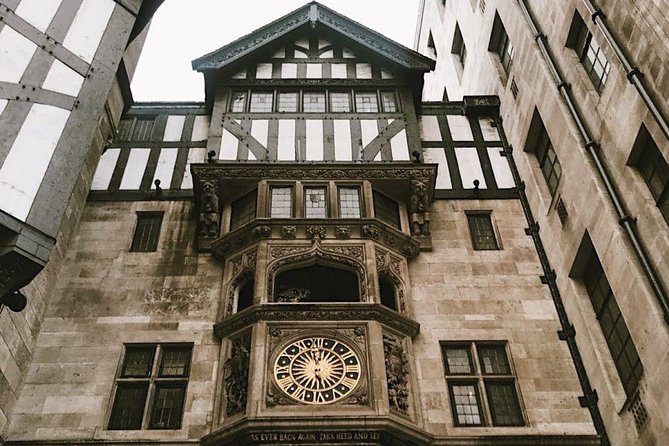
Soho Square dates to around 1681. In its early years, it was one of London’s most fashionable places to live. Today it is a garden square just behind Oxford Street, with a traditional layout and a central mock-Tudor building.
This is a quieter stop than Piccadilly Circus or Carnaby Street. The square gives you a chance to see how Soho’s built form has changed while its basic street pattern remains. It also makes a good visual break before the final walk toward Chinatown.
The tour’s short-stop format works well here. You get enough explanation to place the square in the story of Soho without spending too much time on one garden. If you prefer long pauses for photographs, though, the fixed route may feel brisk.
Music landmarks from Hendrix to Queen
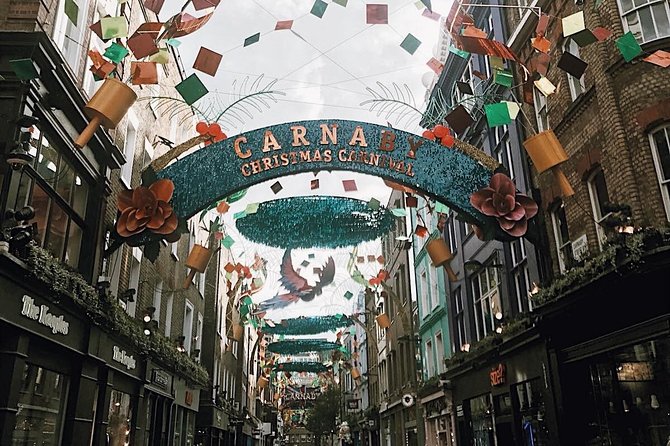
Music is one of the tour’s strongest themes. Along the way, you learn where Jimi Hendrix first performed in London, where Beatlemania began, and where songs such as Bohemian Rhapsody were recorded.
These references give the streets a useful soundtrack. Soho is not just a place where music happened in a vague sense. The guide points you toward locations tied to specific moments in London’s music culture.
I would book this tour especially for someone who likes music but does not want a dedicated museum visit. You get location, context, and movement through the actual streets. The tradeoff is that the experience depends heavily on the guide’s storytelling. There are no listed performances or audio components, so expect spoken history rather than a concert-style attraction.
The strongest guides appear to be those who make these stories personal and easy to follow. Anthony is described as witty, while Sheldon is praised for sharing small details that are hard to find without local knowledge. Nathan is noted for making the district’s past fascinating, and Laurence is singled out for adapting the route to a couple’s interests.
Greek Street, Broad Street, and the ideas behind the streets
The walk also moves beyond entertainment. On Greek Street, the guide discusses philosopher Karl Marx. On Broad Street, you learn about the earliest study of epidemiology.
These stops add intellectual weight without turning the tour into a lecture. They show that Soho’s importance comes from ideas as much as from nightlife. A compact area can connect philosophy, public health, protest, theater, music, and migration.
This is where a small group helps. With no more than 12 people, you have a better chance of hearing the explanation in narrow streets and asking a follow-up question. The tour is offered in English, so you should be comfortable following a spoken discussion while walking.
Chinatown, dumplings, and the final stop
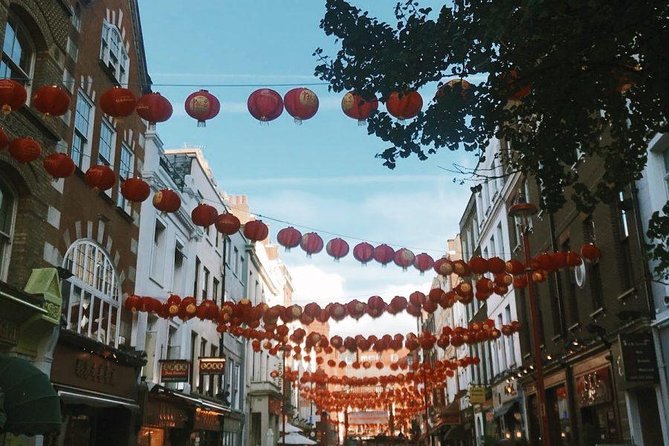
The walk ends in Chinatown, where London’s Chinese neighborhood began to take shape in the 1950s after several Chinese restaurants opened. By the 1960s and 1970s, it had become a center for Chinese culture.
Today, the area offers restaurants, shops, and Chinese food. Dumplings are mentioned as a fitting finish to the tour, and the guides may point you toward food stops you would not find on your own. Food is not listed as included, so plan to pay separately if you decide to eat.
Ending here is smart. Chinatown gives the tour a clear final note about migration and cultural change, while also leaving you in a useful location for lunch or dinner. One couple had their route tailored to include food stops, which suggests that a very small group may allow more flexibility. That is not guaranteed, but it is worth asking the guide about your interests at the start.
What the $62.54 price gets you
At $62.54 per person, this is not the cheapest way to walk around Soho. You can cover the streets independently for free. The question is whether you want to understand what you are seeing.
The fee pays for a professional guide, a two-and-a-half-hour route, and a group capped at 12 people. That is a better setup than a large coach-style walk if you care about questions, pacing, and details. It also offers a private option, with private tours available in both the morning and afternoon.
Group discounts may improve the value for a larger booking. The tour does not include hotel pickup or drop-off, admission to the Palladium, food, drinks, or gratuities. You will need to arrange your own taxi or Uber if you need door-to-door transport.
The tour runs rain or shine, so the price is best judged alongside the weather and your energy level. If heavy rain would ruin your day, an indoor activity may be a better choice. If you are ready for central London streets in changing weather, the route covers a lot of cultural ground for the time.
Walking demands, timing, and practical planning
You need a moderate level of physical fitness. The tour is not available to people with walking disabilities or those using a wheelchair, and no large bags or suitcases are allowed.
Wear comfortable shoes. Take water, carry an umbrella if rain is possible, and use a hat in summer. Since this is a walking tour through central London, you should expect traffic, crowds, and changing pavement conditions, even though the route itself is focused on Soho’s streets and squares.
The tour requires at least three people to run. If that minimum is not met, you are offered another date or a full refund. At the other end, the maximum is 12 people. Children must be accompanied by an adult.
Give the provider a mobile phone number with your country code when booking. Confirmation is sent at booking, and the tour is near public transportation. You can cancel for a full refund up to 24 hours before the start time. Changes or cancellations inside that 24-hour window are not accepted and are not refunded.
Who will get the most from this Soho walk
I would recommend it to:
- First-time visitors who want more than royal and wartime London
- Music fans interested in Hendrix, the Beatles, and Queen
- People curious about LGBT history and social change
- Visitors who enjoy markets, pubs, theater streets, and Chinatown
- Couples or small groups who want a guide with room to adapt
- Anyone who likes short historical explanations tied to real streets
I would be more cautious if you want extensive time inside attractions, a food tour with included tastings, or a fully accessible route. It is also not the right pick if you dislike walking in rain or need hotel transport.
Should you book the Soho District Guided Walking Tour?
Book it if you want Soho explained through its music, politics, markets, theaters, pubs, and immigrant communities. The small group cap is the strongest practical feature, and guides such as Laurence, Becky, Nathan, Sheldon, and Anthony appear to bring a personal, flexible tone to the route.
Skip it if you only want exterior photo stops or prefer to explore at your own pace. For most visitors who want local context without committing to a full-day tour, $62.54 is a fair price for two and a half hours in one of London’s most layered districts.
FAQ
Where does the tour start?
The tour starts outside the Criterion Theatre at 218 to 223 Piccadilly, London W1J 9HR, UK.
Where does the tour end?
The tour ends in Soho, London, in the Chinatown area.
How long does the walking tour last?
The tour lasts approximately two hours and 30 minutes.
What is the maximum group size?
The tour has a maximum of 12 people.
Is this a private tour?
The standard experience is a semi-private walking tour with no more than 12 people. Private options are also available in the morning and afternoon.
What language is the tour offered in?
The tour is offered in English.
Is food included in the price?
Food is not listed as included. The tour ends in Chinatown, where you can find restaurants, shops, and Chinese food. You pay separately for anything you eat.
Is admission to the London Palladium included?
No. Admission to the London Palladium is not included.
Can I join the tour with a wheelchair?
No. The tour is not available for people using a wheelchair or those with walking disabilities. A moderate level of physical fitness is required.
What happens if the minimum number of people is not reached?
The tour requires at least three people to run. If that minimum is not met, you are offered an alternative date or a full refund.
Recently added around London
- London’s Crown Secret: Self-Guided Royal Puzzle Quest★ 4.5 · 8 reviews
- Postcard London★ 5.0 · 8 reviews
- Private Tour: Downton Abbey London Locations by Taxi★ 5.0 · 8 reviews
- Windsor Castle, Stonehenge & Roman Baths Private Tour★ 4.5 · 8 reviews
- Cotswolds Private Driving Tour from London★ 5.0 · 8 reviews
- Skip-the-line London Westminster Abbey and City of Westminster Kid-Friendly Tour★ 5.0 · 8 reviews
- A Silent Disco Adventure in London★ 5.0 · 8 reviews
- London: National Gallery English Audio Tour with free fast Entry★ 3.0 · 8 reviews
Walking Tours, compared.
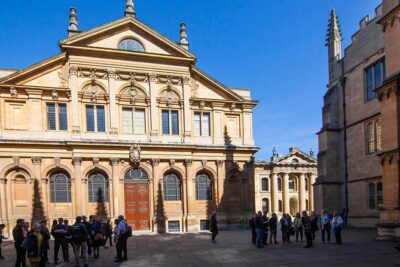
Oxford University Walking Tour With University Alumni Guide
Read our review →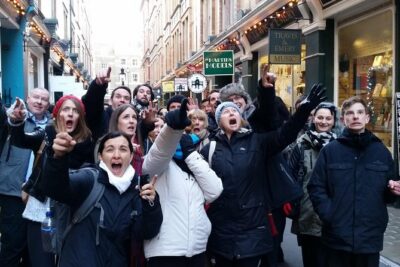
Tour for Muggles The Ultimate Harry Potter Walking Tour in London
Read our review →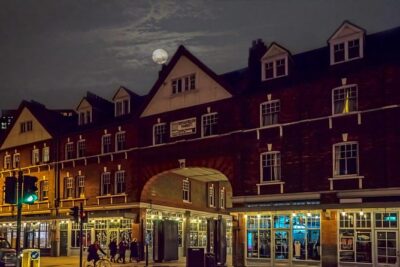
Cambridge University Walking Tour by Alumni™ Kings College Option
Read our review →
Blackbeard to Banksy – The Ultimate Walking Tour of Bristol
Read our review →
Air Raid Shelter + St. Nicholas Market Walking Tour
Read our review →
Walking Tour of Bath with Blue Badge Tourist Guide
Read our review →
Changing of the Guard Guided Walking Tour in London
Read our review →Browse the lists this tour appears in