
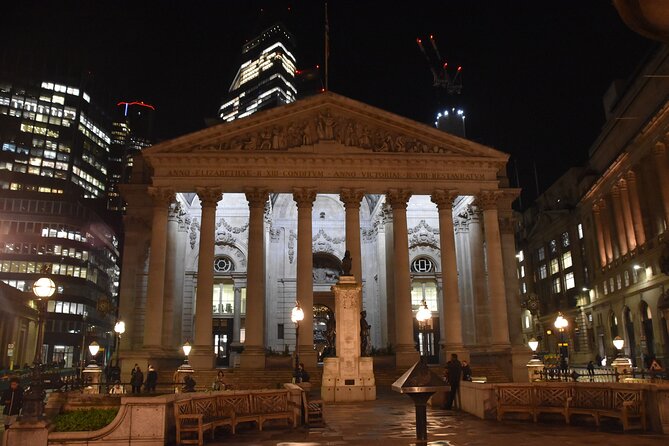
Reviewed · WALKING TOURS
Private Ghosts and Gore Walking Tour of London
London’s oldest streets hold more than grand churches and financial towers. On this private Ghosts and Gore Walking Tour, you follow a trail of plague pits, execution grounds, haunted pubs, prison tales, and restless spirits from the Monument to Farringdon.
I like the private format, which lets your group hear the stories at a more personal pace. I also like the strong historical thread, especially the links to Dickens, the Great Fire, Newgate Prison, and London’s medieval churches. The main drawback is the brisk route: 24 stops in about two hours means plenty of standing and walking, with only a few minutes at each place.
Key points at a glance
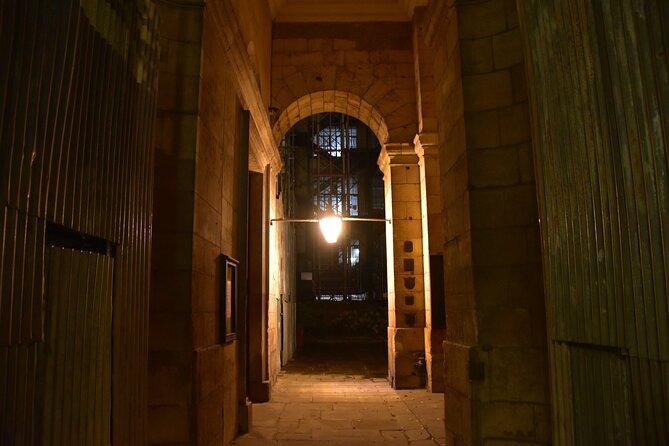
- Twenty-four stops in two hours: The route packs a large amount of London’s darker past into one evening walk.
- A private group of up to 15: Your party gets the guide to itself, rather than joining a large public crowd.
- A history-first ghost tour: Stories connect hauntings with plague pits, executions, Roman London, grave robbing, and famous fiction.
- A strong guide can make the difference: Michael is praised for combining macabre tales with clear historical context and lively storytelling.
- Easy city orientation after dark: You start at the Monument and finish close to the Elizabeth Line entrance at Farringdon Station.
- Accessible in practical terms: The tour is listed as wheelchair and stroller accessible, with service animals allowed, though a moderate level of physical fitness is advised.
From the Monument to the first haunted churches
The meeting point is the Monument to the Great Fire of London on Fish Street Hill. This is a useful place to begin because the column is easy to identify, and the tour immediately places you in the medieval and early modern City of London.
Your first stop is St. Magnus the Martyr, where a dark figure is said to haunt a particular grave. The story includes a 1951 visit from a spiritual medium who claimed to identify the ghost and explain its fixation. This is a good example of the tour’s method: the ghost tale is the hook, but the real interest lies in the people, beliefs, and church customs behind it.
At 54 and 55 Cornhill, look up rather than down. Devils appear in the building details, tied to a dispute involving an architect and a local vicar. The tale gives you a quick lesson in how personal arguments and religious tensions can become part of London’s public architecture.
St. Peter-upon-Cornhill brings in one of the tour’s best literary links. Its churchyard is connected with Ebenezer Scrooge’s horrified discovery of his own grave in A Christmas Carol. You also hear how London’s ghost stories and gruesome events have fed fiction over the centuries.
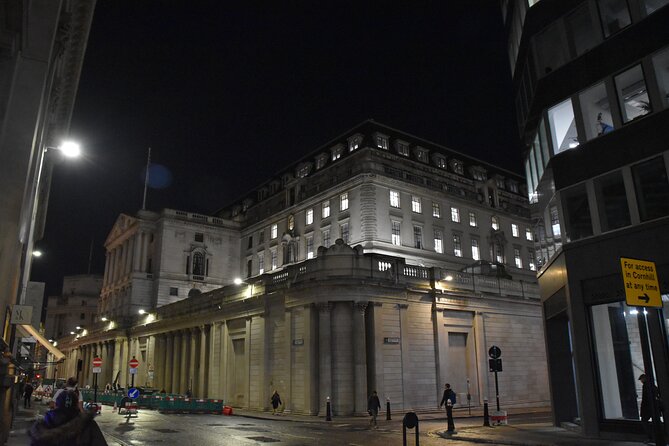
At St. Michael’s Cornhill, the story turns to a storm and the day the devil supposedly visited London. Then, at St. Margaret Lothbury, the focus shifts to the Bank of England and a very tall ghost whose bones were disturbed. The story says this gangly spirit rattled guards’ guns, stomped up the stairs, and frightened bank tellers.
These first stops are short, roughly five minutes each. You should expect quick storytelling rather than time inside each church. Admission is free at the listed locations, but the experience is mainly outdoors, in churchyards, streets, and public spaces.
More Walking Tours in London
- Tour for Muggles The Ultimate Harry Potter Walking Tour in London
★ 5.0 · 4,684 reviews - London Jack The Ripper Guided Walking Tour
★ 5.0 · 3,131 reviews - Changing of the Guard Guided Walking Tour in London
★ 5.0 · 1,793 reviews
Bank Station, black ghosts, and a feline guide
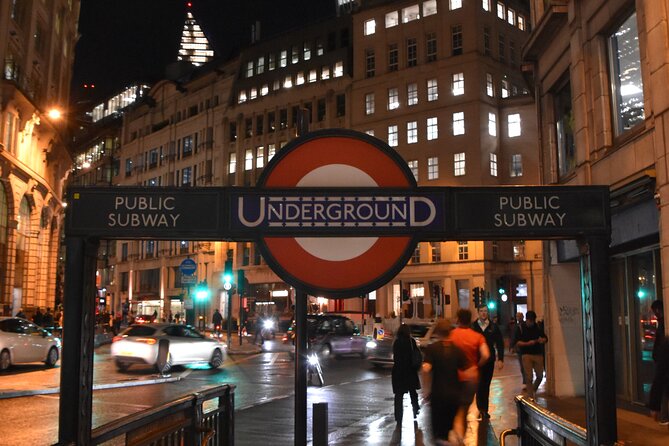
St. Mary Woolnoth is home to one of London’s most famous ghost stories. The so-called Black or Bank Ghost is linked with Bank Station, the Bank of England, and the surrounding streets. A woman in black asking if you have seen her brother is part of the tale, followed by a disturbing secret connected with the Bank Station booking hall.
From here, the route visits St. Michael Paternoster Royal. This stop introduces one of London’s best-known Lord Mayors and his cat. The feline is said to have moved between this church and the next stop, giving the walk a lighter, almost playful moment before the stories grow more macabre again.
At St. James Garlickhythe, you hear about a mummified body found near the altar in 1835. Known as Jimmy the Mummy, the remains were displayed in a case until roughly twenty years ago and were reportedly treated as a plaything by local children. The story is unsettling because it reflects an older attitude toward human remains, when public display and curiosity could easily cross into cruelty.
Williamson’s Tavern brings the group into one of the City’s haunted pub stories. Doors bang, footsteps sound, and police dogs are said to become frightened inside. The pub has only one way out in the tale, which gives the stop its theatrical edge. You will not be promised a supernatural event, but the setting helps explain why old pubs make such effective places for ghost stories.
The Bow Bells, Roman walls, and plague pits
St. Mary Le Bow is less about a single ghost than a long record of bad luck. It is tied to the idea of the Cockney, meaning someone born within the sound of its bells. The church has suffered fires, collapses, accidents, murders, and deaths, earning its reputation as one of London’s most cursed churches.
Noble Street adds older layers. The street follows an area linked with the original Roman garrison and sections of both Roman and medieval walls. Death has been associated with this part of the City from its earliest days, and the stop includes reports of strange events and orb photographs. If you like the uncertain line between folklore and photographic oddity, this is one of the more intriguing moments.
At St. Anne and St. Agnes Garden, the subject is a plague pit. You learn how the plague changed London and why small glowing orbs often appear in photographs taken at supposedly haunted places. The guide encourages you to take a picture and check it for yourself. That gives you a simple activity, though you should treat the results as a curiosity rather than proof.
Christchurch Greyfriars Church Garden is one of the most crowded supernatural stops. The ruined church is linked with Queen Isabella and her lover, an arguing married couple, a religious prophetess, a monk, and a greyhound. The variety of apparitions makes the place memorable, while the ruins give the stories a strong physical setting.
Temple Bar then brings the focus back to public punishment. Designed by Sir Christopher Wren, this gateway once marked the western entrance to the City. The severed heads of executed traitors and criminals were displayed here, and the souls of the condemned are said to linger around the structure.
Newgate Prison and London’s execution ground
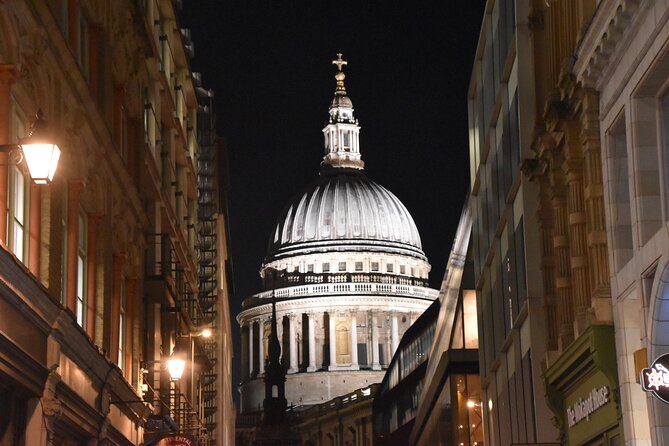
Amen Court gives you a view toward parts of the old Newgate Prison walls. The prison was once Britain’s most notorious jail, and the story here considers what lies beneath the modern buildings. The ground is associated with the bones of men condemned to death, while children now play above the site without knowing its full past.
At the Viaduct Tavern, the ghost is called Fred. His tricks are more mischievous than murderous. He is said to flush the women’s toilets while they are in use and create other harmless but confusing disturbances. A medium once questioned Fred’s identity, adding a layer of séance history to the pub tale.
Old Bailey occupies the former Newgate Prison site. This is where public hangings took place in the street until 1868, and it is connected with the famous Black Dog of Newgate. The warning is suitably grim: if you see a large black dog in the area, you had better update your will.
Holy Sepulchre Church holds an execution bell. It was rung shortly before a prisoner was taken from Newgate Prison or the Old Bailey to be executed. One clerk who rang it became part of one of London’s most notorious ghost stories, which continues at Cock Lane.
Cock Lane provides the story’s dramatic finish. A young girl claimed to channel the spirit of a dead woman who said she had been murdered, and some of London’s leading minds became involved in the effort to save a man’s life. This is one of the route’s strongest examples of how ghost stories, crime, public opinion, and entertainment could blend together.
A completely different sort of day out in London:
- Stonehenge, Windsor Castle, and Bath from London
★ 4.5 · 18,662 reviews - London Big Bus Hop-On Hop-Off Tour with Optional River Cruise
★ 3.5 · 10,803 reviews - London Small Group Tour of Historical Pubs
★ 5.0 · 10,422 reviews - Stonehenge, Windsor Castle and Bath with Pub Lunch in Lacock
★ 4.5 · 7,402 reviews
Grave robbers, the Great Fire, and Smithfield’s violence
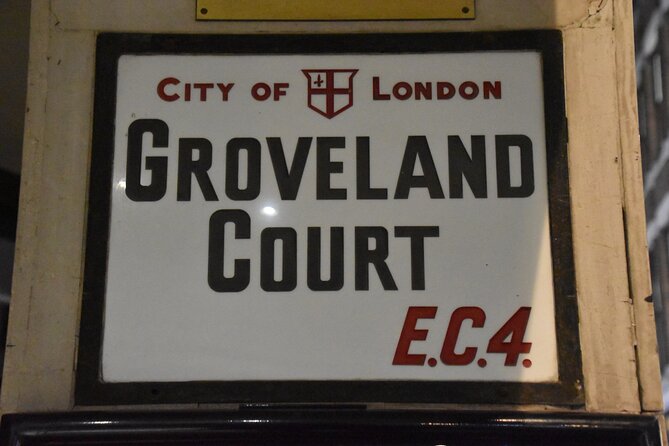
At the Golden Boy of Pye Corner, you reach the point marking the western limit of the Great Fire of London. The small, chubby statue once stood on a notorious pub, and the site later became associated with stolen corpses sold to doctors at nearby St Bartholomew’s Hospital.
This stop explains the work of resurrection men, who robbed graves to supply medical schools and hospitals with fresh bodies. The demand was so strong that it helped lead to a series of murders. Here, the gore is not just a ghost story. It reflects the harsh ethics and medical needs of Georgian and Victorian London.
West Smithfield was one of the capital’s major execution sites. William Wallace and Wat Tyler were among the rebels killed here, and people were hanged, drawn, and quartered. Others were burned at the stake or boiled alive. The adjoining meat market added the smell of blood, meat, and bone to the horror of public punishment.
The nearby St. Bartholomew’s Hospital is also tied to ghost stories. Poltergeists, a haunted lift, and strange presences reported by students working late all form part of the stop. You may find this section particularly effective because the hospital is still a working institution, not just a preserved ruin.
St. Bartholomew the Great and the final pubs
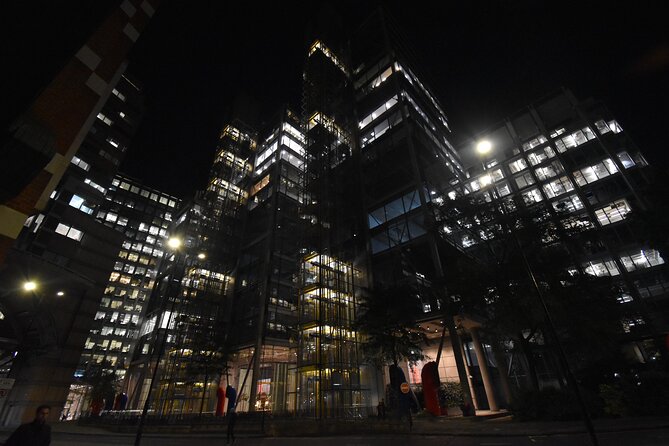
St. Bartholomew the Great is one of the oldest surviving churches in London. Its founder, Rahere, is said to return as a hobbling ghost. The mystery is why he limps now, after centuries of walking normally, and who may be responsible.
The Rising Sun was another resurrectionist pub. Its most disturbing tale concerns a ghost nicknamed the sex pest ghost. The story involves women who were reluctant to work or live on the premises. This stop is darker and more uncomfortable than the playful ghost of Fred, so you should know that the tour does not keep its gore strictly historical or bloodless.
The final stop is the Charterhouse, a short walk from the Elizabeth Line entrance at Farringdon Station. The site is linked with a large plague pit, estimated to contain the remains of about 50,000 people. It was also home to monks executed during the Reformation.
The most commonly seen ghost here is a praying monk. A duke who lost his head is also said to walk the grounds. The final explanation brings the stories into the modern world: Charterhouse Square is also associated with one of the United Kingdom’s leading schools of psychiatry, so the guide considers how medical science might explain unusual sightings and experiences.
That closing note is useful. You can enjoy the tales without having to accept every ghost as fact. The best parts of this tour let history, belief, fear, and psychology sit beside one another.
How the private format affects the value
The price is $247.70 per group of up to 15 people. For a full group, that works out to about $16.50 per person, which is a solid price for a two-hour private walking tour in central London. For only two or three people, the cost per person is much higher, so the private format makes the most financial sense for families, friends, or a larger party.
The personal setting is also the main reason to choose this option. A guide such as Michael can adjust the tone and explain the historical background instead of rushing through a memorized list of ghost names. His approach has been praised for making the macabre stories part of a wider history lesson, and that is exactly what improves the value here.
You should allow for a steady walk and frequent stops. Each listed location receives about five minutes, so this is not a slow church tour with long visits inside buildings. It is a moving story route through streets, courtyards, churchyards, and pub exteriors or nearby areas.
The tour is offered in English and includes guiding fees. It uses a mobile ticket, is wheelchair and stroller accessible, and allows service animals. The stated moderate fitness requirement still matters, since you will be on your feet and moving between 24 locations.
Who should book this London ghost walk
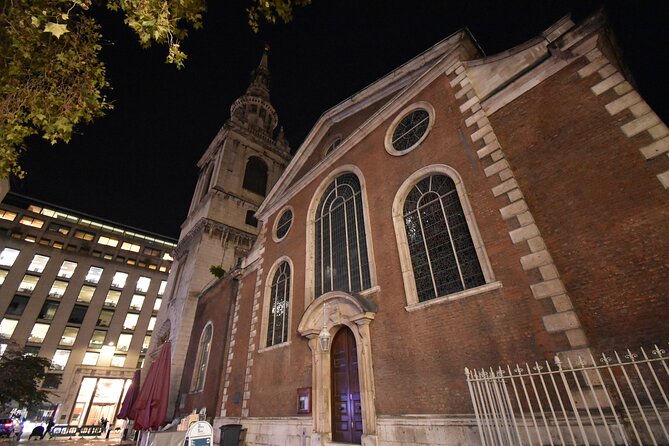
I would choose this for someone who wants history with a sinister edge, not just jump scares. It suits fans of Dickens, London crime, medieval churches, plague history, public executions, and old urban legends.
It is also a good choice for a first evening in the City if you want help finding your way through a part of London that can feel confusing after dark. Starting by the Monument and ending near Farringdon gives the walk a clear east-to-west shape and leaves you near public transportation.
Families with older children may enjoy the stories, but some material is severe. Expect executions, grave robbing, murder, plague deaths, severed heads, and disturbing pub tales. Parents should decide how much gore is suitable for their group.
The tour is less suitable if you want long visits inside churches, a slow photographic walk, or firm proof of the supernatural. You get a fast, story-heavy route with many short stops.
Should you book the Private Ghosts and Gore Walking Tour?
Book it if you want a private, well-paced introduction to London’s darker past and your group values a guide who can explain the history behind the hauntings. The strongest feature is the blend of real places and layered stories: Roman walls, plague pits, Newgate Prison, the Great Fire, Dickens, hospitals, churches, and pubs all appear along one route.
Think twice if your group is very small and price per person matters, or if two hours of brisk walking sounds tiring. For a larger group, the fixed price is more attractive, and the private setting gives you a better chance to ask questions and shape the evening around your interests.
FAQ
How long does the tour last?
The tour lasts approximately two hours.
Where does the tour start?
It starts at the Monument to the Great Fire of London on Fish Street Hill, London EC3R 8AH.
Where does the tour finish?
The tour finishes near the Elizabeth Line entrance to Farringdon Station on Cowcross Street, London EC1M 6BY.
Is this a private tour?
Yes. Only your group participates, with a maximum group size of 15 people.
What language is the tour offered in?
The tour is offered in English.
Is the tour wheelchair and stroller accessible?
Yes. The experience is listed as wheelchair and stroller accessible, and service animals are allowed.
How much does the tour cost?
The listed price is $247.70 per group of up to 15 people.
Can I cancel for a full refund?
Yes. You can cancel at least 24 hours before the local start time for a full refund. Cancellations or changes made less than 24 hours before the start time are not accepted for a refund.
Recently added around London
- London’s Crown Secret: Self-Guided Royal Puzzle Quest★ 4.5 · 8 reviews
- Postcard London★ 5.0 · 8 reviews
- Private Tour: Downton Abbey London Locations by Taxi★ 5.0 · 8 reviews
- Windsor Castle, Stonehenge & Roman Baths Private Tour★ 4.5 · 8 reviews
- Cotswolds Private Driving Tour from London★ 5.0 · 8 reviews
- Skip-the-line London Westminster Abbey and City of Westminster Kid-Friendly Tour★ 5.0 · 8 reviews
- A Silent Disco Adventure in London★ 5.0 · 8 reviews
- London: National Gallery English Audio Tour with free fast Entry★ 3.0 · 8 reviews
Walking Tours, compared.
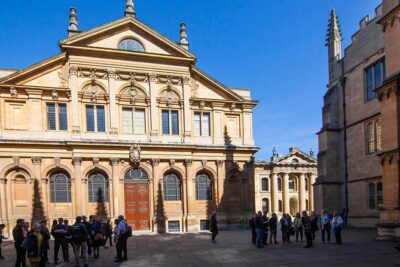
Oxford University Walking Tour With University Alumni Guide
Read our review →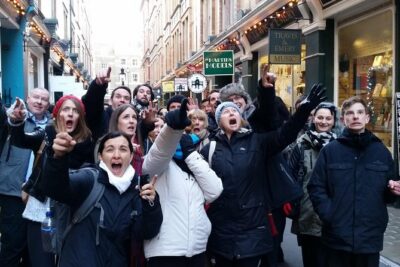
Tour for Muggles The Ultimate Harry Potter Walking Tour in London
Read our review →
Cambridge University Walking Tour by Alumni™ Kings College Option
Read our review →
Blackbeard to Banksy – The Ultimate Walking Tour of Bristol
Read our review →
Air Raid Shelter + St. Nicholas Market Walking Tour
Read our review →
Walking Tour of Bath with Blue Badge Tourist Guide
Read our review →
Changing of the Guard Guided Walking Tour in London
Read our review →Browse the lists this tour appears in