
Reviewed · BRITISH MUSEUM TOURS
Private London British Museum Tour for Kids and Families
The British Museum can swallow a whole morning before you reach the things you came to see. This 2.5-hour private tour fixes that problem by steering your family to major objects, from the 5,400-year-old mummy called Ginger to the Rosetta Stone, while turning the visit into a story rather than a march past glass cases.
I like the one-guide-for-your-family format, which lets the guide adjust the pace and examples to your children. I also like the morning and afternoon choices, plus the use of quizzes, games, and small mysteries to keep younger minds in the room. The catch is price: at $247.40 per person, this is a serious splurge, especially for a small group, and a crowded museum or a guide who misses your child’s interests can reduce the value.
Key points to know
- Ginger the mummy: See one of the museum’s oldest and most memorable Egyptian displays.
- Stories instead of a checklist: Guides use questions, games, and anecdotes to make objects easier for children to grasp.
- A true private visit: Only your group takes part, so the guide can adjust the route and pace.
- Major highlights in one go: Expect the Rosetta Stone, Ramses II, Parthenon sculptures, and Sutton Hoo treasures.
- Best for ages five and up: The tour is designed for families, but older children may get more from the historical detail.
- Useful museum strategy: Your guide can change the route if galleries are crowded or closed for renovation.
Why a private British Museum tour helps
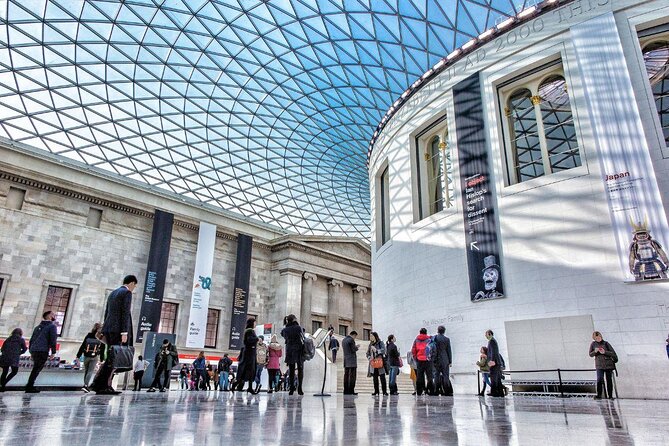
The British Museum is free to enter, but free does not mean simple. Its collection covers about 6,000 years of human history, and the building holds far more than a child, or an adult, can sensibly absorb in one visit.
That makes a private guide useful here. You meet outside the museum on Great Russell Street, then spend roughly two and a half hours inside with a route built around major objects. You are not trying to decode a floor plan while children ask how much longer you will be.
The private setup matters most when your family has mixed ages. A guide can explain an object in a simple way for a five-year-old, then add a more serious layer for a 12-year-old or an adult. Children are also more likely to ask questions when they are not standing beside a large group of strangers.
This is not a behind-the-scenes visit. The information provided does not promise closed galleries, special access, or private viewing areas. You are seeing the public museum, with a guide helping you choose what deserves your limited time.
More British Museum visits:
- British Museum London Guided Tour Semi-Private 8ppl Max
★ 5.0 · 984 reviews - The British Museum London – Exclusive Guided Museum Tour
★ 5.0 · 555 reviews - British Museum Guided Tour
★ 4.0 · 470 reviews
Meeting the guide outside Great Russell Street
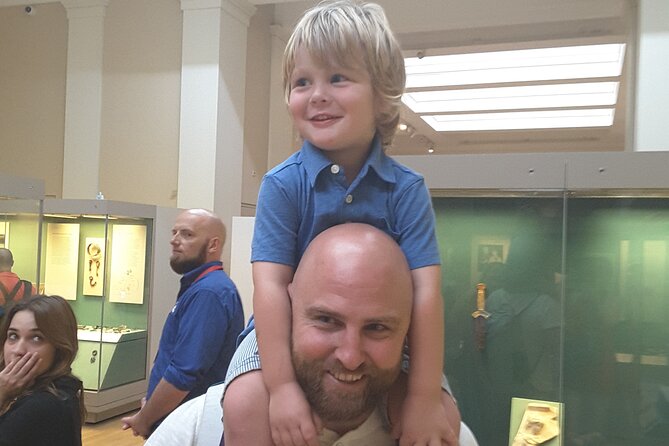
The meeting point is outside the British Museum at Great Russell Street, London WC1B 3DG. The tour ends back at the same meeting point, so you do not need to arrange a separate pickup or figure out a new place to meet afterward.
Hotel pickup and drop-off are not included. Food and drinks are also your responsibility, so plan around the time of day you select. The available morning and afternoon departures are handy for families building a full London schedule around meals, jet lag, or another attraction.
The guide begins working before the first major display. Several families found the opening portion useful because the guide explained the museum building and helped make the entrance wait feel shorter. That is a small point, but on a rainy morning with children, small points can save the day.
A private guide may also help you move through busy rooms more sensibly. The museum can become difficult to navigate when crowds gather around famous objects. Guides such as Alexandra, Christina, Denisa, Ainura, and Lucy were praised for finding a workable path through crowded areas.
Still, allow a little patience. A private tour does not make the museum empty. On a busy Saturday in July, one family found it hard to get close to some displays. Your guide can help, but cannot clear the room.
The Egyptian galleries and the story of Ginger
The Egyptian section is the natural anchor for a family visit. It is described as the widest Egyptian collection in Europe, but the important point for your children is that the objects give the tour an immediate sense of mystery and age.
Ginger, the 5,400-year-old mummy, is a particularly strong stop. A child may understand the age better when it is compared with familiar things, such as grandparents, castles, or recorded history. The display gives the guide a chance to explain burial customs, preservation, and what archaeologists can learn from human remains.
The monumental statue of Ramses II adds scale. A small mummy and a huge royal statue make a good pair: one feels personal and startling, while the other shows how rulers wanted to be seen. A good family guide can use that contrast to explain power, religion, and public image without turning the moment into a lecture.
The Egyptian rooms also give children plenty to look at. You can expect the guide to use short stories and questions rather than ask your child to memorize dates. Vicky, for example, was praised for using a quiz during the tour, and the children stayed involved as the group moved through the galleries.
This section seems to be a high point for many families. One family with six and nine-year-old boys found that the guide kept both children involved for about two hours while still giving the adults useful context. That is the trick: the children need a reason to care, while you need more than a string of fun facts.
The Rosetta Stone and the code-breaking moment
The Rosetta Stone is one of the museum’s essential stops, and it gives the tour a natural puzzle. The guide explains how the stone helped scholars decipher Egyptian hieroglyphics by comparing the same text in different scripts.
For children, this works better than a general explanation of ancient writing. It turns the object into a code that had to be solved. A guide can ask them to think about how you would read a message if it appeared in several writing systems, with one of them already understood.
The Rosetta Stone can draw a crowd, so you may not get a quiet, private moment in front of it. That is one reason a guide helps. You can hear the main explanation, understand why the object matters, and then move on instead of waiting too long for a perfect view.
I would not expect every stop to receive equal time. The point is not to study every inscription or case. It is to leave knowing why a few objects changed what people understood about the past.
More museums and galleries in London:
- Tower of London and Crown Jewels Exhibition Ticket
★ 4.5 · 6,677 reviews - Chelsea FC Stadium Tours and Museum
★ 5.0 · 1,908 reviews - Official tickets: Moco Modern & Contemporary Art Museum
★ 4.5 · 1,157 reviews - The Postal Museum Admission Ticket
★ 4.5 · 347 reviews
Greek sculpture and the Parthenon rooms
The route then moves to ancient Greece, including the Parthenon sculptures from Athens. This is a good place for adults and older children to think about how museums collect objects, how empires displayed power, and why some museum holdings remain the subject of debate.
The tour is presented as a family experience, not a specialist seminar, so your guide should keep the explanation clear. You might hear stories about the sculptures, the building they came from, and the way art can carry political meaning. The exact route can change, since galleries may close for renovation or displays may be rearranged.
One family felt the Greek section was a strong beginning, while the later route did not match an 11-year-old’s interest in British or American military history. That is worth noting. The advertised highlights cover several ancient civilizations and the Sutton Hoo treasure, not a focused tour of British history or the American Civil War.
If your child has a strong interest, tell the guide at the start. The private format gives you a better chance of shaping the emphasis, though the museum’s available galleries still set limits. A child who loves myths, ancient buildings, and visual clues may be especially happy here.
Sutton Hoo and the return to Britain
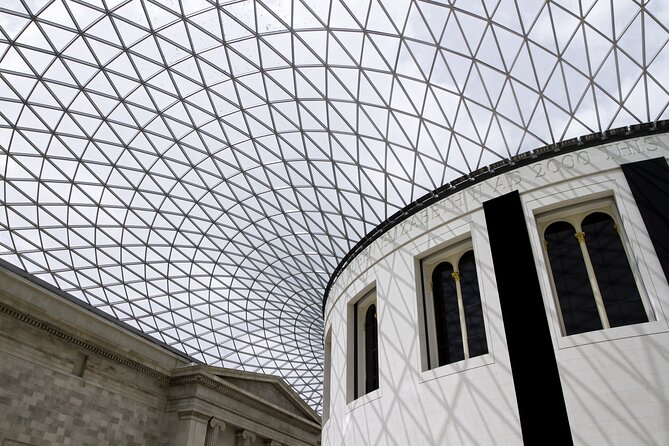
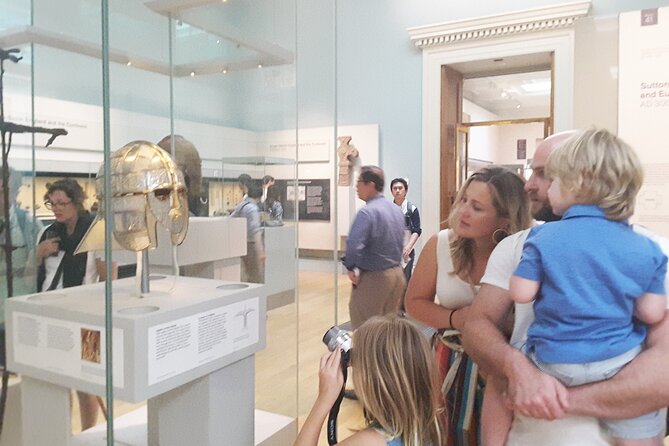
The Sutton Hoo burial treasure brings the tour closer to Britain. It is a useful change of mood after the Egyptian and Greek galleries, moving from monumental stone and royal imagery to an early medieval burial discovery.
For children, buried treasure is an easy doorway into archaeology. The guide can explain what the objects reveal about status, travel, craftsmanship, and the people who lived in Britain before the modern nation took shape. The information provided refers to the Sutton Hoo burial treasure, though the exact objects shown may depend on the route and current gallery access.
This stop also helps balance the tour. You are not spending the full visit in one ancient culture. Instead, you move across periods and places, seeing how different societies expressed belief, authority, wealth, and identity.
If your family wants a narrowly British route, be clear about that before the tour starts. The planned highlights include Egypt and Greece as well as Sutton Hoo. The private guide can respond to your interests, but this is still a broad introduction to the museum.
How guides keep children involved
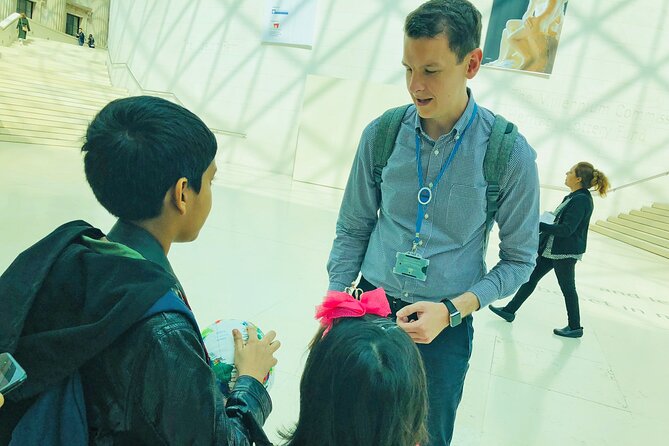
The strongest feature of this experience is the guide’s approach to children. The best moments are not simply facts delivered at a lower reading level. They are small challenges: a quiz, a mystery, a question about what an object might mean, or a story that lets a child make a guess before hearing the answer.
Jeremy received especially warm praise for making history fun for both children and adults, with an energetic style compared to a lively television time traveler. Larry was praised for shaping his explanations around a 12-year-old boy, while Lucy was repeatedly described as good at finding the right level for children around 10.
Other guides named in the feedback include Alexandra, Marina, Vicky, Christina, Denisa, Tim, Ainura, Catherine, and Darcy. I would not assume you can select a particular guide unless booking arrangements confirm it. The useful lesson is that the provider uses several guides with a clear family focus.
The tour seems best suited to children who can listen, walk, and respond to questions for a sustained period. The official minimum age is five. Some family groups included children from roughly six through the teenage years, and guides adjusted their examples to different ages.
You should still manage expectations. A museum tour remains a museum tour. A child who strongly dislikes indoor attractions may tire before the final section. One family found two hours close to the limit for their children, which is why the two-and-a-half-hour schedule can work well if the guide notices fatigue and adjusts.
Pace, crowds, and gallery changes
Two and a half hours is long enough to see major rooms but short enough to avoid trying to conquer the entire museum. I like that limit. It gives the guide time to explain important objects without demanding an all-day commitment from your family.
The pace will not be leisurely in the sense of stopping at everything. One guide specifically explained that the museum is too large to cover every object in a single visit. That is not a flaw in the tour. It is the reality of the building, and a focused route is more useful than a tired family wandering without a plan.
Crowds are the main variable. Busy rooms can make it harder to stand together or see smaller objects. Guides can help with navigation, but they cannot guarantee clear viewing conditions. Morning and afternoon choices let you fit the tour into your day, but the details do not promise that one departure will always be quieter.
Galleries also change. Some may close for renovation, and the guide may replace a planned stop with another object or section. If you have your heart set on one exact display, accept that the route may shift. The upside is that your guide is expected to select other worthwhile objects rather than abandon the visit.
Is $247.40 per person good value?

At $247.40 per person, this tour is expensive. The museum itself has no admission charge listed for the activity, so most of what you are paying for is the private guide, family-focused planning, and the time saved by seeing the main highlights efficiently.
Value depends heavily on group size. A family of four pays far more in total than a larger private group, even though the group receives the same basic two-and-a-half-hour service. Group discounts are available, but the supplied details do not state the discount amount, so check the final price before booking.
I can see the value for a first London visit, especially if the British Museum is high on your child’s list and you do not want to spend hours planning a route. A guide who keeps children engaged can also prevent the familiar museum failure: adults enjoy the objects while children trail behind, bored and hungry.
The value is weaker if your family already knows exactly what it wants to see, enjoys reading labels, or prefers a slow visit with plenty of breaks. You can enter the museum independently and spend nothing on admission. The private tour earns its price only if the guide’s storytelling, navigation, and family pacing matter to you.
The very high overall rating, 4.9 out of 5 from 60 ratings, points to a consistently strong experience, with 98 percent recommending it. That does not remove the price concern. One family considered it far too expensive and felt the route did not match an older child’s interests. Take that criticism seriously, particularly if your child wants a specialized subject.
Who should book this family tour?
I would choose this for families with children aged five and up who want a clear introduction to the British Museum rather than a full scholarly treatment. It also suits grandparents traveling with children, since the guide can make the visit comfortable and easier to follow.
It is a good fit if:
- Your children need stories and activities to stay interested.
- You want to see famous objects without planning the route yourself.
- Your group includes several ages and you want one guide to adjust the explanations.
- You have limited time in London.
- You are comfortable paying for personal attention in a museum that is free to enter.
I would think twice if your child has one narrow interest that is not covered by the main route. Tell the guide about that interest before the tour begins, but do not assume the visit can become a completely different museum experience.
Children must be accompanied by an adult. Service animals are allowed, the meeting point is near public transportation, and most people can participate. You can cancel free of charge up to 24 hours before the start time, but changes or cancellations inside that window are not accepted for a refund.
Should you book the British Museum tour?
Book it if your family needs structure. The British Museum is too large for most first-time visitors to handle well without a plan, and a lively guide can turn the Rosetta Stone, Ginger, Ramses II, the Parthenon sculptures, and Sutton Hoo into connected stories.
I would especially consider it for children around five to 12, families with mixed ages, and anyone who wants a focused visit instead of an all-day museum marathon. Ask about your child’s interests at the start, bring realistic expectations about crowds, and weigh the total private-tour cost against your group size.
Skip it if you prefer to wander, want a specialist route, or feel the fee is hard to justify when museum admission is free. For the right family, though, the guide is not just extra company. The guide is the bridge between an enormous collection and a child who may leave remembering how an ancient message was finally read.
FAQ
How long is the Private London British Museum Tour for Kids and Families?
The tour lasts approximately 2 hours and 30 minutes.
Where does the tour begin and end?
You meet the guide outside the British Museum at Great Russell Street, London WC1B 3DG. The tour ends back at the meeting point.
Is this a private tour?
Yes. Only your group participates in the activity.
What age is the tour suitable for?
The tour is suitable for children aged five and older. Children must be accompanied by an adult.
Which British Museum objects are included?
The planned highlights include Ginger the mummy, the Rosetta Stone, the monumental statue of Ramses II, the Parthenon sculptures, and the Sutton Hoo burial treasure.
Are museum admission, food, or hotel transfers included?
The activity lists museum admission as free. Food and drinks, hotel pickup, and hotel drop-off are not included.
Can I cancel for a full refund?
Yes, if you cancel at least 24 hours before the experience start time. Cancellations or changes made less than 24 hours before the start time are not accepted for a refund.
Recently added around London
- London’s Crown Secret: Self-Guided Royal Puzzle Quest★ 4.5 · 8 reviews
- Postcard London★ 5.0 · 8 reviews
- Private Tour: Downton Abbey London Locations by Taxi★ 5.0 · 8 reviews
- Windsor Castle, Stonehenge & Roman Baths Private Tour★ 4.5 · 8 reviews
- Cotswolds Private Driving Tour from London★ 5.0 · 8 reviews
- Skip-the-line London Westminster Abbey and City of Westminster Kid-Friendly Tour★ 5.0 · 8 reviews
- A Silent Disco Adventure in London★ 5.0 · 8 reviews
- London: National Gallery English Audio Tour with free fast Entry★ 3.0 · 8 reviews
British Museum Tours, compared.
British Museum London Guided Tour Semi-Private 8ppl Max
Read our review →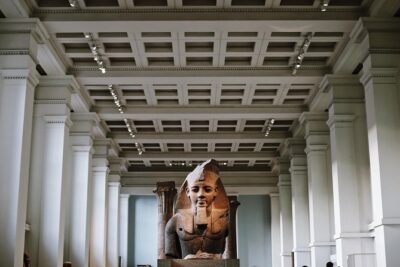
The British Museum London – Exclusive Guided Museum Tour
Read our review →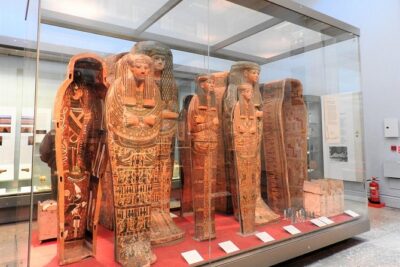
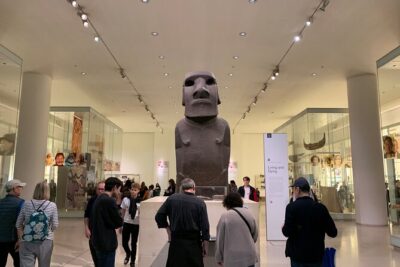
Private Guided Tour of the British Museum – Tickets Included
Read our review →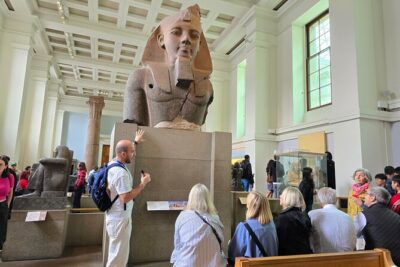
British Museum Guided Tour with Priority Timeslots(Small Group)
Read our review →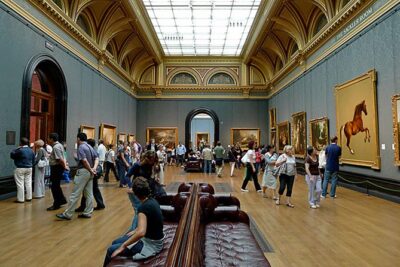
British Museum & National Gallery of London Semi-Private 8ppl Max
Read our review →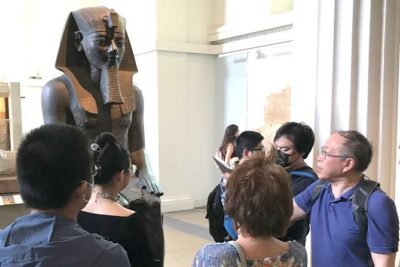
Explore Biblical Artifacts at the British Museum
Read our review →
British Museum Highlights Private Tour in London including the Rosetta Stone
Read our review →Browse the lists this tour appears in