
Reviewed · WALKING TOURS
Secrets of the London Underground Small Group Walking Tour
London’s Underground is more than a way to get across town. It is a living record of Victorian engineering, wartime London, political decisions, and changing city life. This 2.5-hour tour follows that story from Baker Street to Westminster, using several famous stations as its classroom.
I like the route for two reasons: you visit one of the world’s first underground railway stations, and you hear about closed and haunted stations most visitors pass without noticing. Guides such as John, Angela, and Peter have been praised for clear storytelling, good humor, and lively historical detail.
The main catch is simple: this is not a behind-the-scenes tour. You spend plenty of time walking through working stations and riding the Tube, and you must pay your own fares. If wet weather or lots of stairs sounds tiring, think carefully before booking.
Five things to know before you book
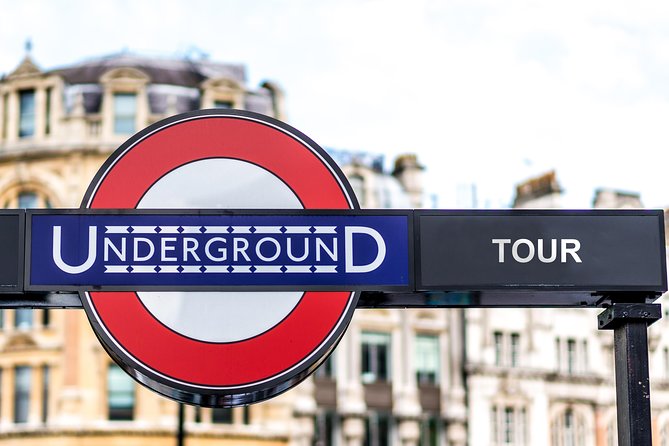
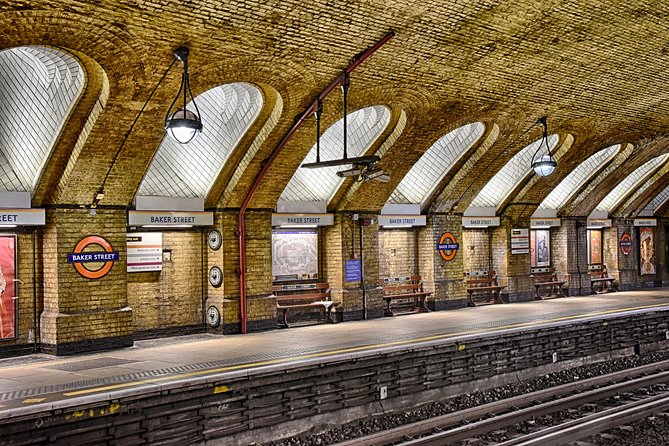
- You start at Baker Street: The meeting point is Baker Street Underground Station, one of the original stops on the Metropolitan Railway.
- The route ends at Westminster: Along the way, you visit Oxford Circus, Green Park, Piccadilly Circus, Victoria Embankment, and Westminster.
- You ride the Tube as part of the story: A valid contactless card, Oyster card, or travel card is required and is not included.
- Abandoned stations are a major theme: Down Street, closed in 1932, helps explain how old stations disappear from the network.
- Expect stairs and steady walking: The tour is not suitable for people with reduced mobility.
- The group can reach 25 people: That is smaller than a large coach tour, but not necessarily an intimate private walk.
What this London Underground tour is really about
This experience works best as a moving history lesson rather than a station-access tour. You are not promised secret platforms, staff-only rooms, or entry into closed stations. Instead, your guide uses public stations, street sections, Tube rides, photographs, and stories to explain how the system grew.
That distinction matters. The title may suggest a visit to hidden spaces below London, but the actual experience centers on the story behind the network. You learn about the original underground railway, Victorian construction methods, station closures, wartime use, and the different jobs the Underground has performed over time.
I like that approach because the Tube is easy to use and easy to overlook. After a few days in London, you may know which line gets you to Westminster, but still know nothing about why the stations were built where they are or how the early system functioned.
The route lasts about two and a half hours and begins at 1 p.m. That timing gives you a useful afternoon activity, but it also means you should not schedule a tight attraction immediately afterward. Walking, station changes, explanations, and photographs can take longer than a simple point-to-point Tube ride.
More Walking Tours in London
- Tour for Muggles The Ultimate Harry Potter Walking Tour in London
★ 5.0 · 4,684 reviews - London Jack The Ripper Guided Walking Tour
★ 5.0 · 3,131 reviews - Changing of the Guard Guided Walking Tour in London
★ 5.0 · 1,793 reviews
Baker Street and the birth of the Underground
Baker Street is a fitting starting point. The station is tied to the Metropolitan Railway, which opened in 1863 and became the world’s first underground railway. That single fact gives the tour its foundation: London’s Tube was not designed as one grand system from the start. It grew in stages, through separate companies, changing technology, and expanding city needs.
At the opening meeting point, your guide begins with the Victorian challenge of building railways beneath a crowded city. The tour explains how the Underground was constructed before modern technology made tunneling easier. That gives you useful context for the streets above, where the city’s growth created both the demand for rail travel and the obstacles to building it.
This stop is particularly good for history buffs. You can connect the station you are standing in with the broader story of industrial London, rather than treating it as just a place to board a train.
The Baker Street portion is relatively brief, listed at about ten minutes. Do not expect a long museum visit or a formal station inspection. The value comes from the guide’s explanation and from seeing the place where the Underground story begins.
Oxford Circus and the modern Tube network
The route then moves to Oxford Circus Station, where the history shifts from the earliest Underground to the later expansion of London’s network. Construction began in 1962 on the initial Walthamstow to Victoria section of the Victoria line, with cross-platform interchange planned at Oxford Circus. The Victoria line platforms opened on March 7, 1969.
That makes this stop useful for understanding how London kept adapting its railway system long after the Victorian era. The Underground is not one period piece. It includes early lines, later lines, rebuilt interchanges, and stations shaped by modern transport demands.
You will spend about ten minutes here. Because this is a working station, the experience depends heavily on where the group can stand and how busy the surroundings are. Your guide may need to keep the group moving, so stay close and listen carefully.
This is also one reason the tour suits people who enjoy transport systems. You are not only hearing about old tunnels. You are following the changes that turned a small pioneering railway into a huge urban network.
Green Park and the lost Down Street station

Green Park brings one of the tour’s more unusual subjects: Down Street Station. Opened in 1907 by the Great Northern, Piccadilly and Brompton Railway, it later served the Piccadilly line. It sat between Dover Street, now Green Park, and Hyde Park Corner.
Down Street closed in 1932 because it had few passengers and sat too close to other stations. That small detail tells you a lot about London’s Underground. A station could be beautifully placed or historically important, yet still fail if nearby stations offered better access.
Closed stations are one of the strongest reasons to choose this tour. You begin to notice that the Tube has a past beneath its current map. Stations vanish, lines change names, and old spaces remain part of the network’s story even when trains no longer stop there.
The tour includes stories about haunted and disused stations, but you should not expect to enter Down Street. The stop is about seeing the area and understanding its history, not touring an abandoned platform.
A completely different sort of day out in London:
- Stonehenge, Windsor Castle, and Bath from London
★ 4.5 · 18,662 reviews - London Big Bus Hop-On Hop-Off Tour with Optional River Cruise
★ 3.5 · 10,803 reviews - London Small Group Tour of Historical Pubs
★ 5.0 · 10,422 reviews - Stonehenge, Windsor Castle and Bath with Pub Lunch in Lacock
★ 4.5 · 7,402 reviews
Piccadilly Circus and competing railway companies
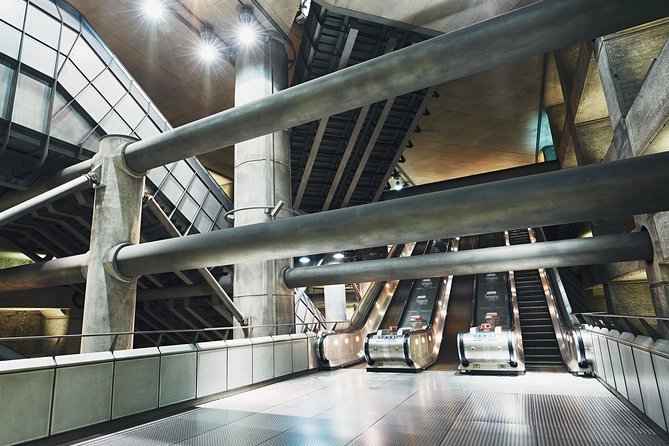
Piccadilly Circus adds another piece to the puzzle. The station opened on March 10, 1906, for the Baker Street and Waterloo Railway, now the Bakerloo line. The Great Northern, Piccadilly and Brompton Railway platforms opened later that year, on December 15, and are now part of the Piccadilly line.
This is a good place to see how several railway companies shaped London’s Underground. The system’s familiar line names and connections came from a long process of mergers, extensions, and redesigns. What feels like one unified network today began as a collection of separate schemes.
The stop lasts about ten minutes. The surrounding streets are among central London’s busiest, so this is not a quiet setting for a long talk. Still, a strong guide can turn the station into a clear lesson in transport competition and urban planning.
John has received especially strong praise for keeping the pace lively while explaining the technology and history. That matters here. The best version of this tour keeps you moving without making the information feel rushed.
Victoria Embankment and the city above the tunnels
At Victoria Embankment, the tour steps into the relationship between the Underground and the River Thames. The Embankment runs along the north bank of the river, from the City of Westminster toward the City of London. It was developed in the 19th century to reclaim marshy land from the riverbank.
This stop helps you see that London’s transport history cannot be separated from the city’s wider building projects. The streets, riverfront, railway routes, and reclaimed land developed together. The Underground was part of a larger effort to reshape a crowded capital.
The listed stop lasts about ten minutes, but the outdoor setting affects the experience. Bring an umbrella or rain jacket, especially in uncertain weather. One person found the tour disappointing on a wet day because of the amount of walking and time spent outside, so weather is a real consideration rather than a minor footnote.
You should also wear comfortable shoes. The route involves many steps, and the tour does not work well if you need frequent rest stops.
Westminster and the story’s final station
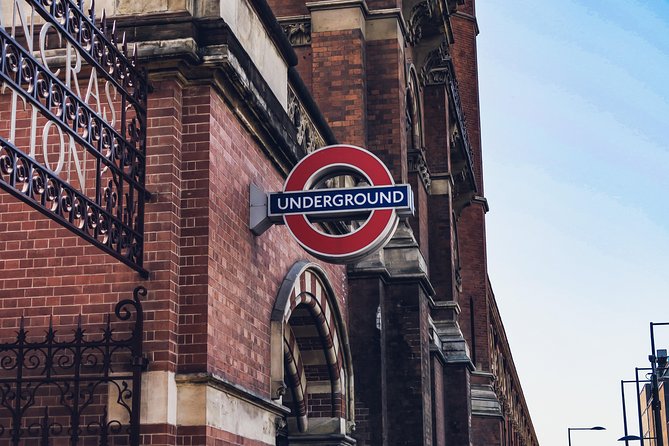
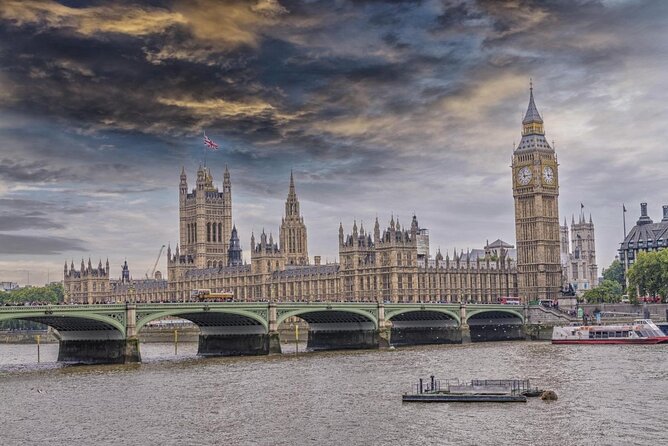
The tour finishes at Westminster Tube Station, near Bridge Street. The station opened as Westminster Bridge on December 24, 1868, when the steam-operated District Railway opened its first section from South Kensington.
That early name reflects the station’s link with the bridge and the river crossing. Access originally came through a passage from Bridge Street and a pedestrian subway beneath the road. Once again, the station shows how transport planning followed the needs of the city above.
Westminster is a strong ending because it brings together the Underground, government, the Thames, and the long history of central London. The tour concludes at the station rather than returning to Baker Street, so you finish in a useful location for continuing your afternoon.
Admission to Westminster Station is listed as free. Other station admissions are not included, but this does not mean you are paying for entry to special attractions. The cost of the tour covers the guided experience, while your Tube fare remains your responsibility.
The guides make or break the experience
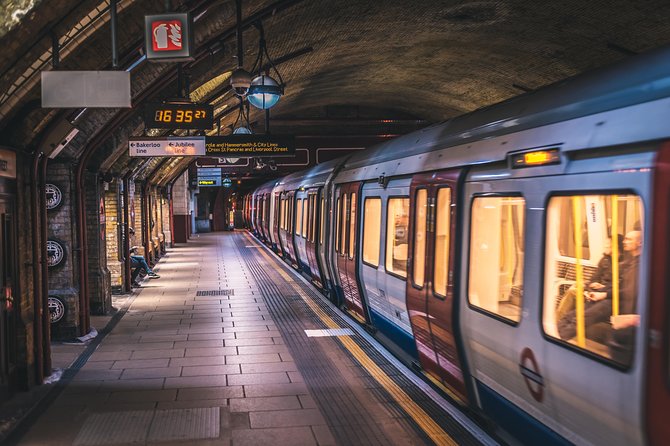
The most consistent strength is the guiding. John is praised for his enthusiasm, clear voice, humor, and command of the Underground’s history. Angela is noted for explaining construction, politics, and the Tube’s role during World War II, while using photographs to make the past easier to picture. Peter is described as engaging, good-humored, and full of historical anecdotes.
Those details give you a useful picture of the tour’s tone. Expect spoken history, practical movement through stations, and the occasional visual aid rather than a formal lecture. A good guide must manage the group while watching crowds, platforms, stairways, and train movements.
The guide also affects how much you gain from familiar places. If you already know London well, the basic station facts may not all be new. Still, the combination of engineering, politics, wartime history, and abandoned stations can add fresh meaning to a transport system you may have used many times.
Price, extra fares, and overall value
The listed price is $41.13 per person. That is fair if you want a guided history walk and enjoy public transport as part of the experience. It is less attractive if you mainly want access to closed stations or a special railway museum visit, because that is not what this tour provides.
Your fare is extra. The instructions require a valid contactless card, Oyster card, or travel card for Zone 1, and a day travel card for Zones 1 and 2 is suggested. Since the route includes several Tube journeys, check that you have enough travel credit or the correct day ticket before arriving.
This extra cost was a sore point for some people, especially because the tour price does not include a day pass. I agree that the fare requirement should be treated as part of the total cost when comparing tours.
The tour is rated 4.4 out of 5 from 38 reviews, which suggests a generally strong experience with some clear limits. I would call it good value for a Tube fan, history enthusiast, or repeat London visitor who wants a guided story. I would not call it the best value for someone expecting a rare-access Underground experience.
Walking, group size, and practical comfort
The group can include up to 25 people. That keeps it smaller than a large sightseeing bus group, but it may not feel especially personal when moving through busy stations.
You need moderate physical fitness. The route includes many steps, station corridors, outdoor walking, and several train rides. The operator specifically says the experience is not suitable for people with reduced mobility.
Bring comfortable footwear and weather protection. Since the tour operates outdoors as well as underground, rain can change the mood quickly. A small umbrella is a sensible addition, but it can be awkward on crowded stairs and platforms, so a rain jacket may be easier.
The tour operates on Tuesdays, Thursdays, and Sundays from April through March, except December 24 to 26 and January 1. It begins at 1 p.m. Confirmation is provided at booking, and free cancellation is available up to 24 hours before the start time.
Who should book this Tube history walk?
I would book this tour if you enjoy engineering, old railway systems, urban history, or the practical story of how cities are built. It is also a good choice if you have already seen London’s main sights and want an activity that uses familiar places in a different way.
Repeat visitors may get the most from it. You already know the Tube as a transport tool, so learning why the lines and stations developed can change how you see your next journey.
I would be cautious if your main goal is a hidden-station tour. The material may be interesting, but the format is mostly public stations, walking, and regular Tube travel. You also pay for the required transport separately.
Should you book the Secrets of the London Underground tour?
Book it if the story of the Tube interests you more than sightseeing from the street. The strongest parts are the 1863 origins, the explanation of Victorian construction, the Down Street closure story, and the guides’ lively accounts of politics and wartime use.
Skip it if you dislike stairs, rain, or group movement, or if you expect access behind locked doors. At $41.13 plus Tube fares, the value depends on how much you enjoy guided history. For the right audience, it is a smart way to understand London’s most famous transport system. For everyone else, a standard sightseeing walk may offer more for the same afternoon.
FAQ
Where does the tour start?
It starts at Baker Street Underground Station, at Marylebone Road, London NW1 5LJ.
Where does the tour end?
The tour ends at Westminster Station on Bridge Street, London SW1A 2JR.
What time does the tour begin?
The scheduled start time is 1 p.m.
How long does the experience last?
It lasts approximately 2 hours and 30 minutes.
Is Tube transportation included in the tour price?
No. Contactless cards, Oyster cards, or travel cards valid for Zone 1 are required and are not included. A day travel card for Zones 1 and 2 is recommended.
How many people can join the tour?
The maximum group size is 25 people.
Is the tour suitable for people with reduced mobility?
No. The route includes many steps and walking, and it is not suitable for people with reduced mobility.
When does the tour operate?
It operates on Tuesdays, Thursdays, and Sundays from April through March, except December 24 to 26 and January 1.
Recently added around London
- London’s Crown Secret: Self-Guided Royal Puzzle Quest★ 4.5 · 8 reviews
- Postcard London★ 5.0 · 8 reviews
- Windsor Castle, Stonehenge & Roman Baths Private Tour★ 4.5 · 8 reviews
- Private Tour: Downton Abbey London Locations by Taxi★ 5.0 · 8 reviews
- Cotswolds Private Driving Tour from London★ 5.0 · 8 reviews
- Skip-the-line London Westminster Abbey and City of Westminster Kid-Friendly Tour★ 5.0 · 8 reviews
- A Silent Disco Adventure in London★ 5.0 · 8 reviews
- Private Full Day Cotswolds Tour From London★ 5.0 · 8 reviews
Walking Tours, compared.

Oxford University Walking Tour With University Alumni Guide
Read our review →
Tour for Muggles The Ultimate Harry Potter Walking Tour in London
Read our review →

Cambridge University Walking Tour by Alumni™ Kings College Option
Read our review →
Blackbeard to Banksy – The Ultimate Walking Tour of Bristol
Read our review →
Air Raid Shelter + St. Nicholas Market Walking Tour
Read our review →
Walking Tour of Bath with Blue Badge Tourist Guide
Read our review →
Changing of the Guard Guided Walking Tour in London
Read our review →Browse the lists this tour appears in