
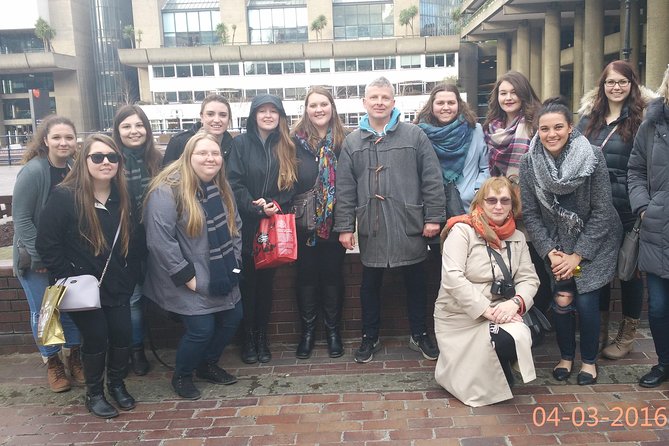
Reviewed · WALKING TOURS
Shakespeare in the City Walk – In Shakespeare’s footsteps North of the Thames
Shakespeare’s London is not limited to the Globe. This two-hour walk north of the Thames traces the writer through Blackfriars, St. Paul’s, Cheapside, and the Barbican, using quiet lanes, church sites, plaques, statues, and one very odd monument made from a famous speech. Declan, a former professional actor, adds live performances to the historical talk.
I like the route for two clear reasons: it takes you to places you would likely miss on your own, and it treats Shakespeare as a working Londoner rather than a distant literary statue. I also like the small-group feel, with bookings capped at 15 people, though the walk covers a fair distance and operates in all weather, so good shoes and a weatherproof layer matter.
Key points to know before you book
- Follow Shakespeare from Blackfriars to Barbican: The route links lesser-known City locations with the Underground at both ends.
- Hear complete Shakespeare speeches: Declan performs passages from Shakespeare’s plays, including a haunting farewell from the final play.
- See overlooked London sites: Expect a hidden sculpture, a strange speech-based totem pole, old church remains, and Shakespeare-related plaques.
- Get more than literary trivia: The walk covers Shakespeare’s houses, daughters, brother, marriage, religion, money, family coat of arms, and writing style.
- Plan for a two-hour city walk: The route is suitable for people with moderate physical fitness and children aged 10 and above when accompanied by an adult.
- Pay about $20.83 per person: At that price, the live performances and specialist route make the walk good value for people with a real interest in Shakespeare.
Why this Shakespeare walk feels different
Many London history walks follow the most famous sights. This one uses Shakespeare as a thread through the City, but it does not simply point at a plaque and move on. You’ll look at where he lived, worshipped, worked, drank, raised a family, and gained social status.
That gives the tour a useful human scale. Shakespeare appears here as a successful but complicated London figure. You hear about his rising wealth, his family, his marriage, his children, his religion, and his periods of loneliness and withdrawal. The literary side remains central, but the route keeps asking how the man behind the plays fitted into the city around him.
The strongest feature is Declan’s use of performance. He does not just explain Shakespeare’s words. He delivers complete speeches, including a full passage near the end of the walk from Shakespeare’s final play. That closing piece concerns farewell, which gives the finish a clear emotional shape rather than ending with a routine thank-you and a Tube stop.
The experience has a 5 out of 5 rating from 114 ratings, with 100 percent recommending it. More useful than the numbers is what they point to: people value Declan’s enthusiasm, his ability to connect the facts, and the way he takes a small group to places that are easy to overlook.
More Walking Tours in London
- Tour for Muggles The Ultimate Harry Potter Walking Tour in London
★ 5.0 · 4,684 reviews - London Jack The Ripper Guided Walking Tour
★ 5.0 · 3,131 reviews - Changing of the Guard Guided Walking Tour in London
★ 5.0 · 1,793 reviews
Meeting Declan at Blackfriars

The meeting point is outside Blackfriars Underground Station at 11:00 am. Use the station on the Circle and District lines, and take care with the name. You must meet at the Underground station north of the river, not Blackfriars overground station south of the river.
There is only one exit, and Declan will be a few metres away with a sign on his rucksack showing Shakespeare’s face. That is a practical touch in a busy part of London. You do not need to search several corners of a large station or guess which exit to use.
The starting point is free to enter and the first stop is simply the orientation for the walk. From here, the route moves through City streets toward Barbican. Wear shoes you can walk in for two hours. The tour runs in all weather, and the City can feel exposed in poor conditions, so bring suitable clothing rather than hoping for a dry morning.
Blackfriars Theatre and the price of seeing Shakespeare
One of the first substantial stops points to the original Blackfriars Theatre. This is a chance to understand that Shakespeare’s audiences were not all standing in the open air at the Globe. The Blackfriars setting catered to a wealthier audience, and the discussion includes why admission cost more there.
That detail helps correct the usual picture of Elizabethan theatre as a single shared experience. Shakespeare was also a businessman who became wealthy, and the walk connects the theatre’s social setting with the money he made himself.
You’ll then see a surviving fragment of the Blackfriars Monastery at Ireland Yard. It is a modest remnant rather than a grand ruin, but that is part of the appeal. The stop links a small piece of medieval London with Shakespeare’s recurring themes and gives the route a wider historical frame.
At Carter Lane, the tone shifts. This is described as a quiet, attractive location tied to Shakespeare and King James. A calm lane can make a welcome break from the traffic and hard stone of the City, especially early in the walk.
Shakespeare’s homes, Richard III, and a praying sculpture
Saint Andrew’s Hill gathers several strands into one stop. You’ll hear about the site of a Shakespeare house in London, what happened to it, and the play likely written there. The focus then turns to a church containing a sculpture of Shakespeare praying, a detail that is easy to miss without a guide.
The stop also brings in an important document and the researcher associated with it, along with Richard III and the area’s connection to that play. This is where the walk shows its broader range. You are not just collecting addresses linked to Shakespeare. You are being asked to consider how buildings, records, religious settings, and later research shape what we think we know about him.
Some of the material may be familiar to serious Shakespeare readers, but the setting gives it a physical anchor. If you have only met Shakespeare through books or school productions, seeing the places connected with his London life can make the subject much easier to picture.
A completely different sort of day out in London:
- Stonehenge, Windsor Castle, and Bath from London
★ 4.5 · 18,662 reviews - London Big Bus Hop-On Hop-Off Tour with Optional River Cruise
★ 3.5 · 10,803 reviews - London Small Group Tour of Historical Pubs
★ 5.0 · 10,422 reviews - Stonehenge, Windsor Castle and Bath with Pub Lunch in Lacock
★ 4.5 · 7,402 reviews
A speech carved into an unexpected London monument

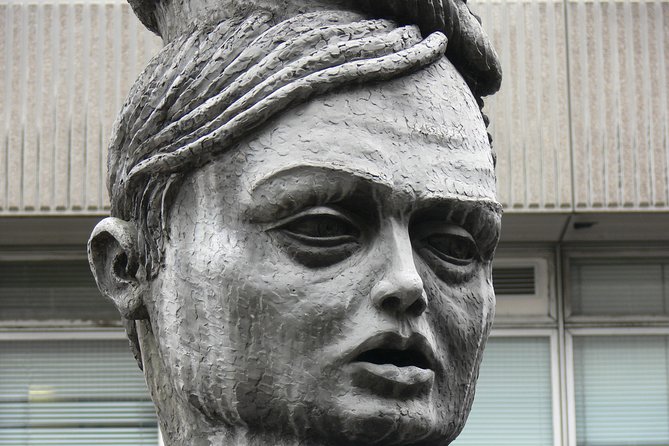
Queen Victoria Street brings one of the tour’s most unusual sights: a totem pole made from a famous William Shakespeare speech. You would be unlikely to find it by chance, and the guide performs the entire speech beside it.
This is the moment that best explains why the walk is not just a standard literary lecture. London’s City streets contain strange, tucked-away objects that make little sense until someone explains them. A monument based on a Shakespeare speech is both curious and memorable, especially when the words are spoken aloud at the same time.
The stop then turns to the College of Arms and Shakespeare’s family coat of arms. You’ll hear why the honour came two months too late, along with Ben Jonson’s joke at Shakespeare’s expense. Shakespeare’s children also enter the story here, so the discussion moves from public status to private family life.
That mixture keeps the route from becoming too solemn. There is room for status, rivalry, ambition, and humour, not only reverence for the Bard.
Generosity, daughters, and the danger of romanticizing Love Lane
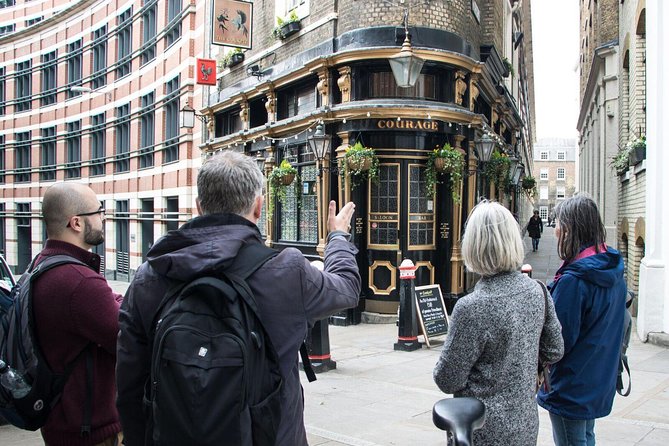
At another Carter Lane stop, a plaque opens up a discussion of Shakespeare’s generosity. The guide also encourages you to think about what may still be found in old attics, a reminder that new evidence can sometimes come from ordinary family possessions rather than famous institutions.
The stories of Shakespeare’s two daughters receive special attention. Their fortunes differed greatly, and the contrast gives you a more grounded view of the family. Shakespeare’s name can dominate the story so completely that his children become footnotes. Here, they have a clearer place.
Love Lane follows with a bust of Shakespeare and the men who honoured him. The stop also asks which plays might not have survived without those men, and it includes information about Shakespeare’s writing style.
Do not expect the lane’s name to lead into a dreamy romance. The guide specifically warns against getting starry-eyed about Love Lane. That small joke fits the practical character of the tour: Shakespeare’s London is treated with affection, but not as a perfect storybook setting.
St. Paul’s, sonnets, and Shakespeare’s cosmic side
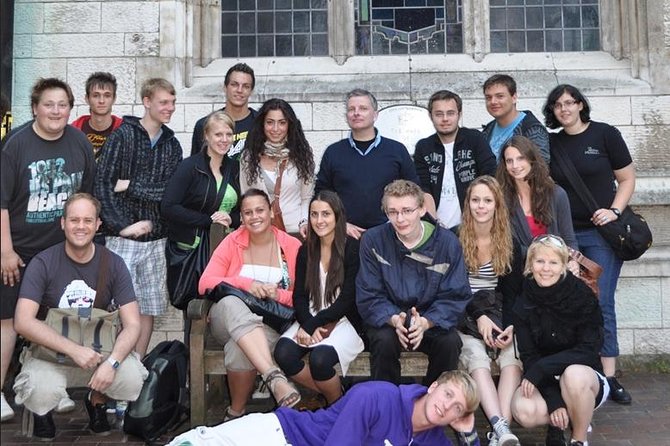
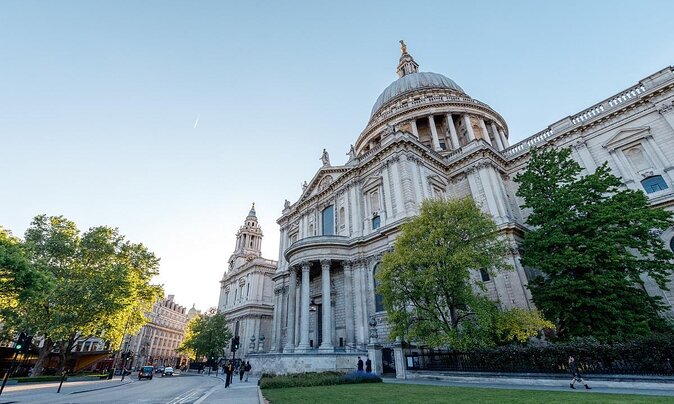
The approach to St. Paul’s Cathedral gives the route one of its grandest visual moments. You do not go inside the cathedral, but the exterior provides an impressive setting for a discussion of Shakespeare’s best-selling work and his sonnets.
The treatment of Shakespeare’s sexuality is described as a reasonable interpretation rather than a firm verdict. That is the right tone for a subject where the poems invite questions but do not give modern readers a simple biography. You get room to consider the language without pretending that every uncertainty can be solved.
Declan also shares his favourite four words by Shakespeare, described as cosmic in scale. The specific words are part of the live delivery, and they fit the larger theme running through the walk: Shakespeare’s ability to move from a London street to ideas about time, death, identity, and the universe.
This portion may appeal most to readers who already know the plays or sonnets. Still, you do not need to be a scholar. The route supplies enough context to make the literary references approachable.
Cheapside and the limits of Shakespeare’s vocabulary
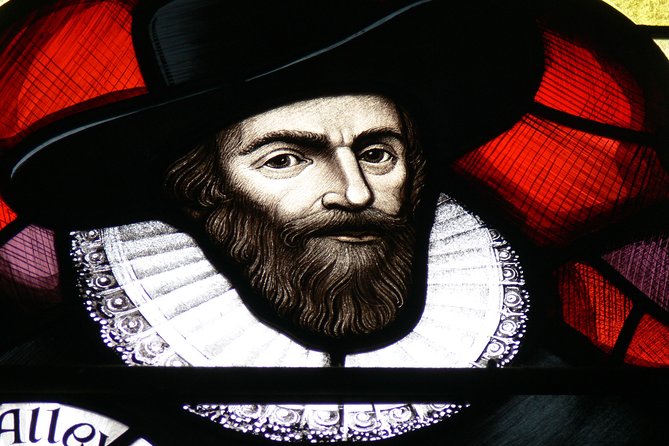
At Cheapside, the subject turns to Shakespeare’s extraordinary vocabulary and the surprising fact that even such a large store of words was not enough. The point is less about counting terms than about showing how language can fail when a writer reaches for an idea, feeling, or experience beyond easy description.
The stop also covers a pub where Shakespeare drank and names another notable person who drank there. From there, the discussion moves into Shakespeare’s religion and the reasons he may have been lonely and reclusive.
This is one of the more personal sections of the route. It resists the image of an endlessly social genius who was always surrounded by actors and patrons. You get a portrait that includes isolation and private difficulty alongside professional success.
Because the tour remains on public streets, some stops are brief. Cheapside is allocated about 12 minutes, enough for a focused talk but not an extended seminar. If you want long discussion after each subject, a two-hour walk may feel brisk.
From London Wall to Shakespeare’s difficult marriage
The London Wall stop marks the site of Shakespeare’s second house and explains why he ended up in this part of the city. The location helps connect his movements to the ordinary practical pressures of London life.
You’ll also hear the full story of his marriage and why he later regretted it. This is potentially sensitive material, and the value lies in seeing Shakespeare as a person whose private decisions could bring lasting consequences. The walk does not turn him into a flawless genius. It leaves room for mistakes, disappointment, and contradiction.
That balance is one reason the tour suits adults and older children better than very young ones. The recommended age is 10 and above, and children must be accompanied by an adult. Younger children may enjoy the performances, but the family, marriage, and religious material calls for enough attention to follow the discussion.
St. Giles Cripplegate and a farewell from Shakespeare
The final main stop is St. Giles Cripplegate, a church Shakespeare knew. Here you’ll hear about the two most famous actors of his age and the sad story of his brother Edmund.
The route finishes with another complete and haunting speech from Shakespeare’s final play. It is about saying goodbye, so the choice gives the ending real purpose. After two hours of streets, records, family stories, buildings, and speeches, the final words return you to Shakespeare’s writing.
Declan then walks to Barbican Underground Station if you want to continue with him. Barbican is served by the Circle, Metropolitan, and Hammersmith and City lines. Ending at a well-connected station makes it easy to carry on with your London day, rather than leaving you in an unfamiliar side street.
What you get for about $20.83
At roughly $20.83 per person, the cost is modest for a two-hour guided walk in central London. The price includes a professional guide, pickup and drop-off at the designated points, and live entertainment. There are no separate admission charges at the listed stops, and St. Paul’s Cathedral is viewed from outside.
The value depends on how much you want from the subject. If you already plan to walk around the City and only want a quick introduction to Shakespeare, you could follow parts of the route independently. You would not, however, get Declan’s explanations, the connections between the sites, or the complete performances.
I see the strongest value in the unusual route. The walk leads you to a monastery fragment, a praying sculpture, a speech-based totem pole, lesser-known house sites, and a church connected to Shakespeare’s circle. These are not the standard first-day London sights, so the tour works best as a focused experience rather than a replacement for a general city tour.
The activity is often booked about 25 days ahead. That suggests planning early if your London dates are fixed, particularly because small bookings are capped at 15 people and the overall activity has a maximum of 45 participants.
Who should take this walk
You should book it if you enjoy literary history, old city streets, and stories that connect public places with private lives. It suits Shakespeare readers, theatre fans, London residents who want a fresh local route, and visitors who have already seen the main sights.
It also works well for anyone who prefers a guide with performance skills. Declan’s background as a professional actor is important here because the speeches are not an extra thrown in at the end. They are part of the way the tour brings the subject to life.
You may want to skip it if you dislike walking in uncertain weather, need a fully indoor activity, or want to enter major attractions. The group does not go inside St. Paul’s Cathedral, and the experience is conducted in English.
Practical details for a smoother morning
The tour begins at 11:00 am outside Blackfriars Underground Station. Check that you are at the correct Blackfriars station north of the Thames, on the Circle and District lines. Look for the guide’s rucksack sign with Shakespeare’s face.
The walk lasts about two hours and ends at Barbican Underground Station. The route includes several short stops, with the longest discussions around 15 minutes. A moderate level of physical fitness is recommended.
Children must be accompanied by an adult, and the suggested minimum age is 10. The tour operates in all weather, so bring clothing suited to the forecast. Confirmation is provided when you book, and free cancellation is available up to 24 hours before the start time. Changes or cancellations inside that window are not accepted for a refund.
Should you book Shakespeare in the City Walk?
Book this walk if you want Shakespeare connected to real streets, buildings, family stories, money, faith, and uncomfortable personal choices. The small-group format, unusual City locations, and Declan’s complete speech performances give it more character than a basic sightseeing walk.
Skip it if you want a broad tour of London, an indoor museum visit, or entry to St. Paul’s Cathedral. For about $20.83, though, it offers strong value for anyone curious about Shakespeare and willing to walk from Blackfriars to Barbican in whatever weather London provides.
FAQ
Where does the Shakespeare in the City Walk begin?
The walk begins outside Blackfriars Underground Station in London at 11:00 am. Use the Underground station on the Circle and District lines, not the Blackfriars overground station south of the river.
Where does the tour end?
The tour ends at Barbican Underground Station on Aldersgate Street. Barbican is served by the Circle, Metropolitan, and Hammersmith and City lines.
How long does the walk last?
The experience lasts approximately two hours.
Is the tour conducted in English?
Yes. The walk is offered in English.
Who leads the Shakespeare walk?
The guide is Declan, a former professional actor who provides live performances of complete Shakespeare speeches during the walk.
Does the tour enter St. Paul’s Cathedral?
No. The route visits St. Paul’s Cathedral from the outside and does not include interior admission.
Is the walk suitable for children?
Children must be accompanied by an adult, and the recommended age is 10 and above.
What happens if the weather is bad?
The tour operates in all weather conditions. You should dress appropriately for the forecast and wear suitable walking shoes.
Recently added around London
- London’s Crown Secret: Self-Guided Royal Puzzle Quest★ 4.5 · 8 reviews
- Postcard London★ 5.0 · 8 reviews
- Private Tour: Downton Abbey London Locations by Taxi★ 5.0 · 8 reviews
- Windsor Castle, Stonehenge & Roman Baths Private Tour★ 4.5 · 8 reviews
- Cotswolds Private Driving Tour from London★ 5.0 · 8 reviews
- Skip-the-line London Westminster Abbey and City of Westminster Kid-Friendly Tour★ 5.0 · 8 reviews
- A Silent Disco Adventure in London★ 5.0 · 8 reviews
- Gangster Tour of Soho★ 4.5 · 8 reviews
Walking Tours, compared.
Oxford University Walking Tour With University Alumni Guide
Read our review →
Tour for Muggles The Ultimate Harry Potter Walking Tour in London
Read our review →
Cambridge University Walking Tour by Alumni™ Kings College Option
Read our review →
Blackbeard to Banksy – The Ultimate Walking Tour of Bristol
Read our review →
Air Raid Shelter + St. Nicholas Market Walking Tour
Read our review →
Walking Tour of Bath with Blue Badge Tourist Guide
Read our review →
Changing of the Guard Guided Walking Tour in London
Read our review →Browse the lists this tour appears in