
Reviewed · WALKING TOURS
Slavery and City of London Walking Tour
London’s grandest streets carry a story that is easy to miss: slave labor and the slave trade helped build British power, from Roman Londinium to the companies and institutions of the 18th century. This walk puts that story beside places you may otherwise pass without a second thought, including the Jamaica Wine House and the Bank of England.
I like two things here. First, guide Sam connects buildings, people, and business dealings instead of treating slavery as a separate subject floating outside the city. Second, the route adds useful context to famous sights such as St Paul’s Cathedral and the Tower of London. The main consideration is that the walk is short, so the subject is presented briskly and the route details should be checked carefully before you go.
Key points
- Roman Londinium begins the story: See part of the old wall and learn how Roman conquest brought the enslavement of Britons.
- Coffee, sugar, and slavery meet at Jamaica Wine House: The site of London’s first coffee house was tied to the West Indies trade.
- Abolition has a local setting: The Gilt of Cain sculpture and St Mary Woolnoth connect the trade with the campaign to end it.
- Major institutions come into focus: The East India Company, Bank of England, and Royal Africa Company reveal how commerce and civic power overlapped.
- Sam leads a personal, discussion-based walk: His clear delivery, humor, books about the area, and collected images add depth to the street-level tour.
- Good value at $27.43: For about 90 minutes, you get a focused City of London walk with no admission charges at the listed stops.
Why this City of London walk matters
The most useful feature of this tour is its frame. It does not treat slavery as a distant subject that belongs only in museums or former plantation colonies. Instead, it asks you to look at the City of London, the compact financial district where decisions, investments, trade, and public power helped shape the British Empire.
You will hear about slavery across roughly 2,000 years. The walk begins with the Roman occupation, when Romans enslaved Britons, then moves toward the Atlantic slave trade, the East India Company, West Indian sugar, and the campaign for abolition.
That long view can be uncomfortable, but it gives the walk more range than a standard sightseeing circuit. You are not simply being shown attractive buildings. You are being asked to consider who financed them, who benefited from trade, and how opposition to slavery also developed within the same city.
I especially like the way the route places opposing stories close together. The Jamaica Coffee House was linked to the sugar trade and slave plantations of the West Indies. Nearby, St Mary Woolnoth was associated with abolitionist John Newton, who served as rector. The contrast gives the subject a physical shape you can understand while walking.
More Walking Tours in London
- Tour for Muggles The Ultimate Harry Potter Walking Tour in London
★ 5.0 · 4,684 reviews - London Jack The Ripper Guided Walking Tour
★ 5.0 · 3,131 reviews - Changing of the Guard Guided Walking Tour in London
★ 5.0 · 1,793 reviews
Meeting at Tower Hill and finding the Roman wall

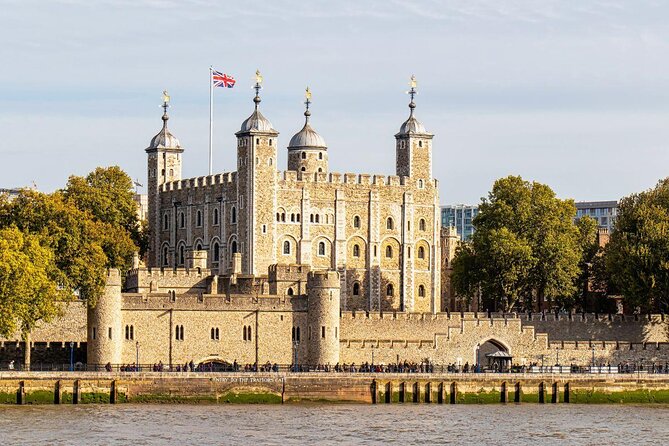
The tour begins at noon at Tower Hill Tram, Trinity Square, near the Tower of London. The location is well served by public transport and gives you an easy starting point in the City.
One early stop is the Roman wall of Londinium. The surviving section helps explain why the settlement became a defined city about 2,000 years ago. This is not just a stone fragment to photograph. It introduces the idea that London’s story has always included conquest, movement, labor, and unequal power.
The Roman section also brings in an African Roman emperor associated with the building of the wall. That detail broadens the usual picture of Roman Britain, which is often presented as a story of soldiers from Rome ruling a passive local population. Sam uses the wall to show that London was connected to a much wider empire from the start.
You will spend only about five minutes at this point, with no admission fee. That is enough for orientation, but not enough for a full Roman London lesson. If Roman archaeology is your main interest, you will want a separate museum visit or a longer archaeological walk.
East India House and the machinery of trade
The route then reaches the former site of East India House. This was the headquarters of the East India Company, one of the most powerful commercial organizations in British history.
Here the focus shifts from ancient conquest to organized imperial commerce. The East India Company relied on slave labor and trafficked in enslaved people from East and West Africa. That connection is important because the company is often remembered mainly for spices, textiles, tea, and political control in Asia.
Standing at the former headquarters helps you connect commercial success with the labor systems that supported it. The building itself is gone, so this part relies on Sam’s explanation rather than a dramatic surviving monument. That may disappoint you if you expect every stop to have a clear physical display, but it is also typical of a City of London walk, where financial history often survives in addresses and records rather than intact buildings.
The route makes a useful point here: trade was not separate from power. Company directors, merchants, public officials, and investors operated in the same small district. The City’s streets became a meeting place for private profit and national policy.
Fenchurch Street and the Gilt of Cain
At Fenchurch Street, the walk pauses at Fen Gardens, where you can see the Gilt of Cain sculpture. The work commemorates the abolition of the transatlantic slave trade.
This is one of the more direct memorial points on the route. After the earlier stops on conquest, commerce, and exploitation, the sculpture turns your attention to remembrance and abolition. It also shows how modern London marks a painful part of its past in ordinary public space.
The stop lasts about ten minutes and is free. That gives Sam time to explain the sculpture and place abolition within the wider story rather than rushing past it as a single date.
I find this kind of stop more useful than a quick mention of abolition at the end of a general city tour. You have already heard how institutions and businesses profited. The memorial then asks you to think about the campaign that challenged that system and the way London chooses to remember it.
A completely different sort of day out in London:
- Stonehenge, Windsor Castle, and Bath from London
★ 4.5 · 18,662 reviews - London Big Bus Hop-On Hop-Off Tour with Optional River Cruise
★ 3.5 · 10,803 reviews - London Small Group Tour of Historical Pubs
★ 5.0 · 10,422 reviews - Stonehenge, Windsor Castle and Bath with Pub Lunch in Lacock
★ 4.5 · 7,402 reviews
Jamaica Wine House and the sugar trade
The Jamaica Wine House occupies the site of London’s first coffee house, known as the Jamaica Coffee House. The name may sound like a simple piece of local color, but the stop opens a window onto the commercial culture of the period.
Coffee houses were places where merchants exchanged news, discussed prices, arranged deals, and followed overseas trade. This particular site was a hub for the sugar trade and for business connected with slave plantations in the West Indies.
That makes the stop especially effective for visitors who know the City mainly for banks and office towers. A coffee house can seem ordinary, yet places like this helped turn distant plantation production into profitable British commerce. Sam’s job here is to make that connection clear without asking you to imagine a grand building that is no longer there.
You will not be touring the interior as part of the listed experience. The value comes from the address and the explanation. If you have already walked through the area, you may be surprised by how much meaning can sit behind a familiar pub or street corner.
St Mary Woolnoth and John Newton
St Mary Woolnoth brings a more personal figure into the story. John Newton, an abolitionist, was rector of the church.
Newton is a complicated figure in the history of British slavery. His connection with the Atlantic world and later work against the slave trade make him a useful subject for a walk that avoids a simple good-versus-bad version of the past. The church gives Sam a place to discuss how people changed, argued, and acted within institutions tied to slavery.
The stop lasts about ten minutes. You should expect an exterior-focused explanation rather than a long church visit, since the tour is built around the City streets and the links between them.
I like this pause because it puts moral debate beside commercial power. The Jamaica Coffee House represents profit from the system. St Mary Woolnoth represents a prominent voice opposing the trade. The two sites are close enough to make the connection memorable.
The Bank of England and official responsibility

The Bank of England stop lasts about fifteen minutes, making it one of the longer pauses on the route. The subject is the bank’s past links to the slave trade through former directors and governors.
The Bank has apologised for the involvement of some past figures and promised to remove their statues and paintings from public display in its Threadneedle Street building. That detail brings the discussion into the present. This is not only a lesson about what happened centuries ago. It is also about how institutions handle the names, portraits, and reputations of people who helped build their success.
The building itself is an imposing reminder of the City’s financial authority, but the walk asks you to look beyond architecture. The question is not simply who worked here. It is how banking, investment, and public leadership were connected to a wider economy built partly on enslaved labor.
At fifteen minutes, this is a good place for questions. The tour has a maximum of 35 people, so the group may be larger than an intimate private walk, but the cap keeps it from becoming a huge crowd. Sam’s style, based on clear explanation and conversation, suits a stop like this better than a memorized list of dates.
The Royal Africa Company and City government
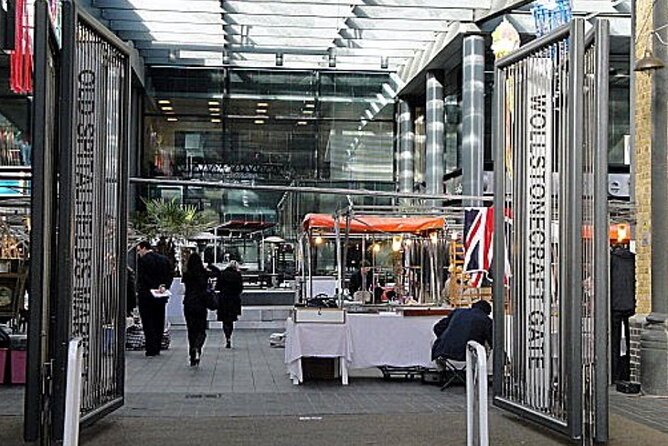
Another important site is the building associated with the Royal Africa Company. Sheriffs, mayors, and aldermen of the City of London met here as shareholders.
That detail cuts to the heart of the tour. The slave trade was not carried out only by remote merchants or anonymous companies. Civic leaders and influential Londoners could hold financial interests in the Royal Africa Company while also serving in public roles.
This is where the City’s separate identity matters. The City of London has its own legal traditions, mayor, and police force, distinct from the wider urban area. The walk uses that civic setting to show how local government, business, and overseas trade overlapped.
You may find this stop less visually obvious than St Paul’s or the Roman wall. Its importance comes from the people connected with the building and the decisions made there. Sam’s supporting images and spoken explanation are especially useful at places where the original story is not easy to read from the street.
Finishing near St Paul’s and Aldgate
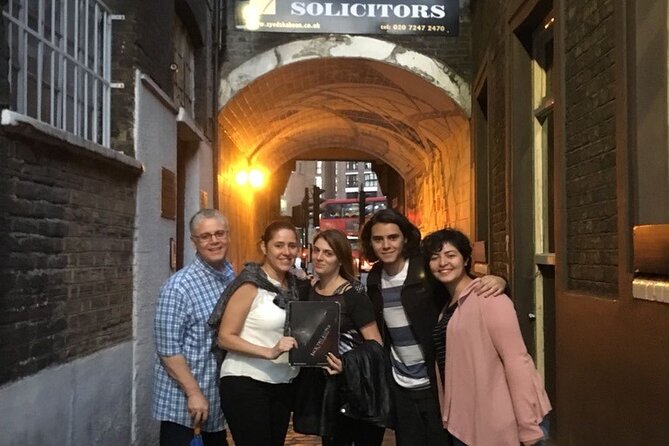
The route includes St Paul’s Cathedral and finishes in the St Paul’s area, near an Underground station on the Central line. The stated end point is also Aldgate Underground station on Aldgate High Street, so I would check your booking confirmation for the exact finishing point before setting out.
St Paul’s works well as the final landmark. Its scale and fame can overshadow the surrounding streets, but the tour uses it to return you to the main idea: London’s best-known buildings are part of a much larger story of money, labor, empire, religion, and resistance.
The listed timing adds up to roughly 90 minutes, though several reviews describe the walk as closer to two hours. That may reflect discussion, questions, or a different actual pace. Plan for at least the advertised hour and a half, and avoid booking a tight connection immediately afterward.
The walk is generally described as easy, but you will be outside for the full experience. Wear practical shoes and check the forecast. The tour requires good weather, and poor conditions can lead to a new date or a full refund.
Sam’s approach and the group size
Sam is the named guide, and his strengths are central to the experience. He is a qualified guide and the author of books about the area. His delivery is described as clear, funny, and engaging, with a strong command of Roman and Victorian London as well as the history of slavery.
I would expect a talk that feels more like a guided conversation than a speech. Sam uses architecture, oral history, and images collected through his studies to support the points made on the street. That approach is useful because some stops, such as East India House and the Royal Africa Company site, require imagination.
The maximum group size is 35 people. That is not a tiny group, so your experience may depend on where you stand and how active the discussion becomes. The cap is still reasonable for a walking tour, especially at this price, and it should be easier to hear the guide than in a large open-ended group.
The public response has been very strong, with a 4.9 rating from 11 reviews and 100 percent recommendation. The praise centers on Sam’s command of the subject, his humor, and his ability to make ordinary streets feel significant. Those are the qualities I would value most here, since the route depends on interpretation as much as on monuments.
Is $27.43 good value?
At $27.43 per person, I consider this a fair price for a focused 90-minute tour in central London. There are no admission charges at the listed stops, so you are paying mainly for Sam’s research, guiding, and the structure he brings to the route.
The value is strongest if you want context rather than a checklist of sights. You could walk past the Roman wall, Jamaica Wine House, Bank of England, and St Paul’s on your own, but you would miss the connections between them. The tour gives you a clear subject and a route through several centuries.
It is less suitable if you want entry inside major attractions, long stops at every building, or a broad introduction to all of London. This is a focused social and economic history walk, not a general highlights tour.
The mobile ticket is practical, and confirmation is provided at booking. Free cancellation is available up to 24 hours before the start time. Last-minute cancellations and changes are not accepted, so keep that deadline in mind.
Who should book this walk?
I would recommend it to you if you have already seen the obvious London sights and want to understand the City in a more serious way. It also suits anyone studying British imperial history, African and Caribbean history, abolition, or the role of finance in the slave trade.
The walk is a good fit for adults and older children who can follow a sustained discussion. The subject is difficult, but the tone described here is informative and often uplifting rather than focused only on despair. Sam’s attention to abolition and resistance gives the walk a sense of movement and agency.
You may want something else if you prefer quiet sightseeing, a museum-based experience, or a tour devoted mainly to Roman remains. The Roman wall is an opening point, not the main subject. Likewise, St Paul’s is a landmark on the route, not an included cathedral visit.
Should you book the Slavery and City of London Walking Tour?
Book it if you want familiar London landmarks to carry more meaning. For $27.43, Sam’s walk gives you a compact route through Roman conquest, the East India Company, sugar commerce, the Royal Africa Company, civic leadership, abolition, and institutional responsibility.
I would confirm the exact end point because the information gives both the St Paul’s area and Aldgate Underground station. Once that is clear, this is an easy choice for a visitor who values thoughtful interpretation over a standard photo stop. It is short, affordable, and specific, with enough historical weight to change how you see the City’s streets afterward.
FAQ
Where does the Slavery and City of London Walking Tour begin?
The tour begins at noon at Tower Hill Tram, Trinity Square, London EC3N 4TH, near public transportation.
Where does the walk finish?
The information gives Aldgate Underground station on Aldgate High Street as the end point. It also describes the finish as being by St Paul’s Underground station on the Central line, so check your booking confirmation for the exact route ending.
How long does the tour last?
The advertised duration is approximately 1 hour 30 minutes. Some descriptions of the walk indicate that it can run closer to two hours, so allow extra time if you have another booking afterward.
What landmarks are included?
The route includes the Roman wall of Londinium, the former site of East India House, Fenchurch Street and the Gilt of Cain sculpture, Jamaica Wine House, St Mary Woolnoth Church, the Bank of England, the Royal Africa Company site, and the St Paul’s Cathedral area.
How many people can join the tour?
The group has a maximum of 35 participants.
Can I cancel for a full refund?
Yes. You can cancel at least 24 hours before the local start time for a full refund. Poor weather or failure to reach the minimum number of participants may also lead to a new date, another experience, or a full refund.
Recently added around London
- London’s Crown Secret: Self-Guided Royal Puzzle Quest★ 4.5 · 8 reviews
- Postcard London★ 5.0 · 8 reviews
- Private Tour: Downton Abbey London Locations by Taxi★ 5.0 · 8 reviews
- Windsor Castle, Stonehenge & Roman Baths Private Tour★ 4.5 · 8 reviews
- Cotswolds Private Driving Tour from London★ 5.0 · 8 reviews
- Skip-the-line London Westminster Abbey and City of Westminster Kid-Friendly Tour★ 5.0 · 8 reviews
- A Silent Disco Adventure in London★ 5.0 · 8 reviews
- London: National Gallery English Audio Tour with free fast Entry★ 3.0 · 8 reviews
Walking Tours, compared.
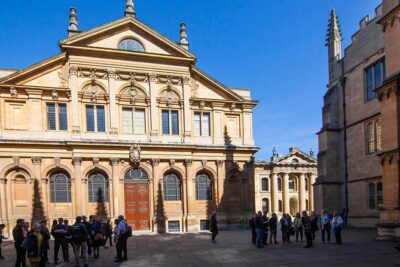
Oxford University Walking Tour With University Alumni Guide
Read our review →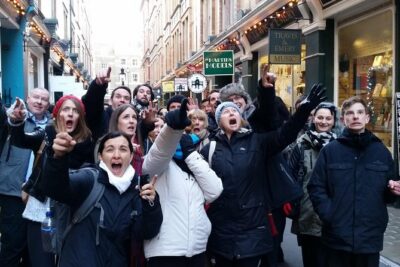
Tour for Muggles The Ultimate Harry Potter Walking Tour in London
Read our review →
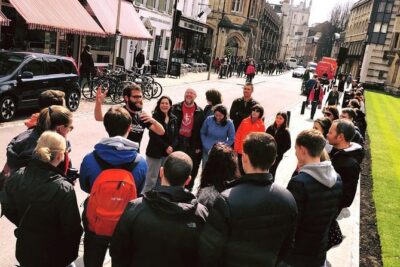
Cambridge University Walking Tour by Alumni™ Kings College Option
Read our review →
Blackbeard to Banksy – The Ultimate Walking Tour of Bristol
Read our review →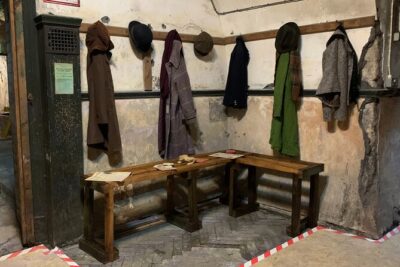
Air Raid Shelter + St. Nicholas Market Walking Tour
Read our review →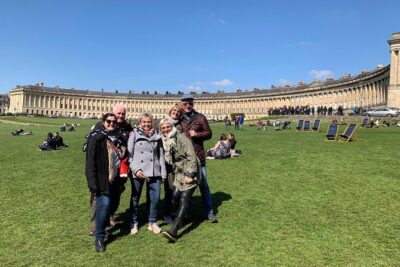
Walking Tour of Bath with Blue Badge Tourist Guide
Read our review →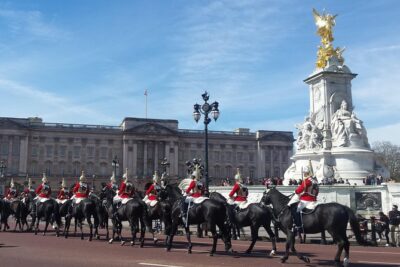
Changing of the Guard Guided Walking Tour in London
Read our review →Browse the lists this tour appears in