Reviewed · WALKING TOURS
Small-group New Forest Discovery Walk from Lyndhurst
The most rewarding part of this New Forest walk is the way it connects small details to the wider story. A bird call, a pony beside the track, an old oak, and a patch of heath all help explain how this unusual place has been shaped for centuries. Starting at Bolton’s Bench, you’ll walk with wildlife surveyor guides Marcus and Emily-Louise through heath, mire, ancient woodland, and working coppice.
I like the small group of no more than 12 because it gives you a fair chance to ask questions. I also like the relaxed pace. You cover about 8 kilometres in roughly two hours, with time to stop for birds, butterflies, fungi, flowers, and whatever else appears. The main consideration is that this is still a fairly long walk, and the forest can be weather-dependent. Good shoes and moderate fitness matter.
What makes this walk worth your morning
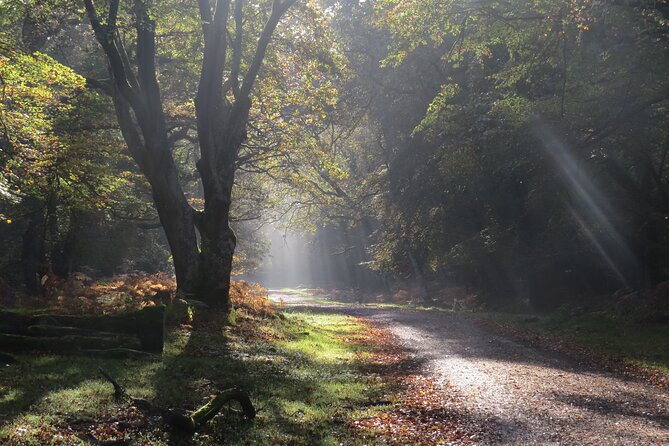
- Bolton’s Bench gives you an immediate view: Begin with broad views across New Forest heath and mire before entering the woods.
- The route covers several habitats: Walk through open heath, wet mire, ancient woodland, and Pondhead Inclosure’s working coppice.
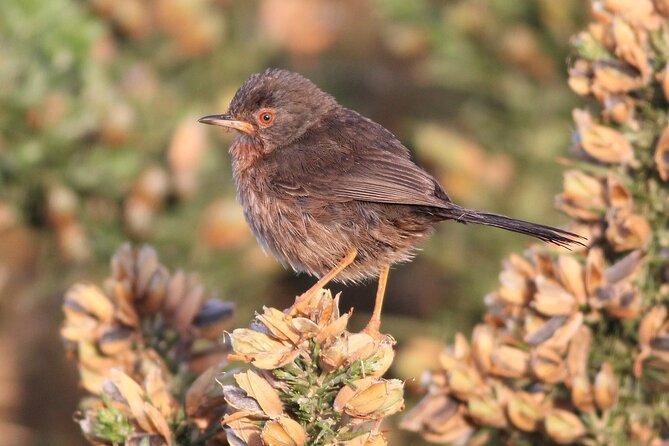
- Wildlife is the main event: Look and listen for Dartford Warblers, fallow deer, birdsong, butterflies, fungi, wildflowers, and invertebrates.
- Marcus and Emily-Louise add real field knowledge: Their interests range from bird identification to woodland management and forest history.
- Commoning is explained on the ground: Ponies and cattle are not just scenery. Their grazing helps maintain the open habitats you see.
- The pace suits curious walkers: The route is family-friendly for those with moderate fitness, but it is not a short stroll.
Starting at Bolton’s Bench with heathland views
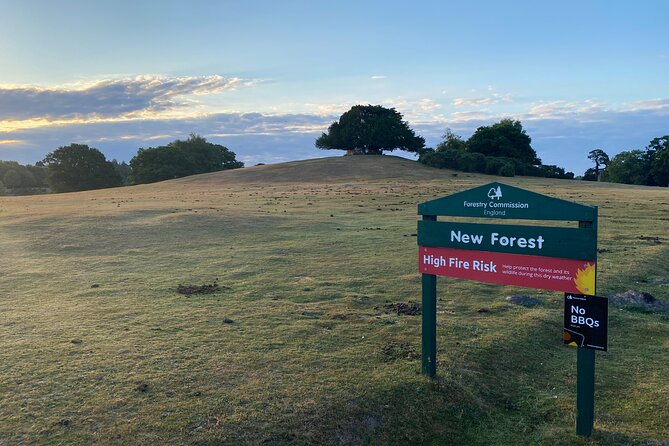
Meet at Bolton’s Bench, on Beaulieu Road in Lyndhurst, at 10:00 am. This well-known starting point gives you a useful introduction before your boots even reach the trees. From the ridge, you can look across classic New Forest heath and mire toward distant woodland.
I like this opening because it helps you see the forest as a mix of habitats rather than one endless stretch of trees. Open heath needs different conditions from woodland. Mire has its own wet ground and plant life. The view lets you understand that variety early.
The route follows The Ridge, where the open views are likely to be at their best. This is also a good moment to settle into the walk and hear how the guide plans to read the forest. You might stop for a bird call, an unusual plant, or a sign of grazing animals.
The views are a strong feature, but they come with a practical point. Much of the experience takes place outdoors in exposed conditions, so wind or rain can affect your comfort. The operator requires good weather for the walk to run. Bring suitable clothing rather than relying on a pleasant forecast from your departure point.
More Walking Tours in South East England:
- Guided Walking Tour of New Forest National Park in Hampshire
★ 5.0 · 31 reviews - Oxford University Walking Tour With University Alumni Guide
★ 5.0 · 6,905 reviews - Tour for Muggles The Ultimate Harry Potter Walking Tour in London
★ 5.0 · 4,684 reviews
Entering Denny Inclosure and the ancient trees
From the open ridge, the route enters Denny Inclosure. The change is immediate: open heath gives way to woodland, with a different feel under the canopy and a new set of things to notice.
This is where the walk’s natural history becomes especially useful. Marcus and Emily-Louise can help you look beyond the most obvious sights. Ancient beech and oak are part of the story, but the woodland also supports fungi, birds, insects, flowers, and other smaller forms of life.
You may not see every species named in the description. Wildlife walks depend on season, weather, and luck. That is not a weakness of the tour, but you should book it for skilled observation and a better understanding of the forest, not for a guaranteed checklist.
Birds are a particular strength here. One guide is an enthusiastic birdwatcher and can identify birdsong, adding another layer to the walk. You might hear a bird before you see it, then learn how habitat and season affect where it feeds or nests. The Dartford Warbler is one of the signature species associated with New Forest heath, though sightings are never promised.
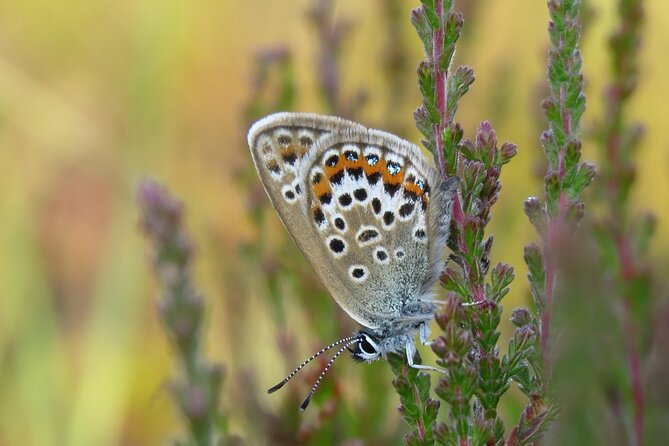
Past walks with Marcus and Emily-Louise have included a young cuckoo, a silver-washed fritillary, and a bee-wolf colony. These examples show the range of encounters possible on a good day. They also show why it pays to move slowly and listen instead of treating the route as a simple point-to-point hike.
From woodland habitats to Pondhead Inclosure
The route continues through a mixture of woodland habitats before returning through Pondhead Inclosure. This is working coppice woodland, so the trees are part of an active tradition of woodland management rather than simply a backdrop for a walk.
Coppicing involves cutting trees close to the ground so they can grow again from the base. You will learn about this kind of management in relation to the forest, and it gives useful context to what you see around you. The New Forest is not untouched wilderness. People have shaped it for a very long time, and some traditional practices still affect its plants and animals.
The guides also explain commoning, the ancient system that allows commoners certain rights, including the grazing of animals. Ponies and cattle help keep some areas open by eating vegetation that would otherwise spread into heath and grassland. That grazing helps create the varied conditions that support different wildlife.
This is one of the best reasons to choose a guided walk instead of exploring alone. You can walk past a pony and take a photograph, or you can learn why its presence matters to the habitat. The second option gives the sight more meaning without taking away its simple pleasure.
Forest history from Parc Pale to wartime use
The walk is not only about plants and animals. Along the way, the guides bring in the human story, from people living here more than 1,000 years ago to the remains of the historic Parc Pale.
The Parc Pale was a boundary connected with the forest’s earlier use and management. Seeing a remnant on the route gives you something physical to study, rather than hearing a string of dates with no connection to the ground beneath your feet.
The route also touches on the New Forest’s role during the Second World War, including the former bombing range. That detail may surprise you. It shows that the forest has served very different purposes over time, from royal hunting ground and commoning area to military site and major nature area.
I appreciate this broad approach. The forest is easier to understand when its ecology and human use are discussed together. You learn not only what grows here, but why the open areas remain open, why particular trees matter, and how older decisions still shape the place today.
A completely different sort of day out in South East England:
- Leeds Castle Admission – Ultimate Explorer Tickets
★ 3.5 · 344 reviews - Southampton: Post-Cruise Tour to London via Salisbury, Stonehenge and Windsor
★ 4.5 · 333 reviews - Admission Pass to Eagle Heights in Kent
★ 4.5 · 110 reviews - Port Lympne Day Ticket
★ 3.5 · 97 reviews
Wildlife, from Dartford Warblers to fungi
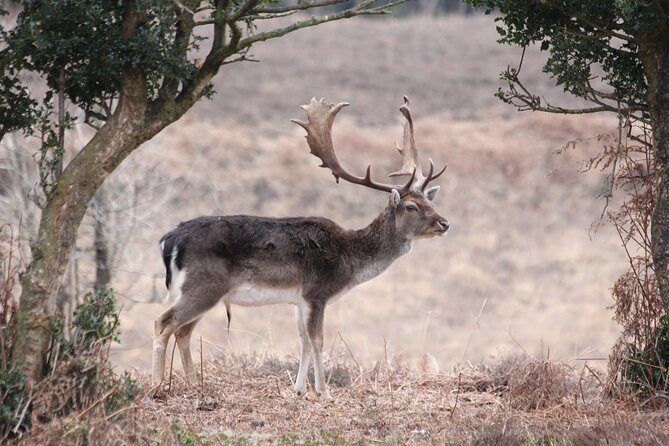
Wildlife is the heart of the walk, but it is best approached with realistic expectations. You might see fallow deer, hear several bird species, or find butterflies and fungi. You might also spend time examining a plant, track, or patch of woodland that would be easy to miss without a guide.
The named possibilities cover a wide range:
- Dartford Warblers on the heath
- Fallow deer in or near woodland
- Ancient beech and oak
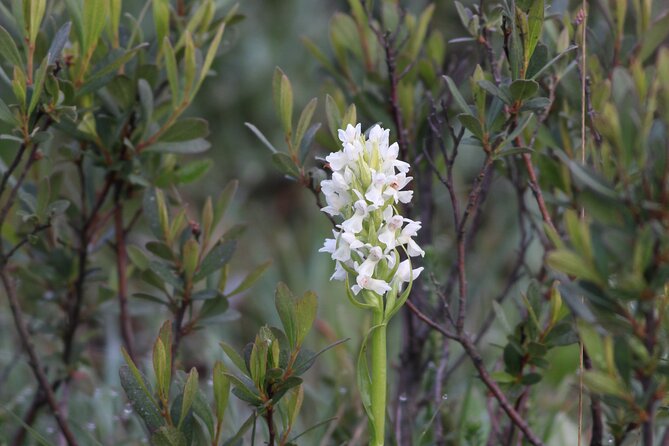
- Wildflowers and fungi
- Butterflies such as the silver-washed fritillary
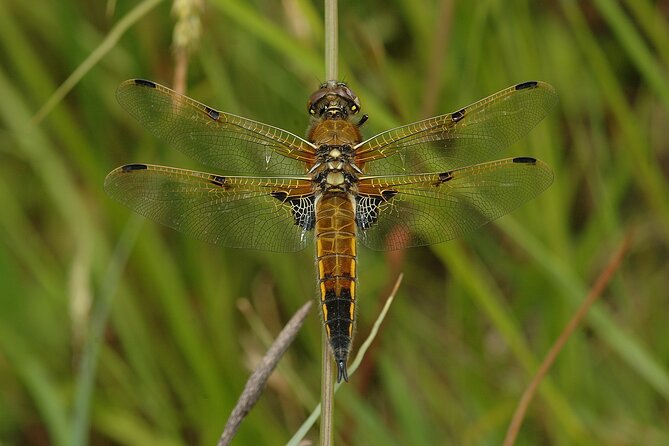
- Invertebrates, including bee-wolves
- Woodland and heathland birds identified by sight or song
The variety is important. You do not need to be a committed birder to enjoy this walk. One outing can touch on birds, mammals, trees, flowers, fungi, butterflies, and insects. If you already know the area, the guides may help you notice details you usually pass by.
The experience can also suit families, though the two-hour duration and 8 kilometre distance deserve attention. A child who enjoys looking for animals may have a fine time. A child who dislikes steady walking or frequent stops could find the pace tiring. The route is described as suitable for moderate fitness, so it is not designed as a completely effortless village stroll.
Why the two-hour pace works
The walk lasts about two hours and covers around 8 kilometres. That means a steady pace, but not a race. There should be room to pause, look, listen, and ask questions.
I like this balance. A shorter walk might not reach the range of habitats included here. A much longer outing could become tiring, especially for families or people fitting the activity into a wider day in Lyndhurst.
The small group also matters. With a maximum of 12 people, the guide can keep the group together without making every stop feel like a formal lecture. You can ask about birdsong, ponies, fungi, or the history of a boundary when the question occurs to you.
The experience is suitable for service animals, and it is near public transportation. The meeting point is also the end point, which keeps the logistics simple. You do not need to arrange a separate pickup or work out how to return to your vehicle after the walk.
The guide makes the difference
The strongest feature is the quality and range of guiding. Marcus is particularly associated with birds, but his subject range includes the forest’s ecology, mammals, insects, habitats, ponies, and history. Emily-Louise brings the same friendly, inclusive approach to the walk.
The guiding style appears to suit people who want information without a rigid classroom feel. You can ask plenty of questions, and the relaxed pace allows the subject to shift naturally from birds to woodland management or from butterflies to local history.
That flexibility is useful for mixed groups. One person may want to learn bird identification, another may be interested in fungi, and someone else may want to understand why cattle graze the forest. You are not locked into one narrow topic.
The guides also seem attentive to the group. On one walk, extra help made it easier for people to ask questions. On another, the group was kind and supportive when a participant felt unwell. That does not guarantee how every outing will unfold, but it suggests a welcoming atmosphere rather than a competitive wildlife count.
Price, timing, and overall value
At $23.30 per person, this is a modestly priced guided activity for a two-hour outing. The value comes less from transport or special access and more from having expert eyes and ears with you in a place that can otherwise seem deceptively simple.
You are paying for interpretation. The forest is free to walk through on your own, but it is easy to miss the difference between heath and mire, overlook the importance of coppicing, or walk past a bird without identifying its call. A guide turns the route into a lesson in how the forest works.
The price is especially reasonable if you are already staying in Lyndhurst or nearby and want an activity that fills a morning without taking the entire day. It is less suited to someone who only wants a quick scenic walk or a guaranteed close wildlife encounter.
The experience is often booked about 23 days ahead. That is a useful planning clue, particularly if your visit falls on a busy weekend or during a popular season. Booking early makes sense if the fixed 10:00 am start fits your plans.
Free cancellation is available up to 24 hours before the start time for a full refund. Changes or cancellations made inside that window are not accepted for a refund, and poor weather may lead to a different date or a full refund.
Who should book this Lyndhurst walk
I would choose this experience if you want to understand the New Forest rather than simply pass through it. It suits couples, families with walkers, solo visitors, and anyone who likes natural history but does not want a technical field course.
You should be comfortable walking about 8 kilometres at a relaxed but continuous pace. Wear footwear suited to woodland paths and open ground, and prepare for changing weather. The outdoor setting is central to the experience, so poor conditions can affect both comfort and the chance of seeing wildlife.
This is also a good choice for repeat visitors. If you have already walked around Lyndhurst, a guide can show you a more informed way to read familiar ground. The route’s mix of heath, mire, ancient woodland, coppice, and historic remains gives you more than a single pretty viewpoint.
Should you book the New Forest Discovery Walk?
Book it if you want a friendly, informative introduction to the New Forest, especially if birds, habitats, woodland management, and local history all interest you. Marcus and Emily-Louise bring the kind of enthusiasm that helps you keep looking after the obvious sights have passed.
Skip it if you want a very short walk, guaranteed deer or bird sightings, or a fully sheltered activity. This is an outdoor outing of about 8 kilometres, and it depends on reasonable weather.
For most visitors with moderate fitness, the price, small group, varied route, and strong guiding make this a smart way to spend a morning in Lyndhurst. You leave with more than photographs. You gain a clearer sense of why ponies graze the heath, why coppice matters, and how the New Forest’s people and wildlife continue to shape one another.
FAQ
Where does the New Forest Discovery Walk start?
The walk starts at Bolton’s Bench, Beaulieu Road, Lyndhurst, SO43 7DA, UK.
What time does the walk begin?
The scheduled start time is 10:00 am.
Where does the walk finish?
The activity ends back at the meeting point at Bolton’s Bench.
How long is the experience?
The walk lasts approximately two hours.
How far do you walk?
The route covers about 8 kilometres.
How large is the group?
The activity has a maximum of 12 travelers.
What level of fitness is needed?
You should have a moderate level of physical fitness. The route is taken at a relaxed pace but covers about 8 kilometres.
Is the walk suitable for families?
Yes. The experience is described as suitable for the whole family, provided participants can manage the distance and moderate fitness requirement.
Are service animals allowed?
Yes, service animals are allowed.
What happens if the weather is poor?
The experience requires good weather. If it is canceled because of poor weather, you will be offered another date or a full refund.
Can I cancel for a full refund?
Yes. You can cancel at least 24 hours before the local start time for a full refund. Cancellations or changes made less than 24 hours before the start time are not accepted for a refund.
Recently added around South East England
- 25 minute Helicopter Discovery Trial Lesson★ 5.0 · 9 reviews
- Private Minibus Arrival Transfer: Gatwick to Central London Airport★ 3.0 · 10 reviews
- RHS Garden Wisley and Tea in the Garden Entry Ticket★ 4.0 · 10 reviews
- Yoga & Forest Bathing Day Retreat★ 5.0 · 10 reviews
- Stonehenge Tour from Southampton to London★ 4.0 · 11 reviews
- 40 minute Helicopter Explorer Trial Lesson★ 5.0 · 12 reviews
- Stained Glass Workshop – Half Day Taster★ 5.0 · 14 reviews
- Seven Sisters Jet Ski Safari★ 5.0 · 15 reviews
Walking Tours, compared.

Oxford University Walking Tour With University Alumni Guide
Read our review →
Tour for Muggles The Ultimate Harry Potter Walking Tour in London
Read our review →
Cambridge University Walking Tour by Alumni™ Kings College Option
Read our review →
Blackbeard to Banksy – The Ultimate Walking Tour of Bristol
Read our review →
Air Raid Shelter + St. Nicholas Market Walking Tour
Read our review →
Walking Tour of Bath with Blue Badge Tourist Guide
Read our review →