
Reviewed · WALKING TOURS
The Great Rock and Roll Walking Tour of London
London’s rock story is written into ordinary streets. On this walk, you pass the building linked to the Beatles’ final concert, the former Marquee Club, the studio where the Rolling Stones and Black Sabbath made early records, and the plaque marking David Bowie’s Ziggy Stardust. It is a good reminder that music history often hides behind plain doors.
I like the small group size, capped at 15, because a music walk works best when you can ask questions and hear the guide clearly. I also like the personal touch: guides such as Grant and Glen use stories, music clips, and videos to connect the buildings with the artists. The main drawback is simple: you walk a lot, and some stops are exterior views rather than places you enter.
Key points at a glance
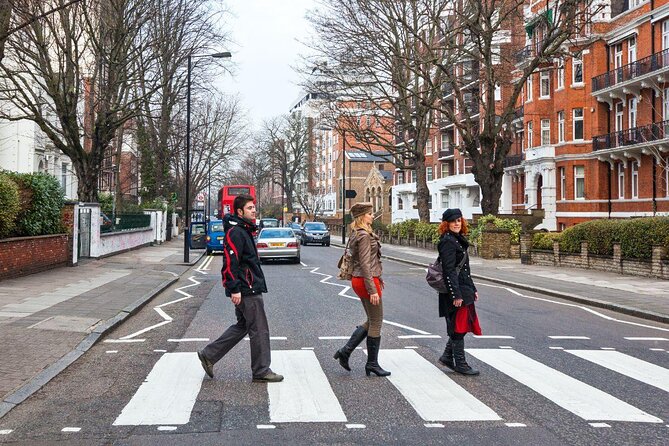
- Beatles moments in two famous settings: See the Savile Row building tied to the Beatles’ last concert, then pose for photos at the Abbey Road crossing.
- A compact route through central London: Soho, Chinatown, Denmark Street, Regent Street, and nearby streets pack plenty of music history into about two hours.
- Major names at every turn: The route covers the Beatles, Jimi Hendrix, David Bowie, Pink Floyd, the Rolling Stones, Black Sabbath, and The Who.
- A guide-led experience: Grant and Glen are named guides associated with the walk, and the tour can be shaped around your musical interests.
- Good value for music fans: At $27.46 per person, the price is modest for a two-hour private-feeling walk with stories, clips, and photo opportunities.
- Comfortable shoes matter: Several stops are close together, but this is still a steady city walk, not a short hop between attractions.
Why London’s streets tell the rock story best
You do not need a museum ticket to feel the pull of this tour. London’s rock landmarks are spread through working streets, office buildings, pubs, and shopfronts. The appeal comes from standing in the same places where musicians recorded, played, met, or helped shape the city’s music scene.
That also explains the tour’s limits. You are usually seeing the outside of a building, a plaque, or a street corner. The guide supplies the context. If you want backstage access, museum displays, or long visits inside famous studios, this walk will feel too light.
The tour is designed for a maximum of 15 people. That is small enough for a guide to keep the group together and answer questions without turning the walk into a noisy procession. Grant is praised for tailoring the stories to the group’s musical tastes, while Glen is also named as a guide who kept a good pace and helped with photographs.
The walk is listed at about two hours and costs $27.46 per person. I consider that fair value if you already enjoy the music and want a lively introduction to London’s rock landmarks. You are paying for the guide’s memory, connections between places, and the stories that make an unmarked doorway matter.
More Walking Tours in London
- Tour for Muggles The Ultimate Harry Potter Walking Tour in London
★ 5.0 · 4,684 reviews - London Jack The Ripper Guided Walking Tour
★ 5.0 · 3,131 reviews - Changing of the Guard Guided Walking Tour in London
★ 5.0 · 1,793 reviews
Soho Square and the sound of Trident Studios
The walk begins at 3 Villiers Street, near the Strand, at 11 a.m., before moving toward Soho Square. The first stop is Trident Studios and MPL, with about 10 minutes set aside.
Trident is an important name in British recording history, and this stop gives the tour an early sense of place. Soho has long been associated with music, nightlife, recording, and performance. Here, the point is not a long interior visit. It is the chance to connect a normal-looking central London building with the studio work that helped define the era.
You may find this stop most rewarding if you enjoy the behind-the-scenes side of music. A guide can explain why a studio matters even when the studio itself is not open for a tour. The listed details make clear that admission is not included, so expect an exterior stop rather than a ticketed visit.
Savile Row and the Beatles’ final concert
The next stop is Savile Row, where you see the building associated with the Beatles’ final concert. This is one of the walk’s strongest Beatles moments.
The location matters because it turns a well-known piece of music history into a physical address. Instead of hearing only about the Beatles’ last performance, you can look at the building and picture the event in its London setting. One account of the tour describes the moment as seeing where the Beatles played their final rooftop show, which helps explain why this stop often becomes a highlight.
Allow time for photographs here. The stop is listed at 10 minutes, so the guide will likely keep the group moving rather than linger for a detailed architectural visit. Still, that short pause is enough to take in the setting and hear the story.
Denmark Street, Tin Pan Alley, and guitars
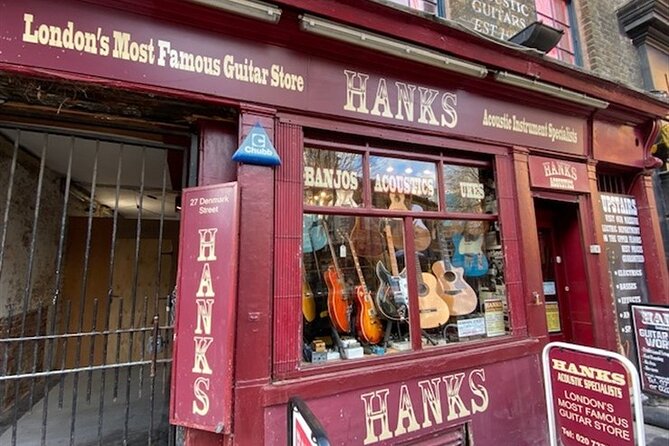
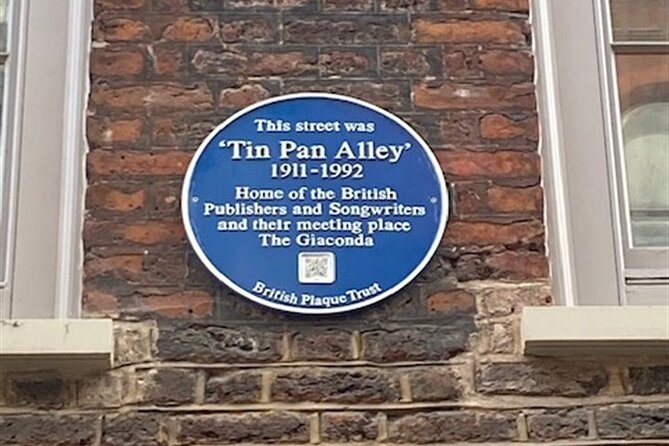
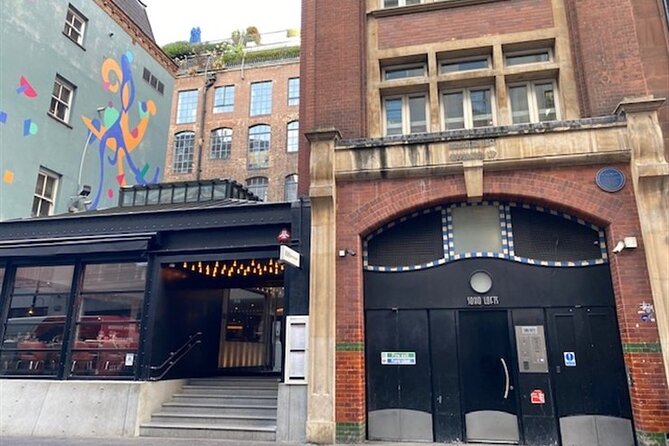
Denmark Street is often called Tin Pan Alley, and the tour gives it about 10 minutes. The street is tied to London’s music trade, especially the shops and businesses that served working musicians.
The playful description about buying a Gibson Les Paul points to the street’s practical musical identity. This was not only a place for famous performers. It was also a place where musicians could find instruments, equipment, and contacts.
This stop is free, and you can expect a street-level experience. It may appeal most to guitar players and people who like the business side of music. The tour ends on Denmark Street, so you will have a chance to return to this area after the main walk if you want a closer look at the street itself.
The end point is given as Denmark Street, near Tottenham Court Road station. That makes the finish useful for continuing into Soho, finding food, or using the Underground.
A completely different sort of day out in London:
- Stonehenge, Windsor Castle, and Bath from London
★ 4.5 · 18,662 reviews - London Big Bus Hop-On Hop-Off Tour with Optional River Cruise
★ 3.5 · 10,803 reviews - London Small Group Tour of Historical Pubs
★ 5.0 · 10,422 reviews - Stonehenge, Windsor Castle and Bath with Pub Lunch in Lacock
★ 4.5 · 7,402 reviews
The former Marquee Club on Wardour Street
Wardour Street brings the tour to the former Marquee Club, one of London’s lost music venues. The stop is scheduled for about 10 minutes.
The club’s importance comes from the artists who performed there, including Jimi Hendrix, David Bowie, and The Who. You are not visiting a preserved concert hall. You are seeing the place where the club once operated and learning how the venue fitted into London’s music life.
That distinction is worth keeping in mind. The emotional effect depends on your interest in the names and the stories. A serious fan may enjoy imagining the room in its working days. Someone looking for a functioning music venue may find only a street address and a plaque or exterior view.
The guide’s storytelling is especially important here. A plain street can seem unremarkable until you know who played there and why the venue mattered. This is where the walk’s human stories add value beyond a map of locations.
Heddon Street and Ziggy Stardust
Heddon Street offers a shorter stop, about 10 minutes, focused on a plaque for Ziggy Stardust. This is one of the clearest David Bowie connections on the route.
The plaque marks a cultural moment as much as a physical site. Bowie’s Ziggy Stardust character was central to the visual and musical drama of the early 1970s, and the location gives you a specific place to connect with that image.
This is another free, outdoor stop. Bring your camera, but do not expect a large exhibition or a full Bowie display. The appeal is the small physical marker and the story attached to it.
I like these brief plaque stops because they keep the walk moving. You get a series of quick discoveries rather than spending the whole morning in one venue. The tradeoff is that you need to stay attentive. If you are not already interested in Bowie, the stop may pass quickly.
Regent Sounds and shoestring recording
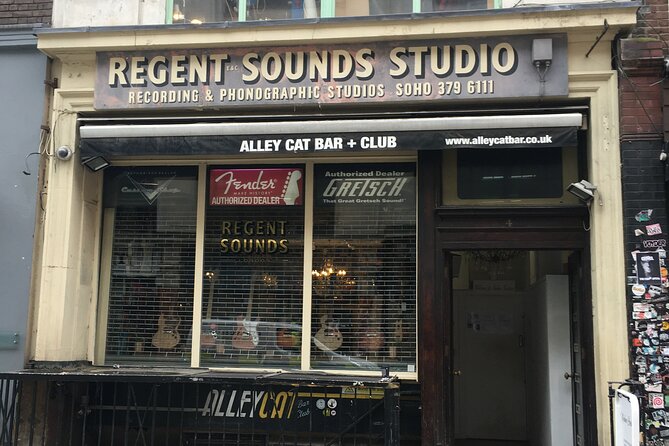
At Regent Sounds, the walk pauses for about five minutes. The site is linked with the Rolling Stones and Black Sabbath, both of whom recorded their first album there on a very small budget.
That detail gives this stop a useful lesson in how rock music was made. Not every important recording began in a grand, polished facility. The story here is about resourcefulness, early careers, and musicians working with limited means.
The stop also includes a Jimi Hendrix story, involving a request for him to turn the music down. It is a small but memorable detail, the sort of anecdote that helps you remember the place after the tour ends.
Five minutes is enough for a quick explanation and a photograph. It is not enough for a long discussion of recording technology, so listeners looking for technical studio detail may want to ask questions as the group walks.
Regent Street and the Pink Floyd connection
The next stop is on Regent Street, at a building now connected with Westminster University. The site is linked to Pink Floyd, whose members met while studying architecture.
This is one of the tour’s more surprising points. It shows that famous bands did not begin only in obvious music settings. Students, schoolmates, and aspiring artists often met in ordinary places before their careers took shape.
The stop lasts about five minutes. It is brief, but the contrast is useful. You move from recording studios and clubs to an educational setting, seeing how London’s music story grew through many parts of city life.
If Pink Floyd is a major reason you are booking, treat this as a quick connection rather than a full band-focused visit. The tour covers many artists, so no single group receives the attention of a dedicated Pink Floyd walk.
The Marquis, London’s rock watering hole
The Marquis is the final named stop, with about five minutes set aside. It is described as London’s rock and roll watering hole, giving the walk a social ending.
Music history is not only about stages and studios. Pubs and meeting places matter because musicians need somewhere to talk, make plans, and spend time between performances. The Marquis adds that everyday side to the tour.
The stop is free. It does not appear to be a formal tasting or pub visit, so do not book this expecting a meal or drinks to be included. Instead, see it as a place connected with London’s rock scene and a natural point to finish the story.
Abbey Road photographs and a route detail to check
Posing at the Abbey Road zebra crossing is one of the advertised highlights, and the experience includes a Beatles-style crossing for photographs. This can be the most immediately memorable part of the day, especially if you want a picture that clearly connects you with London music culture.
There is one practical detail you should confirm before booking. The listed stop-by-stop route names Soho Square, Savile Row, Denmark Street, Wardour Street, Heddon Street, Regent Sounds, Regent Street, and The Marquis, but Abbey Road is not included in that sequence. The stated end point is also Denmark Street, not Abbey Road.
Because the crossing is specifically promoted and described in tour accounts, ask the provider how Abbey Road fits into the current route. The answer matters for timing, transport, and expectations. You do not want to assume that a central London walking route automatically includes a distant crossing without checking the day’s plan.
The same applies to the start information. The experience is listed with an 11 a.m. start at 3 Villiers Street, while the overview describes it as easy to fit into a late-afternoon schedule. Confirm the operating time when you book, especially if you are arranging theatre tickets, a concert, or another timed attraction.
What the guide adds to the walk
The guide is the heart of this experience. The route itself is accessible on a map, but the meaning of each stop is not always obvious from the pavement.
Grant is associated with stories across a wide range of artists and can tailor the discussion to the group’s musical tastes. Glen is also named in connection with the tour and is described as keeping a good pace, waiting when extra photo time was needed, and offering suggestions for restaurants and other things to do in London.
The use of music clips and videos is a distinctive part of the format. Some people will enjoy hearing and seeing a performance connected with the building in front of them. Others may prefer uninterrupted storytelling and may feel that screen material takes attention away from the streets.
That is the clearest point of balance in the experience. If you want a guide who uses audiovisual material to bring old performances back into the present, this approach should suit you. If you dislike watching clips during a walking tour, tell the guide early and focus on the live explanation.
The strongest praise is reserved for the guide’s warmth, music knowledge, pace, and ability to shape the walk around the group. That matters more here than polished sightseeing narration. You are joining a conversation about music, not simply following a list of addresses.
Price, pace, and practical planning
At $27.46 per person, this is a reasonably priced introduction to London rock history. The cost is low compared with a concert ticket or a specialist museum visit, and you get two hours of guided context across several central locations.
The value drops if you already know all the sites and want extended time at each one. You will mostly be outdoors, moving from place to place, with short pauses of five or 10 minutes. Wear comfortable shoes, and plan for London weather. One person described the walk as a lot of walking, which is exactly the warning you need.
The tour allows service animals, operates near public transportation, and is suitable for most people. It requires a minimum number of participants, so a cancellation is possible if that number is not reached. Free cancellation is available up to 24 hours before the start time, but changes or cancellations inside that window are not refunded.
The published score is 4.7 from 19 ratings, with 95 percent recommending the experience. That is a strong result, but the small number of ratings means you should still judge the format carefully. One very negative experience focused on the amount of walking and the use of online video clips, while the more favorable feedback repeatedly points to the guide, the stories, and the Abbey Road photographs.
Who should book this London rock walk?
You should book it if you already listen to British rock, want a friendly introduction to London’s music streets, or prefer stories and locations to formal museum displays. It is particularly good for Beatles, Bowie, Hendrix, Pink Floyd, Rolling Stones, Black Sabbath, and The Who fans who want several connections in one outing.
It also suits a first visit to London because the route moves through Soho, Chinatown, and nearby central streets you may otherwise pass without noticing. The guide can add restaurant and sightseeing suggestions, giving you useful ideas for the rest of your day.
You should think twice if you dislike walking, need indoor attractions, or want access to recording studios and former clubs. You should also confirm the Abbey Road portion and the start time, since the published route details do not fully explain how those pieces fit together.
Should you book The Great Rock and Roll Walking Tour of London?
Book it for the guide-led stories, the range of artists, and the chance to connect famous music moments with real London streets. At $27.46, it is a sensible buy for music fans who accept that the main attraction is interpretation, not entry into historic venues.
Skip it if you want a short, highly visual attraction with little walking. Before paying, confirm whether Abbey Road is included on your date, then put on comfortable shoes and arrive ready to listen. For the right audience, this is an enjoyable way to hear London’s rock story told where much of it happened.
FAQ
How long is The Great Rock and Roll Walking Tour of London?
The experience lasts approximately two hours.
How much does the tour cost?
The listed price is $27.46 per person.
Where does the tour start?
The stated meeting point is 3 Villiers Street, London WC2N 6NN, UK.
Where does the tour end?
The stated end point is Denmark Street, London WC2H, near Tottenham Court Road Underground station.
How many people can join the tour?
The group has a maximum of 15 travelers.
Can I cancel for a full refund?
Yes. You can cancel up to 24 hours before the experience start time for a full refund. Cancellations or changes made less than 24 hours before the start time are not refunded.
Recently added around London
- London’s Crown Secret: Self-Guided Royal Puzzle Quest★ 4.5 · 8 reviews
- Postcard London★ 5.0 · 8 reviews
- Windsor Castle, Stonehenge & Roman Baths Private Tour★ 4.5 · 8 reviews
- Private Tour: Downton Abbey London Locations by Taxi★ 5.0 · 8 reviews
- Cotswolds Private Driving Tour from London★ 5.0 · 8 reviews
- Skip-the-line London Westminster Abbey and City of Westminster Kid-Friendly Tour★ 5.0 · 8 reviews
- A Silent Disco Adventure in London★ 5.0 · 8 reviews
- London: National Gallery English Audio Tour with free fast Entry★ 3.0 · 8 reviews
Walking Tours, compared.

Oxford University Walking Tour With University Alumni Guide
Read our review →
Tour for Muggles The Ultimate Harry Potter Walking Tour in London
Read our review →
Cambridge University Walking Tour by Alumni™ Kings College Option
Read our review →
Blackbeard to Banksy – The Ultimate Walking Tour of Bristol
Read our review →
Air Raid Shelter + St. Nicholas Market Walking Tour
Read our review →
Walking Tour of Bath with Blue Badge Tourist Guide
Read our review →
Changing of the Guard Guided Walking Tour in London
Read our review →Browse the lists this tour appears in