
Reviewed · WALKING TOURS
Walking Tour around Spitalfields in the East End of London
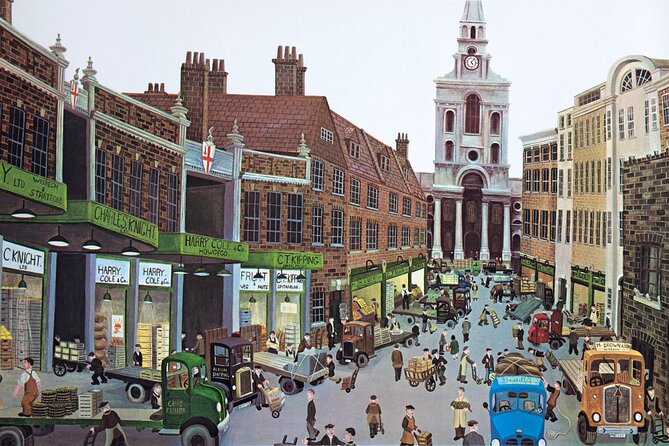
Spitalfields gives you a London far removed from royal palaces and grand avenues. In two hours, this small-group walk moves through Baroque church architecture, immigrant stories, old markets, brewery history, and buildings that changed faiths as the East End changed around them. The final stop is especially unusual: tea and cakes in an 18th-century drawing room overlooking Christ Church Spitalfields.
I like the maximum group size of five, which gives you room to ask questions and stop for small details. I also like the tour’s human scale. Instead of rushing from one famous sight to another, you hear about the people connected to a Jewish institution, a brewery, and the houses along Spitalfields’ streets.
The main consideration is physical. You walk and stand for about two hours, and the route requires good weather. At $90.28 per person, this is not a budget stroll, so it makes the most sense if you value close attention, local stories, and the unusual tea stop.
Key reasons to choose this Spitalfields walk
- A tiny group of no more than five: You get a more personal outing than on a large city tour.
- Christ Church Spitalfields as both landmark and backdrop: Nicholas Hawksmoor’s English Baroque masterpiece frames the start and finish.
- Stories of migration and faith: One building changed from a Huguenot chapel to a synagogue and later to a mosque.
- A thoughtful look at ordinary lives: The tour follows people linked to an East European Jewish institution and two women connected with a brewery.
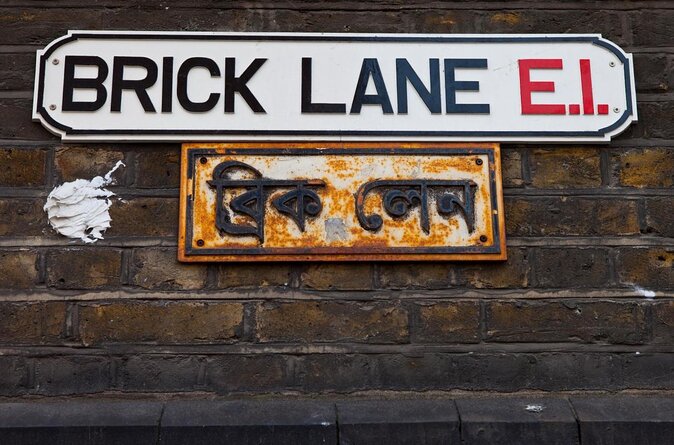
- Old and new Spitalfields together: You hear about the ancient market and the current argument over the future of a famous thoroughfare.
- Tea and cakes included: The walk ends in an 18th-century drawing room with cakes baked to a 1720 recipe.
Why Spitalfields makes such a good walking district
The East End can feel like a different London from the central sights. Spitalfields has grand architecture, but its real interest comes from the way buildings were reused as the population changed. A place built for one community could later serve another. A market could shift from a medieval institution to a modern commercial center. A brewery could be understood through the working lives of women rather than only through its owners.
That makes this a good tour for you if you want history with cause and effect. You are not simply shown an old facade. You are asked to consider why it was built, who used it, and what happened when the neighborhood changed.
The route also works well on foot because the details are close together. Walking lets you stop, look up, and compare old brickwork with newer development. The small group matters here. With only five people, the guide can pause when something catches your eye rather than keeping a large crowd moving.
You meet at Christ Church Spitalfields on Commercial Street at 2 p.m. The activity ends back at the same point. That simple arrangement makes the tour easy to fit into an afternoon, especially if you are staying near public transport.
More Walking Tours in London
- Tour for Muggles The Ultimate Harry Potter Walking Tour in London
★ 5.0 · 4,684 reviews - London Jack The Ripper Guided Walking Tour
★ 5.0 · 3,131 reviews - Changing of the Guard Guided Walking Tour in London
★ 5.0 · 1,793 reviews
Christ Church Spitalfields and the Baroque opening
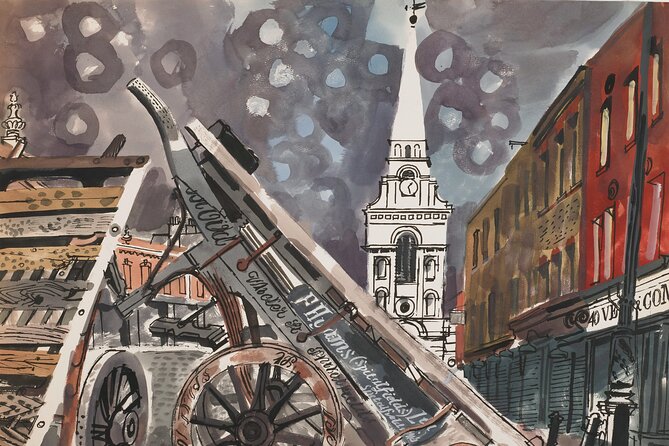
The first major stop is Nicholas Hawksmoor’s Christ Church Spitalfields, described as a masterpiece of English Baroque. The church gives the tour an impressive start, but the value is not just architectural. It sets up a wider question: why did this part of London receive such a grand building?
Your guide uses the church to introduce the district and its layers. Look closely at the scale and decoration, then keep in mind that the rest of the walk will move away from monumental architecture toward institutions, homes, markets, and working places.
You may want to arrive a few minutes early so you can get your bearings around Commercial Street. The meeting point is also the finishing point, so you do not need to plan a separate return journey after the tea stop.
A Jewish institution and the lives tied to it
One of the most affecting parts of the walk focuses on an institution that served Jewish immigrants from Eastern Europe, including people from the area now known as Ukraine. The emphasis is on the people whose lives were connected with its work rather than on a dry account of dates and construction.
This part gives Spitalfields a human face. Immigration is often presented through broad numbers, but the tour brings attention to individuals and their ties to a place that helped meet the needs of a new community. The personal research into people who lived in the area is one of the strongest elements of the experience.
If you prefer tours that explain how communities formed and supported one another, this section should carry real weight. It also shows why a short walk can be more revealing than a quick look at a famous building. You begin to see the East End as a place shaped by arrival, adaptation, and daily work.
The ancient market and a medieval survival
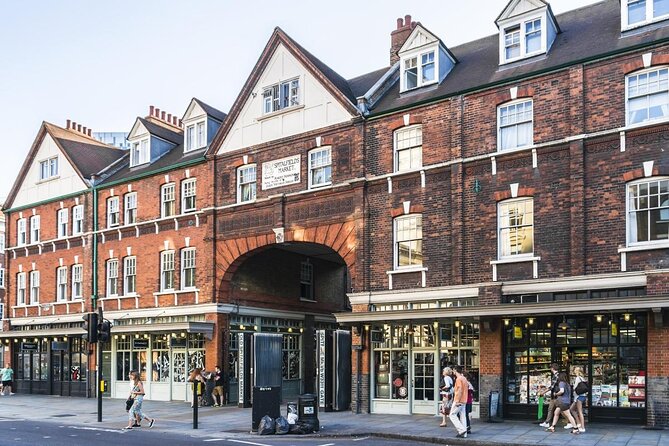
The tour then turns to the story of Spitalfields’ ancient market. Markets are easy to treat as colorful backdrops, but this walk asks how the market began and how its purpose changed over time.
You also learn the reason behind an astonishing medieval survival. The supplied details do not name the exact building or explain its function in advance, which is part of the appeal of hearing this section in place. The guide reveals why it survived and connects it with the development of the district.
This is a good example of the tour’s method. You are not given a long list of dates to memorize. Instead, a surviving structure becomes a clue to how Spitalfields once worked. Be ready to look carefully at modest remains. The most useful details may not be the grandest ones.
A completely different sort of day out in London:
- Stonehenge, Windsor Castle, and Bath from London
★ 4.5 · 18,662 reviews - London Big Bus Hop-On Hop-Off Tour with Optional River Cruise
★ 3.5 · 10,803 reviews - London Small Group Tour of Historical Pubs
★ 5.0 · 10,422 reviews - Stonehenge, Windsor Castle and Bath with Pub Lunch in Lacock
★ 4.5 · 7,402 reviews
The Priory of St Mary Spital

The route visits the site of the Priory of St Mary Spital, an important reminder that the district predates its later reputation as a market and immigrant quarter. A priory site can be easy to miss in a modern city, especially when later streets and buildings have covered or altered the original setting.
Here, the guide helps you picture what the area once contained. The stop adds depth to the walk because it pushes the story back before the Georgian houses, breweries, and religious buildings that appear later in the route.
You should not expect a long archaeological visit based on the information provided. This is a stop on a walking route, not a separate museum admission. Its value comes from placing a medieval institution into the modern streets you are walking through.
The brewery story told through two women
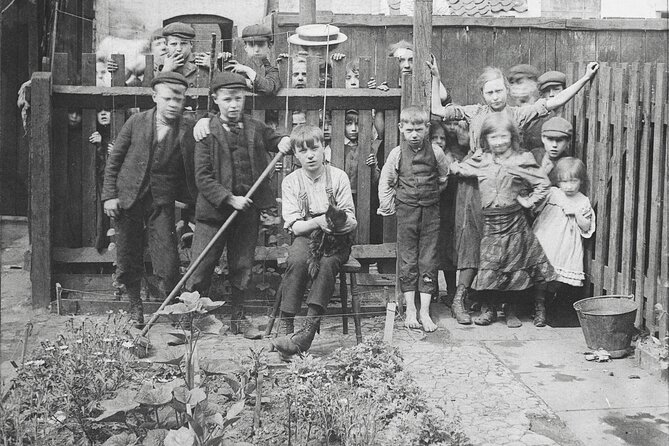
The brewery stop takes a welcome turn away from famous men and official buildings. The story is told through the lives of two women who worked there. That choice makes the stop more useful than a simple account of production or business ownership.
I like this focus because it gives you a glimpse of working life and reminds you that neighborhood history is built by people whose names may not appear on plaques. The guide’s approach appears to favor personal research, and this is where that approach can make an ordinary industrial story feel specific.
The supplied details do not identify the brewery or the women by name, so you should see this as a story-led stop rather than a promise of a particular building interior. You will hear how the brewery connects to the people who worked there and to Spitalfields as a place of labor.
Commercial Street and the argument over its future
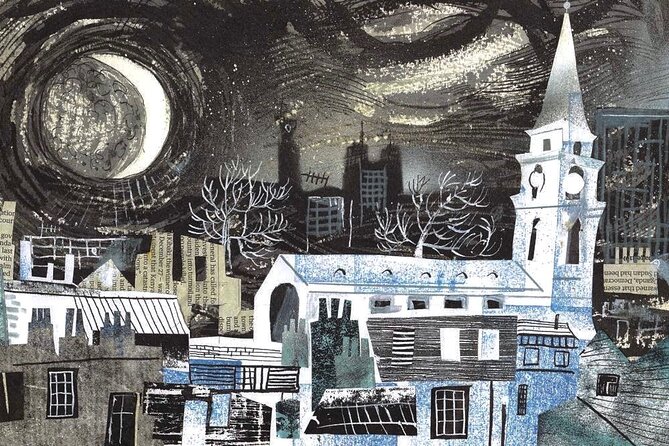
The walk also tells the story of a famous thoroughfare and the continuing controversy over its future. This gives the tour a modern edge. Spitalfields is not presented as a preserved old quarter sealed away from current decisions.
The discussion is useful because historic streets often sit at the center of arguments about development, trade, traffic, and preservation. You get a chance to think about what should remain, what can change, and who gets a say.
Do not expect a detailed planning seminar. The route is only about two hours, and many subjects are covered. Still, this stop helps prevent the walk from becoming a sentimental trip into the past. The district remains a working part of London with choices to make.
One building, three religious chapters
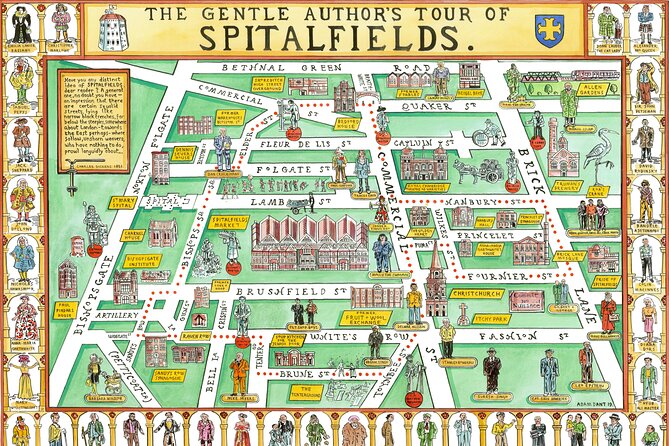
One of the most memorable buildings on the route began as a Huguenot chapel, later became a synagogue, and later still became a mosque. That sequence neatly captures the movement of communities through the East End.
You can read the building as a record of changing faith and migration. Its structure remained useful while the people around it changed. That is a much more revealing story than simply labeling it historic.
This stop may be especially worthwhile if you enjoy religious and social history. It also provides a clear example of why Spitalfields cannot be reduced to one identity. Huguenot, Jewish, Muslim, English, immigrant, commercial, and residential stories all meet here.
Eighteenth-century houses and the people behind them
The route includes a group of fine eighteenth-century houses. Their appearance may suggest wealth and stability, but the guide uses them to tell the story behind the buildings rather than asking you to admire facades alone.
Pay attention to how the houses fit into the wider district. They sit alongside places linked with immigration, religious change, markets, and industry. That contrast is one of Spitalfields’ special qualities. Elegant domestic architecture and working neighborhood history occupy the same few streets.
The tour’s small size should be useful at this point. A guide can direct your attention to architectural details that a large group might pass without noticing. If you enjoy house fronts and street-level clues, this will be a rewarding part of the route.
Nicholas Culpeper’s seventeenth-century herb garden
The walk visits the herb garden of Nicholas Culpeper, a seventeenth-century herbalist. This stop adds a different texture to the tour. Instead of focusing on migration, commerce, or religious buildings, it turns to plants, medicine, and the way people once understood health.
The garden also gives the route a visual change. After streets, facades, and urban institutions, a small planted space can help you consider how knowledge was gathered and used before modern medicine.
The information provided does not promise a formal gardening demonstration or a large botanical collection. Think of it as a historical stop tied to Culpeper and his work. You will likely appreciate it most if you enjoy the everyday side of history, including remedies and practical knowledge.
Finishing with tea in an 18th-century drawing room
The final stop is Townhouse, where you put your feet up in an eighteenth-century drawing room overlooking Christ Church Spitalfields. Tea and cakes are included, with the cakes baked to a recipe from 1720.
This is more than a snack tacked onto the end. After two hours of walking and standing, a seated finish gives you time to absorb the stories. The setting also echoes the architecture you have seen, bringing the tour back to the church and to domestic life.
The tea stop lasts 30 minutes and admission is included. That matters when you compare the price with a standard walking tour. You are paying for a small group, a guide-led route, and a hosted finish in a historic interior rather than only for two hours on the pavement.
The cakes are a particularly nice detail because they connect the refreshment with the period being discussed. Still, you should not book this as a full afternoon tea. The information promises tea and cakes, not a broad meal or a large service.
Price, group size, and the real value
At $90.28 per person, this is a premium two-hour walk. You can find cheaper London walks, especially those with larger groups or no included refreshment. The question is not simply how many sights you see. It is how much you value the guide’s personal attention and the depth of the stories.
A maximum of five people changes the experience. You can ask about a building, request clarification, or pause without competing with a crowd. If you have taken many walking tours and found them too general, this format may justify the cost.
The included tea and cakes also add something practical. You finish seated in a period room rather than having to find a cafe immediately. The 30-minute ending extends the outing beyond a standard route and gives the experience a clear shape.
For a solo visitor or couple who prefer detailed local history, the price may feel fair. For a family looking for cheap entertainment or a first overview of all London, it may not. The route focuses tightly on Spitalfields rather than covering the city’s major sights.
Who should book this tour?
I would choose this experience if you want:
- A small group and a guide who can give you personal attention
- Stories about migration, religious change, and working lives
- A walk that includes both medieval remains and modern planning concerns
- Historic architecture viewed through its social purpose
- A calm finish with tea and cakes in an old drawing room
- A focused East End experience after you have seen London’s central landmarks
You should think twice if standing and walking for two hours is difficult. The activity is not recommended for people who cannot manage that amount of time on foot, although service animals are allowed and most people can participate.
The tour is offered in English. Since the experience depends heavily on storytelling, you should be comfortable following spoken English for the full route.
Timing, weather, and booking advice
The tour begins at 2 p.m. and returns to Christ Church Spitalfields. It lasts about two hours, with the final 30 minutes spent at Townhouse. The activity is offered with a mobile ticket, and confirmation is received when you book.
Good weather is required. If poor weather cancels the activity, you are offered another date or a full refund. The same applies if the minimum number of people is not met.
You can cancel for a full refund up to 24 hours before the start time. Changes or cancellations made less than 24 hours before the start time are not accepted, so check your afternoon plans before booking.
The experience is often reserved well ahead, with an average booking time of 36 days in advance. That is useful advice if your London dates are fixed. A small group of five has limited capacity, so leaving it until the last minute may not work.
Should you book the Spitalfields walk?
Book it if you want a thoughtful, tightly focused look at one East London district, especially if you enjoy the people behind the buildings. The Jewish immigrant story, the building that passed from Huguenot chapel to synagogue to mosque, and the brewery stories told through two women give the walk more feeling than a simple architectural tour.
The tea and cakes in an eighteenth-century drawing room are a real bonus, not an afterthought. They also help justify the higher price, along with the five-person limit and the guide’s personal research.
Skip it if you want a broad London introduction, a fast list of famous sights, or a low-cost walk. For the right reader, though, this is a gentle and distinctive way to spend an afternoon in Spitalfields, with enough history to keep your mind busy and enough tea to let your feet recover.
FAQ
Where does the Spitalfields walking tour begin?
The tour begins at Christ Church Spitalfields, Commercial Street, London E1 6LY, UK.
What time does the tour start?
The scheduled start time is 2 p.m.
Where does the tour end?
The activity ends back at the meeting point at Christ Church Spitalfields.
How long does the walking tour last?
The tour lasts approximately two hours.
How large is the tour group?
The activity has a maximum of five participants.
What language is the tour offered in?
The tour is offered in English.
Is tea included?
Yes. The final stop includes tea and cakes in an eighteenth-century drawing room.
How long is the final Townhouse stop?
The Townhouse stop lasts 30 minutes, and admission is included.
Is the tour suitable for someone who cannot walk for two hours?
No. It is not recommended for people who cannot stand and walk for two hours.
What is the cancellation policy?
You can cancel up to 24 hours before the start time for a full refund. Cancellations or changes made less than 24 hours before the start time are not accepted.
Recently added around London
- London’s Crown Secret: Self-Guided Royal Puzzle Quest★ 4.5 · 8 reviews
- Postcard London★ 5.0 · 8 reviews
- Windsor Castle, Stonehenge & Roman Baths Private Tour★ 4.5 · 8 reviews
- Private Tour: Downton Abbey London Locations by Taxi★ 5.0 · 8 reviews
- Cotswolds Private Driving Tour from London★ 5.0 · 8 reviews
- Skip-the-line London Westminster Abbey and City of Westminster Kid-Friendly Tour★ 5.0 · 8 reviews
- A Silent Disco Adventure in London★ 5.0 · 8 reviews
- Private Full Day Cotswolds Tour From London★ 5.0 · 8 reviews
Walking Tours, compared.

Oxford University Walking Tour With University Alumni Guide
Read our review →
Tour for Muggles The Ultimate Harry Potter Walking Tour in London
Read our review →

Cambridge University Walking Tour by Alumni™ Kings College Option
Read our review →
Blackbeard to Banksy – The Ultimate Walking Tour of Bristol
Read our review →
Air Raid Shelter + St. Nicholas Market Walking Tour
Read our review →
Walking Tour of Bath with Blue Badge Tourist Guide
Read our review →
Changing of the Guard Guided Walking Tour in London
Read our review →Browse the lists this tour appears in