Reviewed · WALKING TOURS
Walking tour of Lancaster – Execution Slavery Industry
Lancaster’s past is not tidy. It includes executions, witchcraft, slavery, royal intrigue, murder, and industrial wealth, all packed into a walk of about three hours. Guide Barrie connects these subjects with local buildings and streets, so you see more than a collection of old facades.
I like two things in particular: the tour gives you a useful first look at much of the city, and it does not shy away from Lancaster’s uncomfortable links with the slave trade. The small group, capped at 20, should also make it easier to hear the stories and ask questions.
The main drawback is the amount of time spent walking and standing. The pace is described as gentle, but three hours outdoors can feel long in cold or wet weather. One isolated booking problem involved a guide not appearing, so check the operating date carefully, especially during the winter season.
Key points to know before you book
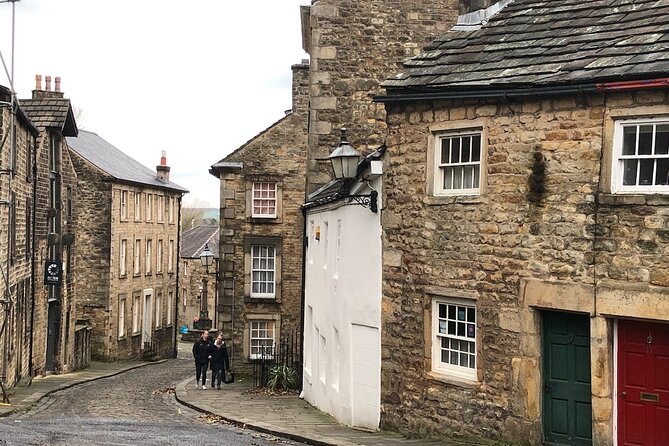
- Lancaster Castle is both the meeting point and the historical starting line: You begin beside an easy-to-find landmark and hear about prisoners, trials, and executions.
- The port’s connection to slavery receives real attention: Saint George’s Quay helps explain how Lancaster’s waterfront tied into international trade and local fortunes.
- Barrie leads with facts, humor, and plenty of anecdotes: The tour works best if you enjoy a guide who tells stories rather than simply naming buildings.
- Nine stops give you a broad city overview: You cover the castle, quay, civic streets, canal, almshouses, and The Storey.
- The $20.81 price is strong value for a three-hour walk: You are paying for local interpretation, not admissions, since the listed stops are viewed from the outside or entered without a separate ticket.
- Plan for outdoor conditions: The tour requires good weather, and you may be standing at several points with no indoor break built into the route.
Why Lancaster’s difficult stories make this walk worthwhile
Many city walks stay safely among attractive buildings and well-known dates. This one takes a harder route. Lancaster’s story is presented through the people who were imprisoned, judged, executed, enriched, accused, or forgotten.
That gives the walk a useful edge. At Lancaster Castle, you look beyond the familiar image of an ancient fortress. The castle’s role as a place of imprisonment, trial, and execution sets the tone for the rest of the afternoon. Later, at Saint George’s Quay, the focus shifts from punishment to profit and Lancaster’s role in the international slave trade.
I appreciate that range. You are not asked to see Lancaster as simply noble or picturesque. The city’s growth involved trade, industry, charity, law, and exploitation. The route helps you connect those parts without requiring a full museum visit or a day of research.
The tour is rated 4.9 out of 5, with 99 percent of bookings recommending it. That rating fits the strongest feature of the experience: Barrie knows how to keep a long walk moving with stories, odd details, and local context. He is also willing to answer questions, which matters on a tour that covers so many subjects.
More Walking Tours in England:
- Oxford University Walking Tour With University Alumni Guide
★ 5.0 · 6,905 reviews - Tour for Muggles The Ultimate Harry Potter Walking Tour in London
★ 5.0 · 4,684 reviews - London Jack The Ripper Guided Walking Tour
★ 5.0 · 3,131 reviews
Starting at Lancaster Castle with prisoners and executions
Meet at Castle Approach, Lancaster LA1 1YN, beside Lancaster Castle. This is a practical start for anyone new to the city because the castle is a clear landmark and the meeting point is easy to locate.
The first stop lasts about 20 minutes. You learn about the castle’s place in Lancaster’s past, including famous and less famous prisoners, trials, and executions. The point is not just the building itself. The castle becomes a way to understand how law and punishment operated in the city.
This opening also helps you get your bearings. Instead of beginning with a general introduction in a square, the guide starts with a site that immediately gives the tour a strong subject. If you have limited time in Lancaster, that is useful. You get a major landmark and a serious explanation of why it mattered.
Do not expect a full castle admission visit as part of the walk. The stop is listed with no admission ticket, and the experience centers on the outdoor tour rather than a separate interior visit. If you want to explore the castle in detail afterward, the walk helps you decide how much more time to set aside.
Saint George’s Quay and Lancaster’s slave-trade connections
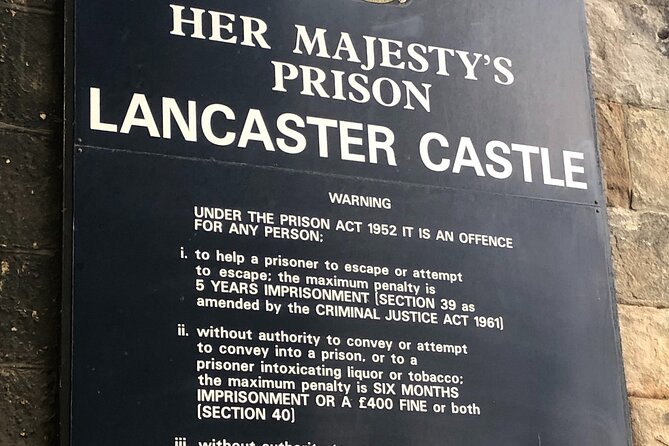
The walk continues to Saint George’s Quay, an eighteenth-century harbor on the River Lune. Allow about 15 minutes here.
This is one of the most important stops because it changes the story from local justice to international commerce. The quay’s links with the slave trade show how a port city could profit from events far beyond Lancashire. You also hear about people connected with the area, putting human faces and local names to a difficult subject.
The waterfront seems to be a favorite part of the route for good reason. Standing beside the old harbor makes it easier to picture Lancaster’s trading life and the ships that once came alongside. The physical setting gives the subject weight. You are not hearing about a distant issue in an abstract lecture. You are standing at the place where trade helped shape the city.
If this subject matters to you, pay close attention here and ask questions. The stop is brief, so the wider tour is not a full treatment of Lancaster’s involvement in slavery. Still, it is a valuable part of the walk because it prevents the city’s prosperity from being explained only through harmless-sounding trade and industry.
Judges’ Lodgings, witchcraft, and the power of the law
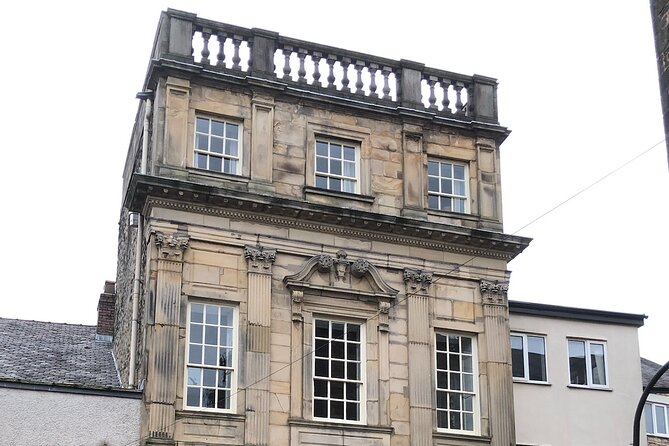
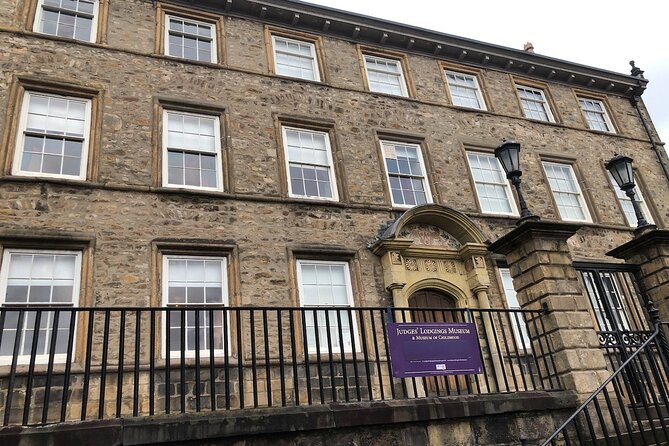
At Judges’ Lodgings, the oldest house in Lancaster, the focus returns to authority and belief. The stop lasts around 10 minutes.
You hear who owned the house and how it links to witchcraft. This is a good example of the tour’s approach: the guide uses a building to open up a larger story about the people who held power and the accusations that could ruin lives.
The short timing means you will not receive a long architectural tour of the house. Instead, expect a compact story with a strong connection to Lancaster’s legal past. Placed after the castle, it also extends the theme of judgment. The castle shows imprisonment and execution, while Judges’ Lodgings gives you another view of the officials and social structures behind those events.
A completely different sort of day out in England:
- Stonehenge, Windsor Castle, and Bath from London
★ 4.5 · 18,662 reviews - London Big Bus Hop-On Hop-Off Tour with Optional River Cruise
★ 3.5 · 10,803 reviews - London Small Group Tour of Historical Pubs
★ 5.0 · 10,422 reviews - Beatles Magical Mystery Tour
★ 5.0 · 9,266 reviews
Church Street and a missing prince
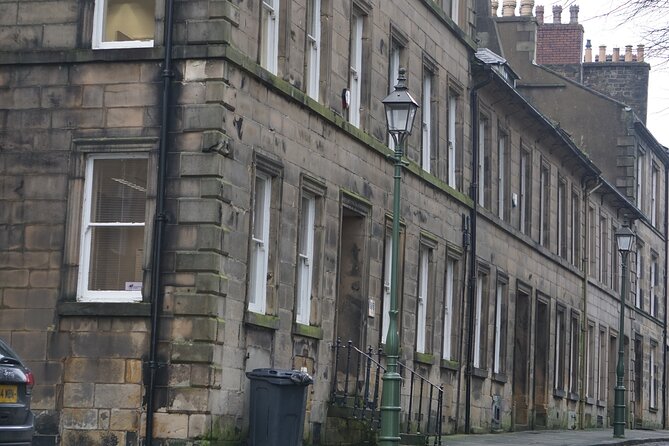
Church Street brings a change of tone. Here, the subject is a missing prince and the possibility that he could have become king of England.
The stop lasts about 10 minutes. The story gives the walk a touch of mystery and royal drama, but it also shows how local streets can connect to national questions. You are not only learning about Lancaster as a regional town. You are hearing how its places and stories fit into the wider politics of England.
This is the kind of stop that can be easy to miss alone. Without a guide, you may walk along Church Street and see attractive historic buildings without realizing that the street has a royal tale attached to it. Barrie’s role is to point out that extra layer.
Market Street and two royal stories 300 years apart
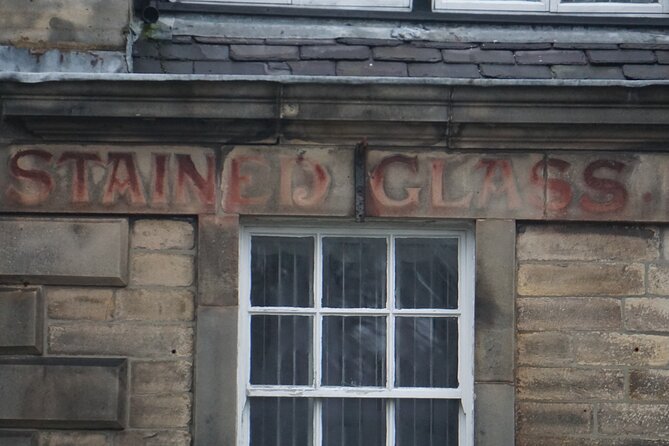
At Market Street, another 10-minute stop brings two royal stories together. One prince raises a banner, while another loses a shoe, with the events separated by 300 years.
The odd contrast is part of the fun. Rather than offering a straight line of kings and dates, the guide uses memorable details to help you keep the stories apart. One event involves a political claim or challenge, while the lost shoe gives the second tale a more human, almost comic detail.
This section should appeal to anyone who prefers history told through characters and small incidents. The story is easier to remember because it has movement and personality. It also keeps the middle of the tour from becoming a string of formal buildings and dates.
Dalton Square, forensic science, and compensation for slave owners
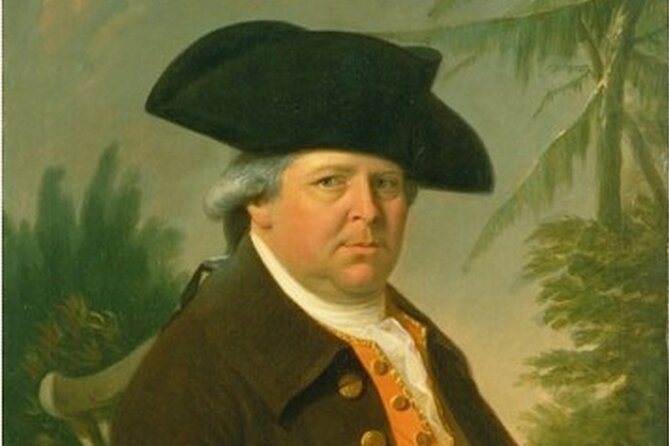
Dalton Square brings together two subjects that seem unrelated at first: a murder solved through forensic science and the government bonus paid to slave owners.
The stop lasts around 10 minutes, and the contrast is revealing. One story concerns the development of a method for solving crime. The other concerns the financial system that compensated owners when slavery was abolished, rather than compensating the enslaved people who had suffered under it.
The murder case gives you a local example of forensic science in action. It is a memorable way to show how crime investigation changed. The compensation story brings the slavery theme back into the center of the walk, reminding you that the port’s role was not only about ships and trade. Money from slavery was tied to government policy and private wealth.
This is one of the more serious sections, and the tour’s balance of murder stories and social history helps keep the pace varied. I would listen closely here, since the two subjects offer very different ways of understanding Lancaster’s past.
Lancaster Canal, White Cross Mill, and industrial growth
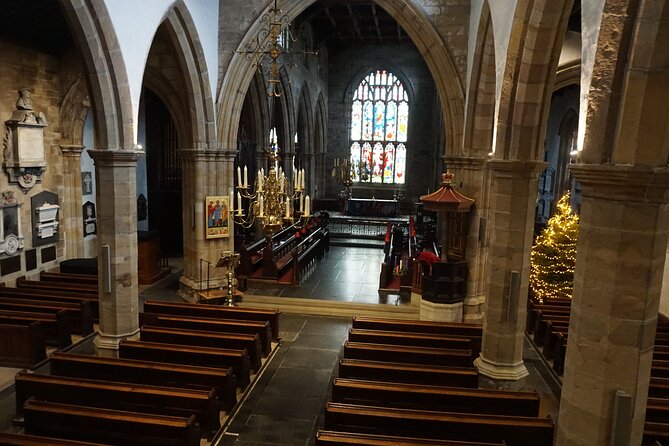
The route then reaches Lancaster Canal and White Cross Mill. The focus shifts to industry, transport, and the Storey Brothers.
You learn about the heyday of this coastal canal and how the mill and its owners fit into Lancaster’s development. The stop is about 10 minutes, but it adds important context to the earlier discussion of trade. Goods, people, and money needed routes through the region, and the canal helped support the city’s industrial ambitions.
This is also where the walk starts to show Lancaster as more than a place of courts and old royal tales. The city’s character was shaped by transport and manufacturing as well as law and commerce. Seeing the canal in person makes that connection easier to grasp.
The stop may be less dramatic than executions or missing princes, but it is necessary. Without industry and transport, Lancaster’s later civic buildings and charitable institutions make less sense. The route builds that connection step by step.
Penny’s Almshouses and charity that still serves a purpose
Penny’s Almshouses provide a look at charitable housing. This is a functioning almshouse, not simply a historic shell, and the guide explains who founded it and how it was financed.
That living connection is important. You are seeing how an old charitable idea continues to have a role today, while also learning that charity was often tied to the wealth and priorities of particular founders. The stop encourages you to consider who received help, why it was offered, and how such institutions were paid for.
At about 10 minutes, this is another concise explanation rather than a full interior tour. Be respectful around the almshouses, since they still function as homes. The value here comes from understanding the building’s purpose and continuing use, not from treating it as a photo stop.
The Storey and Lancaster’s educational tradition
The final stop is The Storey, an educational institute founded through donations. Its story connects civic giving with the educational tradition that later developed in the city.
This is a fitting end because the tour has already shown how Lancaster’s fortunes were made and spent. Wealth from trade and industry could support public buildings, charity, and education, even when the sources of that wealth were morally complicated. The Storey adds another part of the city’s civic story.
You do not finish at an isolated monument. The walk ends back at the meeting point near the castle, so the route forms a loop through several parts of central Lancaster. That makes it easy to continue sightseeing, return to a stop that interested you, or head toward transport and other city attractions.
What the three-hour format feels like on foot
The route includes nine stops, with listed stop times ranging from 10 to 20 minutes. In practice, the experience also includes the walking between them, explanations while moving, and time for questions.
Several people who enjoyed the tour described it as gentle walking but tiring by the end. That is the fairest expectation. You do not need an extreme level of fitness, and most people can participate, but you should be comfortable standing outdoors and walking around the city for three hours.
Wear sensible shoes and check the forecast. The experience requires good weather, and one tour took place in cold conditions while another involved rain. The guide’s energy can help, but it cannot make wet pavement or chilly air disappear.
The group limit is 20. That is small enough to feel more personal than a large city excursion, while still allowing the tour to operate at a reasonable price. If you enjoy asking questions, the group size should give you a fair chance, although the number of stops means the guide must keep an eye on time.
Price, timing, and who gets the best value
At $20.81 per person, this is a good-value introduction to Lancaster. The price works out at roughly $7 per hour before considering the guide’s preparation and local knowledge. Since the route visits nine places and includes subjects ranging from slavery to forensic science, you receive a lot of context for the cost.
The value is strongest if you have only an afternoon in Lancaster or are staying elsewhere in Lancashire. You can see a wide slice of the city without planning your own route or researching every building in advance. The walk also points out places you might want to revisit later.
It is less ideal if you want a leisurely architectural stroll with long pauses for photographs. The schedule moves from stop to stop, and there is plenty to cover. You should also remember that the $20.81 does not function as a general admission pass to Lancaster’s attractions. The listed stops have no separate admission charge within the tour, but the experience is primarily a guided outdoor walk.
The tour is often booked about 19 days ahead, so it is sensible to reserve before your visit if your schedule is fixed. Free cancellation is available until 24 hours before the start time. Poor weather or failure to reach the minimum number of participants can lead to a new date or a full refund.
Is this Lancaster walk right for you?
Book it if you want a strong first orientation to Lancaster, enjoy local stories with a darker side, and are happy to walk and stand outdoors. It suits anyone interested in castles, crime, royal history, slavery, industry, canals, charity, and the way those subjects overlap in one city.
I would especially choose it near the beginning of a Lancaster visit. The route shows you places you might otherwise pass without noticing, and the stories can help you decide what deserves a longer visit later.
Skip it if you need a fully indoor experience, dislike stories about executions and slavery, or want to spend most of your time inside Lancaster Castle. Also check the available date carefully, since one booking problem was linked to a winter Wednesday when the operator said tours were not running.
For most people, the combination of price, coverage, and Barrie’s lively delivery makes this a smart way to meet Lancaster. You finish with a clearer sense of how the city grew, who paid for that growth, and whose stories were left in its streets.
FAQ
How much does the Lancaster walking tour cost?
The listed price is $20.81 per person.
How long does the tour last?
The walk lasts approximately three hours.
Where does the tour begin?
It begins at Castle Approach, Lancaster LA1 1YN, United Kingdom, by Lancaster Castle.
Where does the tour finish?
The activity ends back at the meeting point near Lancaster Castle.
Is the tour offered in English?
Yes. The tour is offered in English.
How large is the group?
The maximum group size is 20 people.
Do you receive a mobile ticket?
Yes. The experience includes a mobile ticket, and booking confirmation is issued at the time of booking.
Can service animals join the tour?
Yes. Service animals are allowed.
What happens if the weather is poor or the tour is canceled?
The experience requires good weather. If poor weather causes a cancellation, you can receive a different date or a full refund. If the minimum number of participants is not reached, you are also offered a different date or experience, or a full refund.
Recently added around England
- Brighton to Heathrow Airport private taxi transfers★ 5.0 · 8 reviews
- London’s Crown Secret: Self-Guided Royal Puzzle Quest★ 4.5 · 8 reviews
- Postcard London★ 5.0 · 8 reviews
- The Condensed Canterbury Tour★ 5.0 · 8 reviews
- Private Tour: Downton Abbey London Locations by Taxi★ 5.0 · 8 reviews
- Windsor Castle, Stonehenge & Roman Baths Private Tour★ 4.5 · 8 reviews
- CS Lewis & Tolkien Tour with Magdalen Entry Public tour 13.45★ 5.0 · 8 reviews
- Cotswolds Private Driving Tour from London★ 5.0 · 8 reviews
Walking Tours, compared.

Oxford University Walking Tour With University Alumni Guide
Read our review →
Tour for Muggles The Ultimate Harry Potter Walking Tour in London
Read our review →
Cambridge University Walking Tour by Alumni™ Kings College Option
Read our review →
Blackbeard to Banksy – The Ultimate Walking Tour of Bristol
Read our review →
Air Raid Shelter + St. Nicholas Market Walking Tour
Read our review →
Walking Tour of Bath with Blue Badge Tourist Guide
Read our review →